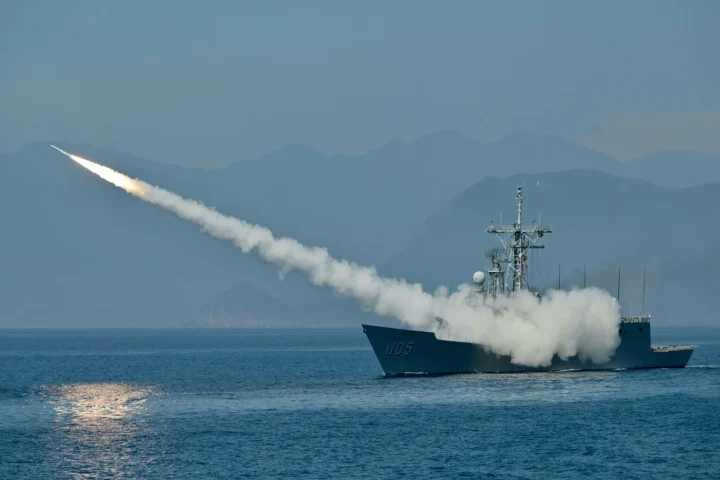
If conflict breaks out over Taiwan, the decisive question may not be how many missiles China can fire, but how quickly the United States can repair, replace, and return ships to the fight. Wars at sea are rarely decided in a single clash; they are won through endurance. In the Indo-Pacific, that endurance is increasingly defined not by fleets afloat today, but by the industrial ecosystems that sustain them tomorrow.
On paper, the United States still commands a formidable navy. With roughly 290 deployable ships, it remains a global force. China’s fleet, at around 330 vessels, is larger—but raw numbers obscure a deeper imbalance. Beijing’s maritime power extends far beyond the People’s Liberation Army Navy. The China Coast Guard, maritime militia, and a vast dual-use commercial fleet all contribute to a layered system that can project force, sustain operations, and apply pressure below the threshold of war. The United States, by contrast, operates with a thinner auxiliary fleet, limited regional coast guard presence, and a merchant marine that has long atrophied.
This asymmetry is not accidental. As naval strategist Alfred Thayer Mahan argued more than a century ago, sea power rests on more than warships—it depends on commerce, industry, and national will. China has internalized that lesson with striking clarity. Its shipyards churn out commercial and military vessels at a pace the United States cannot match. Its maritime policy aligns state, industry, and navy toward a singular goal: dominance in its near seas and growing influence beyond them.
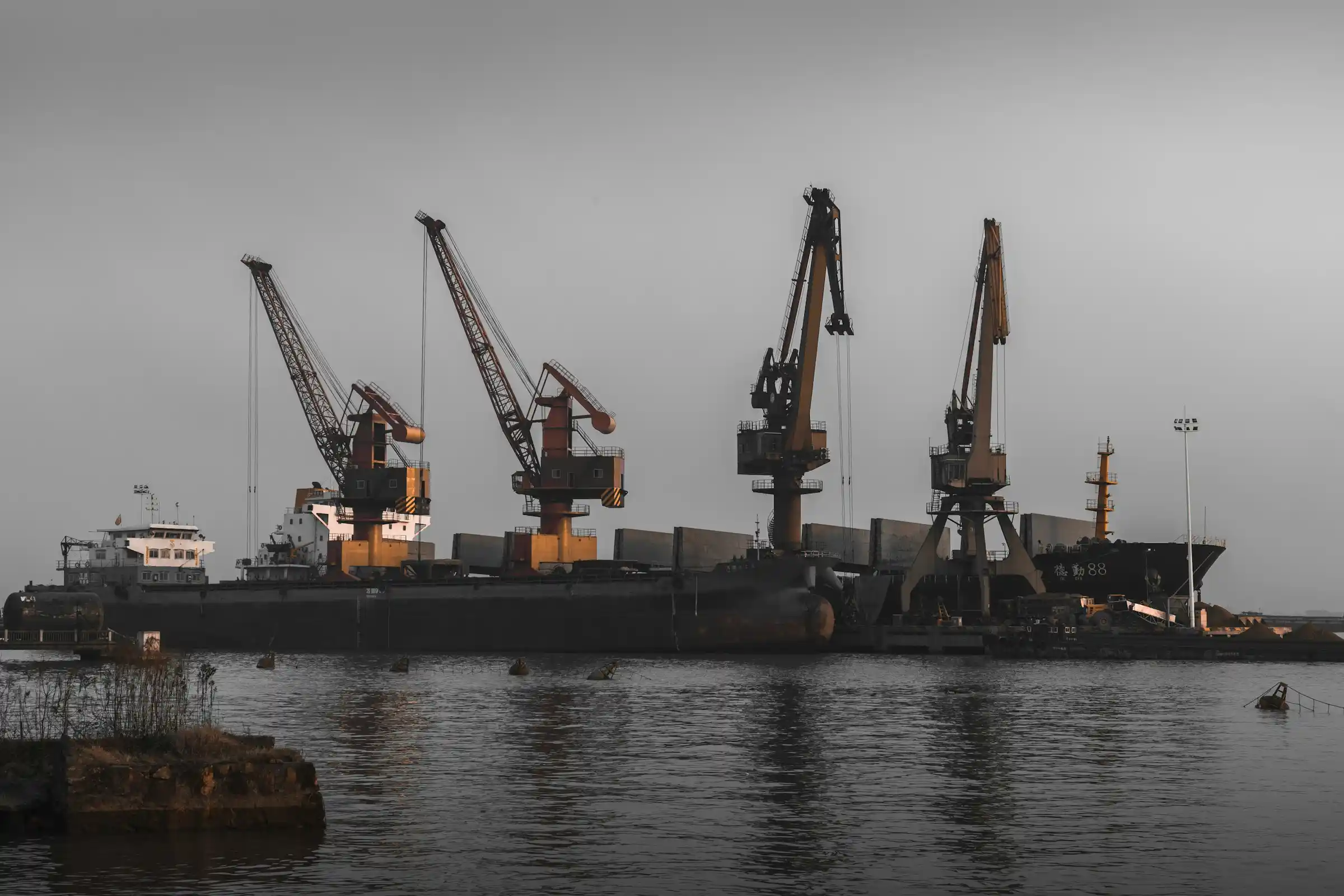
The United States, meanwhile, faces a shipbuilding crisis years in the making. Once the backbone of global maritime production, American shipyards have shrunk, consolidated, and specialized. Today, only a handful of facilities build major combatants, often under the control of just two prime contractors. This concentration preserves technical expertise, but it also introduces fragility. Delays cascade. Costs balloon. And when something goes wrong, there are few alternatives.
Senior naval leaders have grown increasingly blunt about the problem. Delivery timelines slip. Maintenance backlogs grow. New classes of ships, such as next-generation frigates, struggle to reach operational status after years of development. The issue is not merely inefficiency—it is capacity. The United States lacks the industrial depth to surge production or rapidly regenerate losses in a high-end conflict.
Even if reforms succeed—training more workers, stabilizing procurement, investing in infrastructure—they will take time. Years, not months. Deterrence, however, operates on a much shorter clock. The window in which China might test American resolve over Taiwan is measured in the near term, not the distant future.
Beijing appears to understand this dynamic well. Rather than rushing toward a costly amphibious invasion, Chinese strategy has evolved toward a spectrum of coercion: cyber operations, maritime harassment, economic pressure, and the potential for blockade or quarantine. These actions exploit geography. Operating close to its own shores, China benefits from interior lines—shorter supply chains, faster repair cycles, and immediate access to shipyards. It can absorb damage and regenerate forces with relative speed.
The United States, projecting power across the Pacific, faces the inverse challenge. Its ships must travel farther, remain on station longer, and rely on extended logistics chains. In a prolonged crisis, the strain compounds. A damaged destroyer or cruiser cannot be quickly returned to action if repair facilities are distant or overburdened. Over time, the balance shifts—not through decisive battle, but through gradual attrition.
History offers a clear warning. During World War II, American victory in the Pacific was not solely the result of tactical brilliance. It was the triumph of industrial mobilization. Shipyards on the West Coast produced carriers, destroyers, and support vessels at staggering rates. The United States could replace losses faster than its adversary, transforming endurance into dominance.
Today, that advantage has eroded. China launches modern warships in months. The United States often requires years. The gap is not simply quantitative; it is systemic. China’s state-backed model integrates commercial and military production, ensuring that capacity can be redirected in times of crisis. The American system, fragmented and market-driven, lacks that flexibility.
If deterrence is to hold in the Indo-Pacific, the United States cannot rely on domestic shipbuilding alone. The scale of the challenge demands a broader approach—one that treats allied industrial capacity as an extension of American power. Nations like Japan and South Korea possess advanced shipyards, skilled labor forces, and strategic alignment with US interests. Integrating these capabilities into a maritime industrial base would expand repair, maintenance, and production capacity far beyond what the United States can achieve independently.
Such integration is not without complications. Legal barriers, security concerns, and political sensitivities must be addressed. Yet the alternative—attempting to outbuild China alone—is far less plausible. Time is the critical variable, and time favors the side with the deeper industrial bench.
Ultimately, deterrence in a Taiwan scenario will hinge on credibility. Not just the credibility of forward-deployed forces, but the credibility of staying power. Can the United States and its allies sustain operations over weeks and months? Can they repair damage, replace losses, and maintain pressure? Or will capacity constraints quietly erode their position?
Missiles may open a conflict. Shipyards may decide it.