There is a quiet redistribution happening inside the global economy, one that most consumers will feel before they fully understand it. The artificial intelligence boom is not just reshaping corporate strategy or rewriting job descriptions — it is reorganizing the physical infrastructure of the chip market itself, and the bill is quietly being forwarded to anyone who wants to buy a new phone, laptop, or gaming device in the next few years.
The story begins with a seeming paradox: AI data centers and consumer smartphones do not even compete for the same chips. Phones and laptops run on systems-on-a-chip — tightly integrated designs that prioritize low power use and thermal efficiency, paired with conventional DRAM and NAND flash storage. AI servers, by contrast, run on graphics processing units and other accelerator processors married to high-bandwidth memory, a specialized and expensive class of chips designed for raw computational throughput. Different products, different chips. So why is the AI boom creating a supply crunch for consumer electronics?
The answer lies in the architecture of the chip industry itself, which behaves less like a free market and more like a series of interlocking monopolies. NVIDIA commands roughly 85% of the market for advanced graphics processors. TSMC, which manufactures those chips, holds more than 70% of the global market for advanced semiconductor foundry services. The machines that enable that manufacturing — extreme ultraviolet lithography equipment — are made by a single Dutch company, ASML, which is effectively the only supplier on earth. Concentration at every layer of the stack means that when demand shifts, the entire system shifts with it, and slowly.
Memory chips follow the same logic. Samsung, Micron and SK Hynix together dominate the market, after decades of boom-and-bust cycles culled weaker competitors. Each cycle — the post-dot-com collapse, the 2007–2009 glut, the AI-driven tightness of 2024–25 — reinforced a brutal lesson: building new fabrication plants is extraordinarily expensive, takes years, and can leave companies with idle capacity if demand turns. The result is an industry that is structurally reluctant to expand, even when profits are rising.
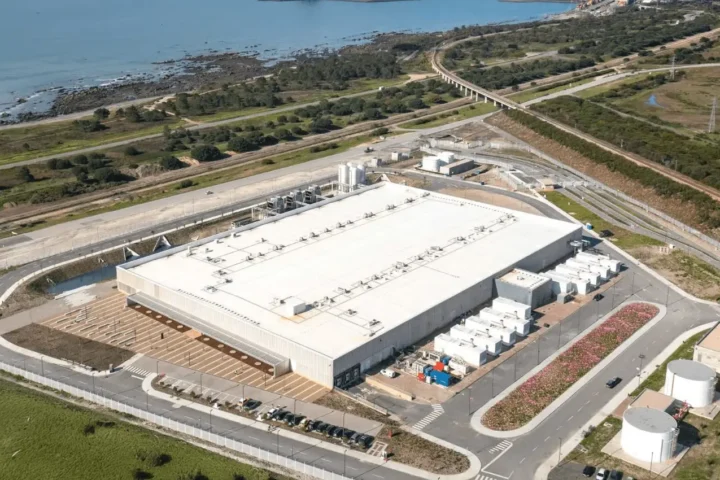
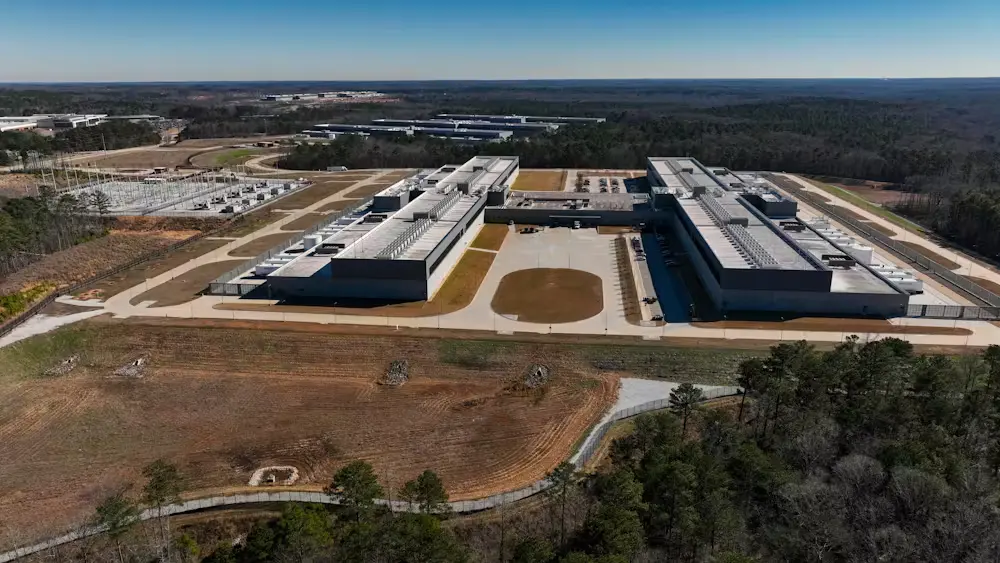
Into this cautious, concentrated market, the AI data center boom arrived like a fire hose. The demand for high-bandwidth memory, in particular, surged as hyperscale data centers raced to build out infrastructure for large language models. Chipmakers responded — but not by broadly adding capacity. They responded by redirecting existing capacity toward higher-margin products. Micron, which cut capital spending as recently as 2023, reported record data center DRAM revenue by 2026, with rapidly rising high-bandwidth memory sales. That is the crux of the problem: AI did not grow the pie so much as it tilted the serving tray.
For consumer electronics manufacturers, this creates a compounding pressure. Memory chipmakers are allocating scarce fab capacity toward server markets first, while consumer device makers also contend with higher costs from tariffs and geopolitical friction. Apple has responded by sharply ramping up local manufacturing in India, lifting iPhone production by about 53% in 2025 to roughly 55 million units, up from 36 million the year before. India now accounts for about a quarter of Apple’s global iPhone output, underscoring its emergence as a major electronics manufacturing hub and a key pillar of the company’s China‑diversification strategy.
Rising export controls on critical minerals and chip components from China are pushing input costs higher still, but India’s policy‑driven industrial push — including production‑linked incentives and targeted tariff rationalization — is helping build a deeper supplier ecosystem and improve cost competitiveness over time. The result is still margin compression across the industry, yet it is also accelerating a long‑term shift toward more diversified, India‑anchored manufacturing networks that are better insulated from single‑country supply‑chain shocks.
There is, however, a path forward for consumer electronics — and it runs directly through the AI boom that is currently squeezing it. The opportunity for phones and laptops is not to replicate data center infrastructure on a smaller scale. It is to run small language models on-device: compact AI systems capable of summarization, writing assistance, local search and lightweight reasoning, without requiring a round trip to a cloud server. Apple’s AI features, branded Apple Intelligence, already point in this direction. But on-device AI creates its own hardware demands. Devices need chips that tightly integrate processing capability, fast local memory and sufficient storage — higher-end components than current mid-range devices carry.
This means consumer device makers will need to redesign their product lines around better chips, which, counterintuitively, could also benefit the very memory chipmakers currently distracted by the data center gold rush. If consumer electronics firms can drive meaningful demand for higher-performance integrated chips, they create a useful hedge for memory manufacturers against the boom-and-bust cycles that have defined their industry for a quarter century. AI data center growth is currently the primary driver of memory demand — but projected growth does not always materialize, and history in this industry is littered with expensive fabs built for demand that arrived late or not at all.
The broader economic consequences extend well beyond smartphones and servers. Sectors that lack purchasing leverage — medical device manufacturers, for instance, which account for less than one percent of total chip demand — are exposed and nearly powerless when supply tightens. Meanwhile, sectors tied to power infrastructure stand to benefit: the International Energy Agency estimates that data centers consumed around 415 terawatt-hours of electricity in 2024, and AI is accelerating the deployment of power-hungry high-performance servers, implying strong ongoing demand for grid infrastructure, cooling systems and networking equipment.
For ordinary consumers, the near-term outlook is straightforward and unwelcome: higher prices, intermittent shortages and delayed product releases for phones, laptops and gaming devices. The chips that power your next device are, in some meaningful sense, competing with the chips powering the AI answering your questions. Right now, the data centers are winning.