
In the global race to avert climate catastrophe, money is often treated as the ultimate signal of seriousness. Governments pledge billions, investors tout green portfolios, and philanthropies brandish climate commitments as proof of moral leadership. Yet a closer look at where this money actually flows reveals a troubling truth: climate finance is not just insufficient—it is misaligned in ways that could undermine the very transition it seeks to accelerate.
Over the past decade, climate finance has nearly doubled. But this apparent progress masks a deeper issue: even now, it represents only a sliver of total global investment and less than 2% of philanthropic giving. More importantly, the distribution of that funding is wildly uneven. Roughly 89% of tracked climate finance flows into energy transition projects, while nature conservation receives just 4% and regenerative agriculture only 7%. This imbalance is not just a technical oversight—it reflects a deeper misunderstanding of what a functional climate solution actually requires.
At first glance, the dominance of energy investment seems logical. Fossil fuels account for the vast majority of greenhouse gas emissions, and renewable technologies like solar and wind are relatively mature, scalable, and profitable. Markets gravitate toward what they understand, and clean energy offers clear revenue models and investor confidence. But markets are not systems thinkers. What they reward is not necessarily what the planet needs.
This is the crux of the problem. Climate change is not a single-sector issue; it is a systemic crisis involving energy, ecosystems, and food systems. Yet our financial architecture continues to treat it as a narrow engineering challenge—one that can be solved primarily through electrification. The result is a transition that risks being fast, but not fair—and ultimately, not sufficient.
Consider nature conservation, the most underfunded pillar. Ecosystems—from forests and wetlands to oceans and grasslands—play a foundational role in stabilizing the climate. They store carbon, regulate water cycles, and buffer communities against disasters. And yet, only a tiny fraction of climate finance is directed toward protecting and restoring these systems. This is not a marginal gap; it is a structural failure.
The scale of that failure becomes clearer when compared to need. Achieving global conservation goals—such as protecting roughly half of Earth’s lands and oceans—would require hundreds of billions of dollars annually. Current funding falls dramatically short of that threshold. This is not just a funding gap; it is a strategic blind spot. Markets struggle to price the value of ecosystems, and so they systematically underinvest in them.
Even within the limited funds allocated to nature, there are distortions. Indigenous land stewardship—arguably one of the most effective forms of conservation—receives only a small fraction of philanthropic funding, despite Indigenous peoples managing a significant share of the planet’s remaining intact ecosystems. This disconnect exposes a recurring theme in climate finance: the marginalization of solutions that are difficult to commodify, even when they are demonstrably effective.
The same pattern emerges in agriculture. Regenerative farming—practices that rebuild soil health, enhance biodiversity, and sequester carbon—receives a modest share of climate finance. Within that already limited pool, funding is concentrated in a handful of high-visibility solutions, such as plant-based proteins. While dietary shifts are important, there is a critical irony: many of these products rely on industrial agricultural systems that degrade soil and ecosystems.
In other words, we are investing in the appearance of sustainability rather than its substance. Core regenerative practices—like agroforestry, soil restoration, and diversified cropping systems—receive only a small fraction of agricultural funding. Meanwhile, transformative approaches such as integrating trees into farmland, which can improve soil health, increase resilience, and capture carbon, are almost entirely overlooked. These are not fringe ideas; they are essential components of a resilient food system. Yet they remain financially invisible.
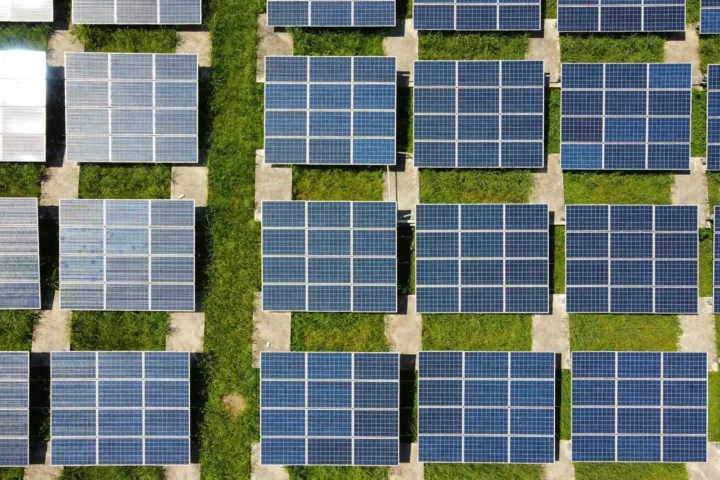
Even within the energy sector—the best-funded pillar—imbalances persist. Solar photovoltaics alone capture a disproportionate share of renewable energy funding, despite being only one piece of the future energy mix. Other critical technologies, such as geothermal and wave energy, receive minimal investment. This concentration reflects a broader tendency to overinvest in familiar solutions while neglecting the diversity required for systemic resilience.
Equally troubling is the neglect of energy access. Only a small percentage of energy funding is directed toward expanding access in underserved communities. This raises an uncomfortable question: can a transition be considered successful if it leaves billions of people behind? A climate solution that exacerbates inequality is not a solution—it is a new form of crisis.
What emerges from this analysis is not a lack of solutions, but a failure of coordination. The technologies, practices, and knowledge needed to address climate change already exist. What is missing is a financial system capable of recognizing and supporting them in a balanced, integrated way.
Climate solutions must be approached as a mosaic, not a silver bullet. Energy transition, nature conservation, and regenerative agriculture are not competing priorities—they are interdependent pillars. Undermining one weakens the others. Yet current funding patterns treat them as separate silos, reinforcing fragmentation at precisely the moment when integration is most needed.
Rebalancing climate finance will require more than incremental adjustments. It demands a shift in how value is defined and measured. Investors must move beyond short-term returns and consider long-term systemic resilience. Philanthropy must take on a catalytic role, directing capital toward underfunded but high-impact areas. Policymakers must create incentives that align markets with ecological realities.
Perhaps most importantly, there must be a willingness to fund what is not yet profitable but is undeniably necessary. The market alone will not solve the climate crisis, because many of the most critical solutions—healthy ecosystems, resilient communities, living soils—are not easily monetized. They are, however, indispensable.
We are often told that this is a decisive decade. But the defining question is no longer whether we have the tools to address climate change—the solutions already exist. The real question is whether we will fund them in time.
If climate finance continues to chase visibility and profitability over systemic impact, we risk building a future that is technologically advanced but ecologically hollow. Closing the climate funding gap is not just about scaling up investment; it is about correcting its course.