
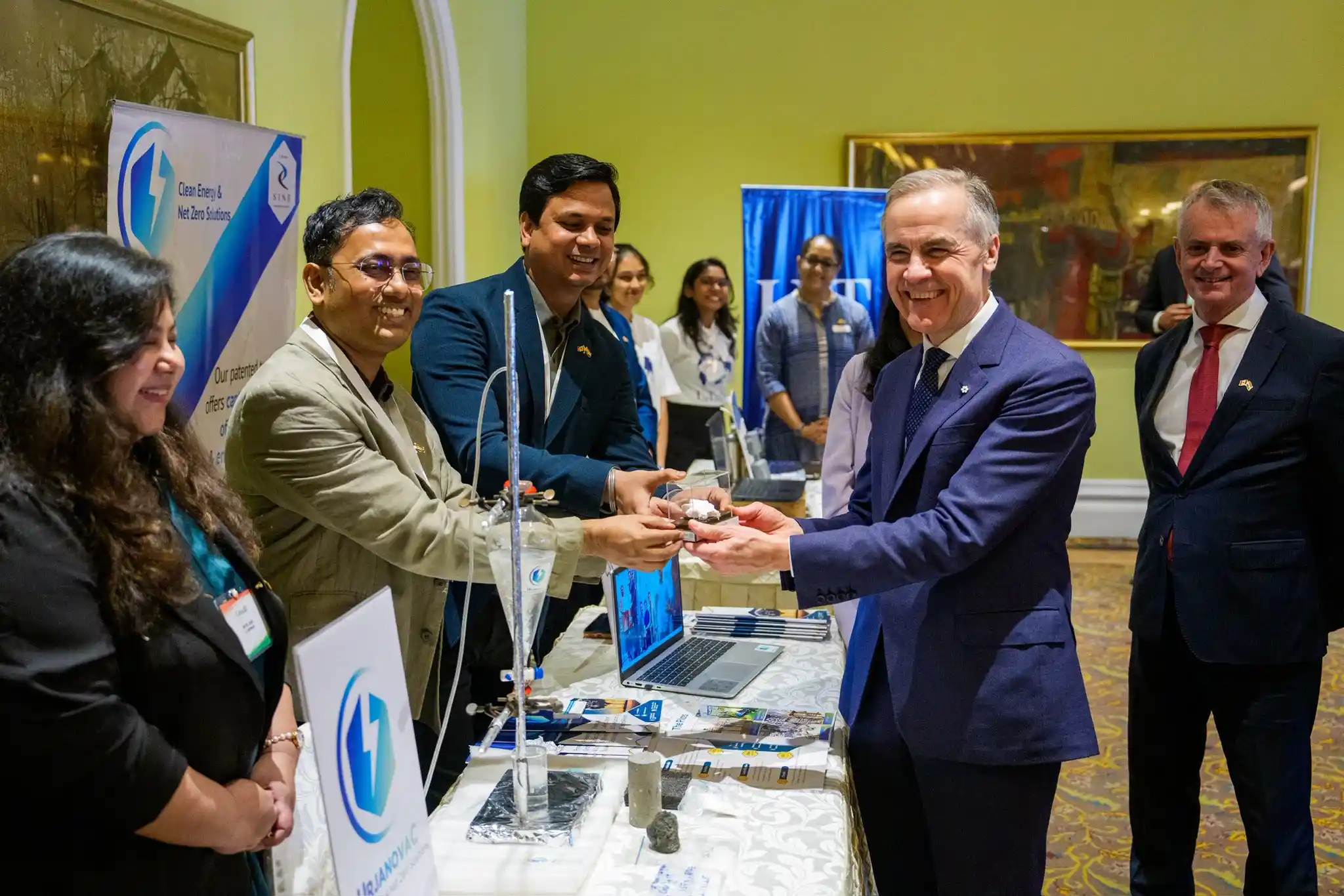
Recent breakthroughs in education mobility between Canada and India offer a strategic path to rebuild essential people-to-people connections strained by visa restrictions. These initiatives, including CA$100 million in scholarships, 300 Mitacs internships, and numerous inter-university agreements, promise to expand student exchanges and research collaborations while delivering substantial economic benefits to Canada.
Prime Minister Mark Carney’s recent visit to India catalyzed progress, resulting in 13 new inter-university partnerships announced in Mumbai and Delhi. Institutions such as the University of Fraser Valley, paired with Panjab University, and Algoma University, with Parul University, to facilitate student and faculty exchanges, joint degree programs, and research centers focused on artificial intelligence and clean technologies. Foreign Affairs Minister Anita Anand emphasized that these agreements will enhance collaborative research and introduce hybrid campuses, directly addressing enrollment declines caused by recent visa caps.
Canadian universities are launching new talent partnerships in India — 13 new agreements for research, hybrid campuses, and AI centres of excellence.
— Mark Carney (@MarkJCarney) February 28, 2026
This will provide invaluable experience for students and strengthen our world-class universities on both sides of the Pacific. pic.twitter.com/tJ2uJKDOH3
The visit launched the Canada-India Talent & Innovation Strategy, encompassing 24 education-focused Memorandums of Understanding (MoUs). A joint statement from Carney and the Indian Prime Minister underscored commitments to dual-degree offerings, offshore Canadian campuses in India, and skills development in emerging technologies.
In Mumbai, Prime Minister Carney welcomed the launch of the Canada-India Talent and Innovation Strategy, including 13 new university partnerships – creating opportunities for students and researchers, driving economic growth, and deepening our strong people-to-people ties. pic.twitter.com/7QPMqkgsTW
— Prime Minister of Canada (@CanadianPM) February 28, 2026
Scholarships and Internship Expansion
A cornerstone of these efforts is CA$100 million in scholarships, supporting up to 200 fully funded positions for Indian students alongside opportunities for Canadians. The University of Toronto committed up to $25 million for more than 220 Indian scholars. Mitacs renewed its memorandum with India’s All India Council for Technical Education (AICTE), securing 300 annual Globalink Research Internships, 12-week programs for elite Indian undergraduates at Canadian universities, commencing summer 2027.
These internships span STEM fields, humanities, and social sciences, with supervision by Canadian faculty to drive innovation. Hybrid study centers, such as Dalhousie University’s collaboration with IIT Tirupati, allow students to begin studies in India before transferring to Canada.
Economic Contributions of Indian Students
Indian students represent a powerhouse for Canada’s economy. In 2023, their numbers peaked at over 300,000 study permit holders, accounting for 40% of all international students and generating significant revenue streams. They contributed approximately CA$22 billion yearly through tuition fees, often three to four times domestic rates, plus spending on housing, retail, and transportation. In Ontario alone, international students, led by Indians, boosted GDP by $16.9 billion in 2022.
Undergraduate tuition averages CA$13,000–20,000 annually, while postgraduate fees range from CA$17,000–25,000, scaling to billions across cohorts. Public colleges derived 68% of tuition revenue ($1.7 billion) from international students, with 62% from Indians. However, visa caps led to sharp declines: new Indian permits fell to 188,255 in 2024 (32% drop) and projected ~90,000 in 2025 (52% further decline), with arrivals down nearly 60%. This threatens a CA$10.5 billion revenue gap compared to 2023 peaks, forcing universities like Humber to absorb 20-30% losses.
Countering Visa Caps Strategically
The 2025 cap limited total study permits to 437,000, dropping to 408,000 in 2026, aimed at easing housing pressures but severely impacting education. New requirements raised proof-of-funds to CA$20,635 and intensified screening. Yet, the new pacts mitigate this by prioritizing high-caliber talent: co-ops and internships now qualify for post-graduation work permits, streamlining Express Entry pathways in AI and clean tech sectors.
Hybrid models and exchanges promote bidirectional mobility, already 85 Canadian graduates headed to India. Five planned joint research centers, matching funds for clean hydrogen and AI projects ahead of the G20, diversify income sources. These address Canada’s aging workforce gaps in tech and healthcare.
Building Enduring Ties
With nearly 2 million Canadians of Indian descent, these initiatives strengthen familial and business networks. They cultivate “future-ready” talent pools: Indian interns become lifelong alumni advocates, while graduates remain via post-graduation work permits, sustaining economic growth. A Joint Working Group oversees implementation, with its first report due in July 2026.
For Canada, this approach embodies pragmatic self-interest. The post-cap void, fewer students leading to budget slashes and program cuts, underscores the stakes. Revitalized mobility preserves the $30.9 billion GDP impact from internationals in 2022, spurs innovation, and enriches campus diversity. Data affirms the value: pre-cap Indians filled labor shortages and fueled local economies.
Critics highlight dependency risks, but evidence points to net gains. As the G20 approaches, prioritizing these partnerships, through scholarship funding and expedited exchanges, secures universities, economies, and futures. Canadians stand to gain from India’s intellectual capital, ensuring prosperity in a competitive global landscape.