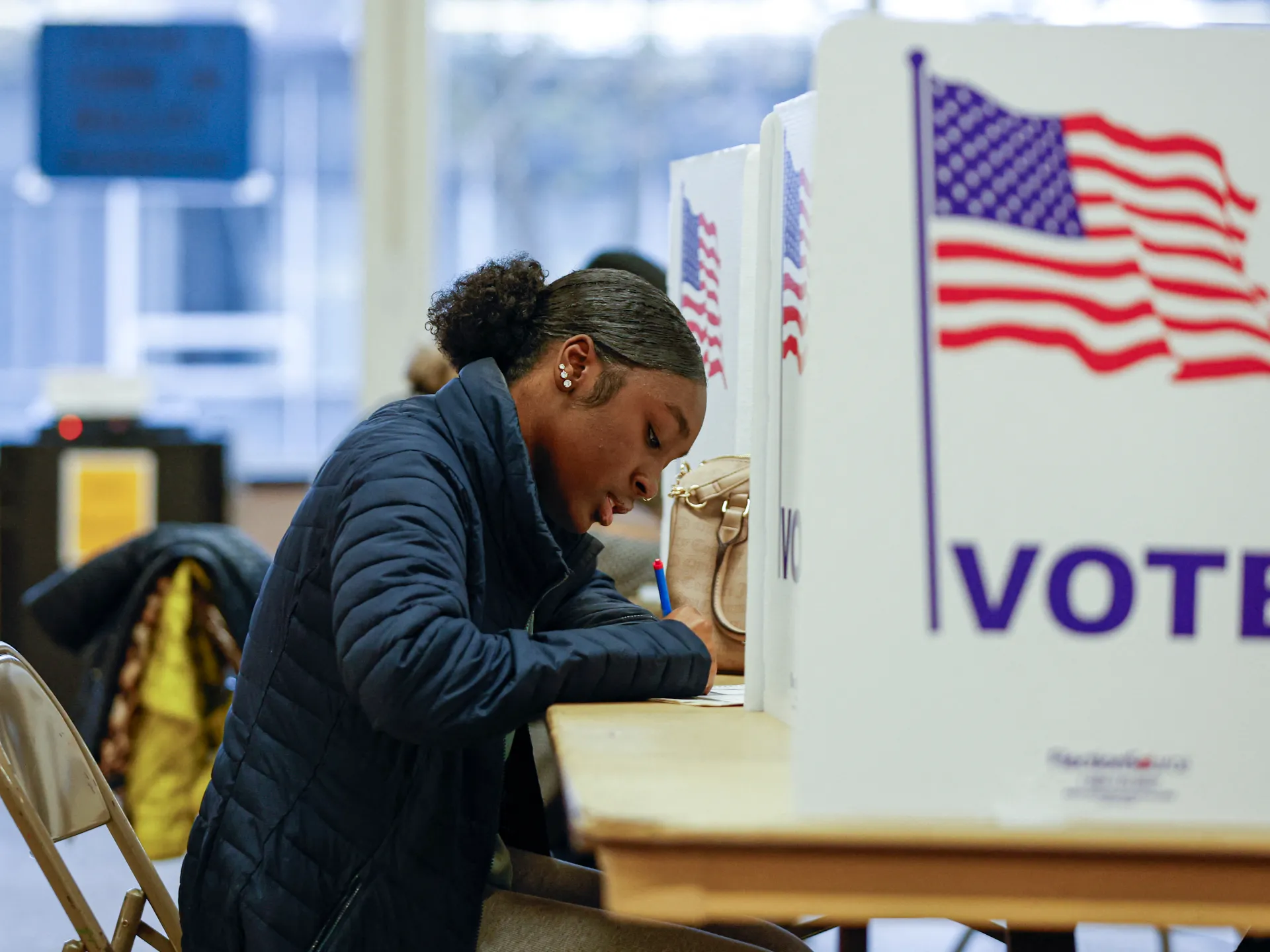
California’s anti–voter ID forces are treating a five-alarm fire like a slow-burning ember, delaying a full campaign until after June’s primary even as Republicans define the measure in voters’ minds as “common sense” reform. If they keep waiting, they risk losing a winnable fight before they’ve even shown up on the field.
The California Voter Identification, Citizenship Verification, and Registered Voter List Administration Initiative has already qualified for the November 2026 ballot after supporters submitted more than 1.3 million signatures, well above the roughly 875,000 required. The measure would amend the state constitution to require a government-issued ID for in‑person voting and the last four digits of an ID number on mail ballots, while ordering state and county officials to tighten voter roll maintenance.
Yet months after Republicans declared victory on signatures, the campaign to defeat the initiative is still largely on paper: a coalition, some stern press releases, and not much else visible to voters.
Opponents say the timing is the problem. They argue that California’s June 2 statewide primary has soaked up donor money, union bandwidth, and progressive groups’ attention, making it futile to launch a major persuasion effort against voter ID before the primary dust settles.
That logic is echoed in reporting that describes interest groups “waiting out a busy primary season” before fully rolling out their anti–voter ID messaging, even though the measure officially qualified for the ballot in late April. The calculation is clear: why spend scarce dollars now when every major player is fixated on congressional and legislative primaries?
Republican Assemblymember Carl DeMaio and his Reform California operation are already treating voter ID as a centerpiece cause, touting more than a million signatures, holding rallies, and framing the initiative as a bipartisan effort to “restore trust and confidence” in elections. Their message is tightly synchronized with President Donald Trump’s national push for stricter ID and proof‑of‑citizenship requirements, which they cast as a response to alleged fraud.
In other words, one side is using the primary season to hard‑wire a “common sense” narrative into voters’ minds, while the other is holding its fire and hoping voters will wait to make up theirs.
The risk in this strategy shows up in the numbers. A March 2026 UC Berkeley Institute of Governmental Studies poll found that when voters were given only a neutral description of requiring ID for voting, 56 percent supported the voter ID initiative and 39 percent opposed it.
But the same survey showed support falling and opposition rising once respondents heard arguments that linked the measure to Trump and raised the risk of eligible voters being turned away, producing a 39–52 split against the initiative under that more contested framing. The lesson is glaring: the more voters hear a substantive debate, the less this measure looks like harmless “integrity” and the more it looks like a partisan power play.
Proponents justify the initiative by invoking fears of widespread voter fraud and noncitizen voting. Yet California’s own election officials and independent reviews have repeatedly found no evidence of systemic fraud in the state’s recent elections, only isolated cases that were detected and remedied.
National research is even more damning for the fraud narrative: a seminal Brennan Center analysis found that in‑person voter impersonation — the only kind of fraud voter ID laws directly address — occurs at rates between 0.0003 and 0.0025 percent of ballots cast, making it literally less likely than being struck by lightning. To impose new hurdles on tens of millions of lawful voters to chase a problem that rounded to zero is not election protection; it is political theater.
If fraud is vanishingly rare, the damage from strict ID laws is not. Peer‑reviewed research using large, validated voter files has found that strict photo ID laws reduce turnout among racial and ethnic minorities far more than among white voters, widening the turnout gap between diverse and less diverse counties. One study found that in states adopting strict ID, turnout in the most racially diverse counties fell by nearly 8 percentage points while rising slightly in the least diverse counties, a swing that systematically disadvantages communities of color.
Other work shows especially sharp drops among Latino voters, naturalized citizens, and low‑income voters — exactly the groups that already face barriers like unstable housing, limited access to transportation, and less flexible work schedules. These are not speculative harms; they are empirically documented effects from places that have already gone down the voter ID road.
California now conducts its elections overwhelmingly by mail, with roughly 80–90 percent of ballots cast that way in recent cycles. The initiative’s requirement that voters write identifying numbers on ballot envelopes and that officials verify those against government databases creates new points of failure in a system that is currently functioning securely.
Voting‑rights groups warn this would increase the rejection of valid ballots because of typos, mismatches, or data errors — problems that disproportionately hit voters who move frequently, change their names, or juggle unstable work and housing. In a state where the margin in many down‑ballot races is tiny, those “administrative” losses are not abstract.
Given that evidence, why aren’t Democrats and allied groups already flooding the zone? Part of the answer is triage: labor unions and progressive organizations are defending legislative majorities, working on other ballot measures such as a proposed billionaire tax, and fighting congressional races that could decide control of the House.
There is also a misplaced confidence that California’s blue tilt will protect them — the belief that a Republican‑backed, Trump‑aligned initiative cannot possibly survive a general election in a state where Democrats dominate voter registration. But that underestimates the cross‑partisan, surface‑level appeal of “show an ID to vote,” especially among independents and even a chunk of Democrats, as recent polling shows.
Waiting until after June to get serious all but guarantees that the “Yes” side’s framing hardens while the “No” side is still workshopping slogans. The coalition opposing the measure — which already includes the ACLU, League of Women Voters, Common Cause, and disability and civil‑rights groups — has the ingredients for a potent campaign if it decides to move.
An effective effort would do three things quickly: hammer home the lack of a real fraud problem in California; put the human cost of rejected ballots and turned‑away voters at the center of the story; and relentlessly tie the initiative to Trump‑era election denialism that California voters broadly reject. The data show that when voters see the full picture, support for the initiative erodes substantially — but that erosion will not happen on its own.
California’s anti–voter ID coalition is not wrong that money and attention are finite. But politics does not run on a school calendar, and ballot measures do not politely wait for party strategists to clear their schedules. The voter ID campaign has already begun; the only question is whether its opponents intend to meet it in real time or keep fighting last month’s battles while the future of ballot access is decided without them.