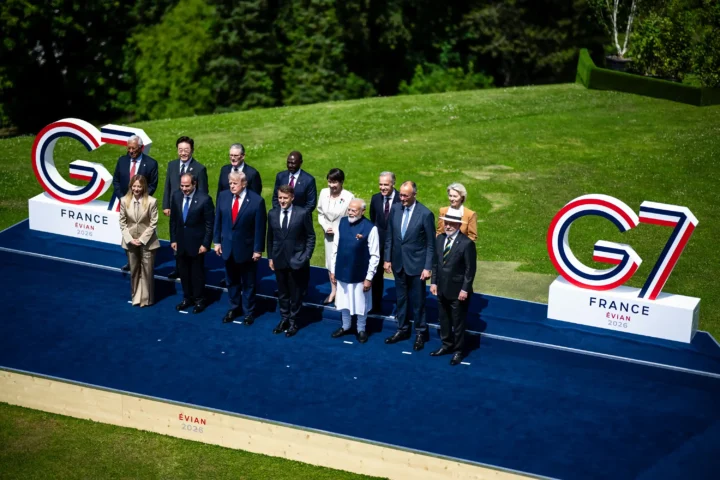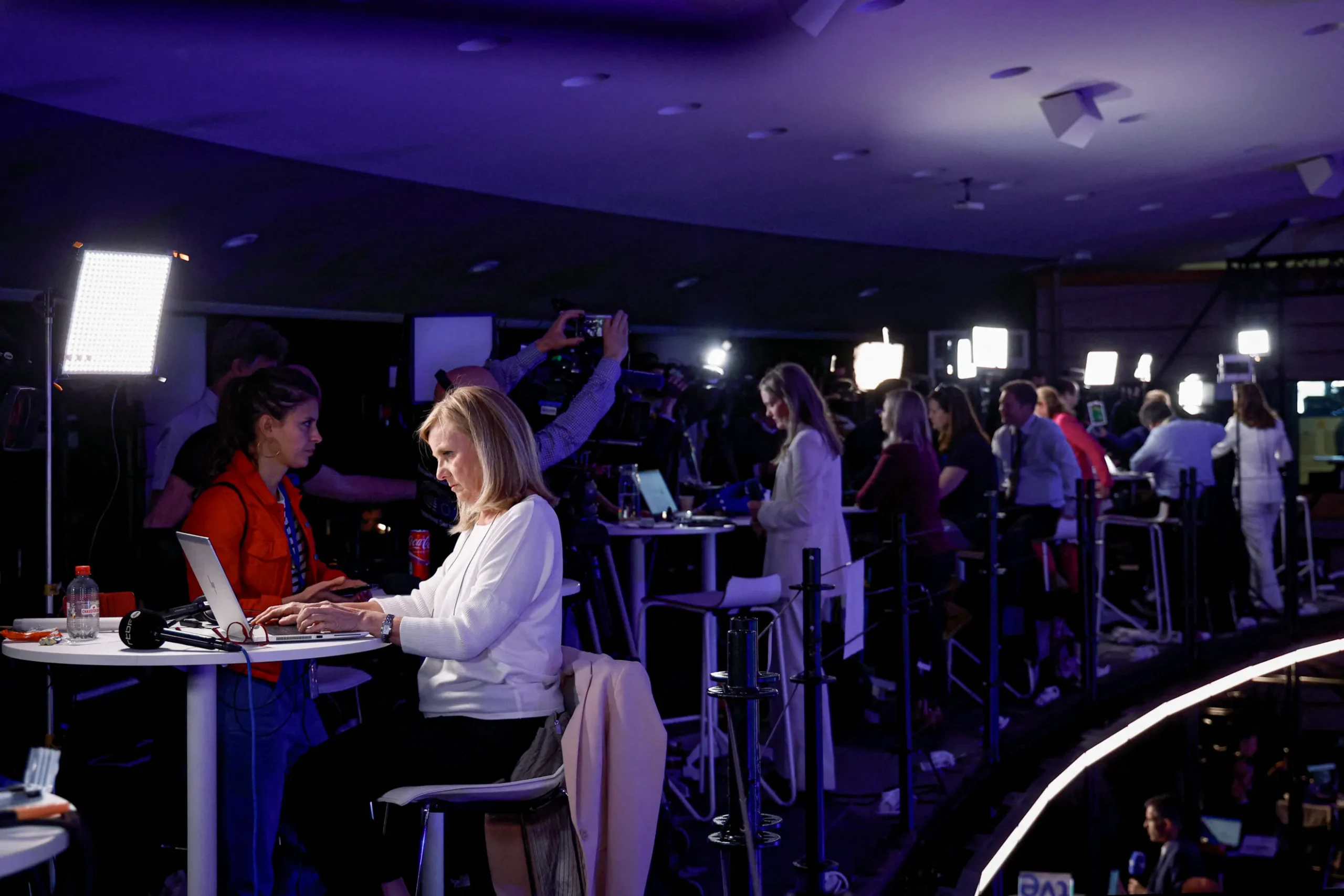
At a European Council summit in Brussels, a curious addition appeared in the press gallery: a small group of content creators, phones in hand, recording the building’s façade, panning across the red‑carpet entrance, and filming short clips of the usual phalanx of EU officials disappearing into the just‑there. They were not there to ask questions, but to “bear witness,” to capture the scene, and to translate the ritual of European summitry into the formats that now dominate their audiences’ feeds. For traditional journalists watching from the sidelines, it felt less like a marginal curiosity and more like a warning shot: the EU’s political theater is no longer scripted solely for the press. It is being redesigned for the attention economy.
The Council of the European Union’s recent proposal to invite influencers and digital content creators to ministerial meetings and even summits has been framed, in some quarters, as a gimmick. But it is better understood as the latest skirmish in a larger, quieter revolution: the re‑staging of democratic politics inside the platforms where most citizens now actually live. The impulse is not entirely new; governments have long hired pollsters, spin doctors, and communications consultants. What is new is that the EU—slow, bureaucratic, and often accused of being out of touch—is now openly courting a class of intermediaries whose primary currency is not analysis or investigation but engagement, shareability, and emotional resonance. This development is neither a simple threat to journalism nor a cheap publicity stunt. It is a contested experiment in whether democratic institutions can harness the viral logics of social media without sacrificing their accountability functions—or their credibility.
The Case for Inviting Influencers
The strongest argument in favor of the Council’s plan is the most straightforward: if democratic institutions cannot speak where people actually are, they will increasingly speak only to themselves. The European Union has long struggled to reach, let alone mobilize, younger Europeans. Surveys released by the Commission and by the European Parliament show that a strikingly large share of young people now get their political information primarily from social media, not from traditional newsrooms. For many, the first encounter with EU politics is not a debate on a mainstream news channel but a short video on TikTok, Instagram, or YouTube.
In this context, the Council’s conclusion that “we would be foolish if we didn’t use influencers” is less a surrender to pop culture than an acknowledgment of reality. Influencers and content creators are already shaping the information environment in ways that can rival or exceed traditional media’s reach, especially among audiences that are vanishingly small in the readership of established newspapers. By inviting them to summit venues, the Council is attempting to insert institutional narratives directly into those flows, rather than remaining confined to the shrinking circle of specialist Brussels journalists.
There is also a civic upside to this strategy. The same Council documents that endorse working with influencers also stress the importance of media literacy, the promotion of trustworthy information, and the need to counter disinformation and the accelerating influence of AI‑generated content. In that light, inviting creators can be framed as part of a broader effort to broaden the informational surface area of European politics. The EU is not just trying to disseminate its own message; it is trying to reshape the ecosystem in which that message circulates, nudging influencers toward higher‑quality sourcing, more transparent disclosure, and more nuanced explanations of process and policy.
A well‑designed initiative could, for example, task creators with explaining not just the outcome of a summit, but the mechanics of the negotiation: why certain countries blocked what others wanted, why some compromises were deemed acceptable and others not. This kind of work does not come naturally to the kind of influencer culture that thrives on outrage and oversimplification, but it is precisely what the EU needs if it ever wants to escape the caricature of being a faceless bureaucracy. The risk is not that the content will be too polished, but that it will be too shallow.
The Risks of Managed Intimacy
The strongest objections to the Council’s plan are not about threatened journalistic jobs; they are about the erosion of transparency and the normalization of managed intimacy. Traditional media organizations reacted with consternation, not because they feel personally threatened, but because the proposal hints at a future in which influence is granted to the intermediaries that are easiest to control, rather than to the ones whose function is to scrutinize.
The Council’s own documents state that invited creators will not be treated as press; they will not receive the same question rights or access protocols that journalists have. In practice, that means they may be guided into carefully curated viewing areas, given pre‑scripted talking points, and encouraged to film the more visually appealing aspects of summitry—the arrival of leaders, the aesthetic of the building, the choreography of the walks to the negotiating room—while being kept away from the back‑and‑forth that actually determines policy. In other words, the EU is not adding a new kind of journalism so much as adding a new kind of public relations.
That is where the optics become dangerous. For an institution already accused of drifting into a twilight zone of technocratic opacity, inviting influencers into summit spaces can easily read as a kind of confidence theater: look, we’re modern, we’re fun, we’re on your phone. The problem is that the public may infer that the presence of friendly faces inside the room is a substitute for the kind of adversarial scrutiny that democratic accountability normally requires. When leaders begin to prefer influencers because they are more predictable, more visually appealing, and less likely to challenge them, the press conference starts to function less as a moment of accountability and more as a content pipeline. The danger is not that influencers will replace journalists; it is that institutions will come to prefer them.
The Transparency Problem
The central structural issue is that influencers and journalists operate under different logics. Journalists are expected to probe, to question conflicts of interest, and to expose contradictions; their credibility still depends, in part, on the perception that they are not amplifying power, but interrogating it. Influencers, by contrast, are often paid, or at least monetized, through access, sponsorship, and audience growth. Their business model is built on keeping their audiences engaged, their sponsors happy, and their relationship with powerful institutions intact.
That does not mean influencers cannot be honest or useful, but it does mean that the usual safeguards of professional journalism—editorial independence, disclosure rules, standards for fact‑checking, and institutional accountability mechanisms—are much thinner. In the EU, regulators are only now beginning to grapple with how to enforce advertising and disclosure obligations on influencers, especially cross‑border creators whose audiences span multiple directives and national authorities. The European Commission has created an “Influencer Legal Hub” to clarify rules around transparency and fair commercial practices, but enforcement remains patchy. The result is an environment where the line between neutral explanation and soft propaganda can be imperceptibly thin.
When the Council invites influencers to summits, that problem is magnified. The setting itself carries symbolic weight: the building, the flags, the red carpet, the sense that one is being granted passage into the inner sanctum. That sense of insider access can become a commodity that creators trade for audience growth, partnership opportunities, or future invitations. And if the Council does not impose strict rules—precisely because it does not treat them as press—it can reasonably expect that the content produced will lean toward the flattering, the celebratory, and the non‑confrontational.
None of this would be so troubling if the traditional press were robust and expanding. But the European media landscape is under strain. Many outlets have shed staff, consolidated operations, or closed entirely. The EU’s own press freedom report documents a steady erosion of resources, rising legal pressure, and the growing influence of platforms that do not directly pay for the news content they distribute. In that context, the vision of an EU that increasingly communicates directly with audiences through influencers, while sidelining the very journalists who have kept the Brussels beat alive for decades, feels less like evolution and more like abdication.
A Hybrid Future
The most defensible version of the Council’s initiative is one in which influencers are clearly positioned as a supplement, not a substitute. In this model, content creators do not replace the press gallery; they occupy a separate, visible lane, with their own rules, limitations, and expectations. Creators would be invited to explain process, humanize institutions, and translate complex negotiations into formats that are genuinely accessible. But they would not be given the illusion of press rights or the false impression that they are performing the same function as investigative reporters, committee‑room watchers, or diplomatic correspondents.
A responsible implementation would require strict transparency rules. Any creator granted access should be required to disclose sponsorship, institutional partnerships, and any special arrangements that underwrite their presence. They should be subject to a clear code of conduct that acknowledges the limits of their role: they are not investigators, they are not subpoena‑wielding editors, they are not substitute ombudsmen. Their task is to explain, contextualize, and humanize—not to police power. Those policing functions should remain firmly with the press, whose institutional and professional norms are still, despite all their flaws, better equipped to hold power to account.
The EU has already taken steps in the direction of a more pluralistic view of information creators. The European Council’s recent conclusions on reliable and trustworthy news and media emphasize the importance of media pluralism, the prominence of quality news on platforms, and the need to support independent media while also strengthening citizens’ ability to navigate the information environment. Those same conclusions call for better funding models, stronger transparency, and more robust safeguards against undue influence. The moment that the EU turns influencers into de facto extensions of its communications apparatus, without the same safeguards, it undercuts its own stated commitments.
A Democracy of Attention
The underlying tension here is not really about journalists versus influencers. It is about whether democracies can adapt to the age of attention without ceding their accountability functions. The EU’s influencer turn is a symptom of a larger trend: institutions are learning that they must compete not just for votes or policies, but for affect—feelings of connection, intimacy, and identification. Politics is now staged in the medium of the feed, where nuance is often a liability and clarification can be a form of friction.
In this environment, the danger is not that influencers will displace journalists, but that institutions will begin to reward the kinds of communication that are easiest to consume at the expense of the kinds that are hardest to ignore. The more leaders discover that friendly, viral‑ready influencers can generate positive sentiment with less friction than the traditional press, the more they will be tempted to lean on them. The risk is that accountability will not vanish overnight, but will slowly migrate from the visible rituals of the press conference and the committee room into the background of the institutional imagination.
The EU’s experiment with influencers is not a cartoonish surrender to the age of TikTokers. It is an earnest, if clumsy, attempt to meet citizens where they are. The real question is whether the EU can professionalize this engagement without normalizing a kind of managed intimacy that makes it easier to perform politics than to practice it. That means demanding clear boundaries between communication and accountability, between explanation and investigation, and between the algorithms that optimize for attention and the journalism that optimizes for truth.
In the end, the Council’s influencer initiative will be judged not by whether it generates engaging clips or multilingual reels, but by whether it deepens or dilutes the conditions for democratic scrutiny. The EU will not be in trouble if influencers start covering summits. It will be in trouble if it ever starts to believe that they can do the work of journalists.