Zack Polanski, the new leader of the Green Party, has ignited one of Britain’s most taboo debates: the end of free movement with Europe. Where other political leaders tiptoe around the legacy of Brexit, Polanski calls it what it is — a “disaster.” His message is clear and unapologetic: the United Kingdom’s decision to end the free movement of people has weakened its economy, divided its society, and diminished its place in the world.
This intervention arrives at a time when the national mood is one of weary resignation. Britain has formally left the European Union, but it has yet to define what it has gained — or what kind of country it wants to become. Polanski’s challenge, then, is not only political but philosophical. He is asking Britons to reimagine freedom not as isolation but as connection; not as control, but as opportunity.
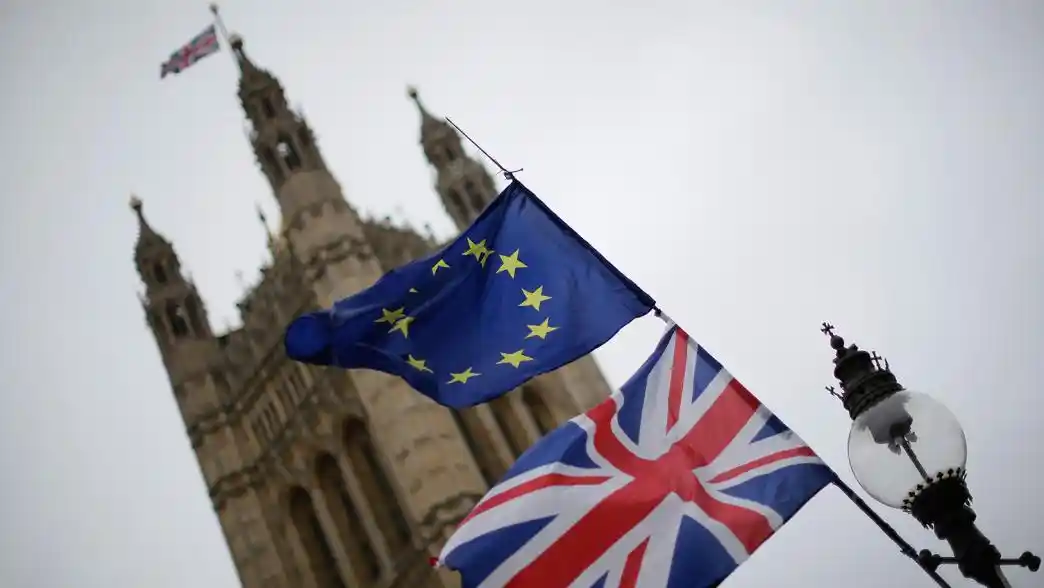
Nearly ten years on from the 2016 referendum, Britain remains in limbo — outside the EU, but still haunted by the promises that led to its departure. The government’s “reset” with Europe has been cautious and constrained, focused on trade tweaks and symbolic agreements. The red lines are rigid: no return to the single market, no customs union, no restoration of free movement. These boundaries are designed to keep faith with Brexit voters, yet they have left the country trapped between nostalgia and necessity.
This timidity has political logic but no vision. The government’s approach to Europe is managerial rather than aspirational — a project of damage control rather than nation-building. Polanski’s criticism strikes at this very nerve. His accusation that Britain lacks a “vision for the future” captures what many feel: that politics has become about avoiding risk rather than pursuing renewal.
The Economic Consequences of Isolation
Polanski’s claim that the end of free movement has been disastrous is more than rhetorical flourish. The evidence is everywhere — in labour shortages, price hikes, and the strangulation of small businesses buried under red tape. The post-Brexit immigration system, far from reducing numbers, has merely changed where migrants come from. Net migration has reached over 400,000, higher than in the years Britain was still part of the EU. Yet the system now imposes bureaucratic burdens that hurt employers and shut out ordinary citizens who once enjoyed the freedom to live, work, and study across Europe.
In this new order, Britain has gained paperwork but lost privilege. Young people who once could pack a bag and seek opportunity in Berlin or Barcelona now face visa queues and fees. Farmers and food producers are bogged down by customs forms that slow trade and raise costs. Polanski connects these dots to a simple truth: Brexit has made life more expensive and less free. His call to rejoin the customs union “as soon as possible” is not just a policy detail — it is a moral statement about honesty in politics. If leaving the EU made people poorer, he argues, then courage demands admitting it.
Polanski’s emergence signals something new in British politics: a fusion of environmentalism, economic justice, and internationalism that he describes through action more than labels. His “eco-populism” is not the angry nationalism of the right but a populism of empathy — one that frames climate action and European cooperation as acts of common sense and common cause. It speaks to voters disillusioned with both Labour’s caution and Conservative cynicism.
The Green Party’s surge in polls reflects that appetite for clarity. Doubling its vote share within a year, it now attracts those who see in Polanski a willingness to say what others won’t. He has managed to turn idealism into momentum, presenting environmental and European policy not as niche concerns but as the foundation of a fairer economy. By linking clean energy, affordable food, and cross-border collaboration, he gives progressive politics a narrative spine it has long lacked.
Yet his vision is not without risk. The idea of restoring free movement remains deeply divisive. For many, it recalls the anxieties that drove Brexit — fears of job competition, cultural change, and political detachment. Polanski’s gamble is that honesty and participation can overcome fear. He argues that Brexit happened because people felt politics was done to them, not with them. His call to rejoin Europe, then, is not just about economics — it is about democracy.
The Moral Case for Internationalism
At a time when the far right is gaining strength across Europe, Polanski’s defense of openness and cooperation feels almost countercultural. His insistence that Britain must stand with progressive movements abroad is a rebuke to the isolationist impulse that has crept into both left and right. He warns that abandoning European institutions — from the EU to the European Convention on Human Rights — is part of a “slow march toward authoritarianism.” In that sense, his project is not merely about policy, but about identity: whether Britain sees itself as a solitary island or a member of a wider moral community.
Internationalism, in Polanski’s view, is not naïve idealism but pragmatic realism. No country can confront the climate crisis, energy insecurity, or inequality alone. Rejoining the European conversation means regaining influence over the very forces that shape British lives — from migration flows to food standards to green investment. His argument reframes sovereignty not as withdrawal but as participation: a modern nation’s power comes not from standing apart but from standing together.
For Prime Minister Keir Starmer, Polanski’s rise presents both a challenge and an opportunity. Starmer has built his reputation on steadiness — on being the adult in the room after years of political chaos. But steadiness can look like stasis. His plan for limited youth visas and modest trade deals may ease friction, but it will not rebuild trust or vision. Polanski’s unflinching advocacy for full European re-engagement exposes that gap. It makes Starmer look like a caretaker, not a leader.
Still, the Greens’ surge could pressure Labour to think bigger. Every successful populist movement shifts the political center by redefining what is possible. If Polanski succeeds in making rejoining the customs union or restoring mobility a mainstream demand, he could do more to reshape Britain’s European policy from outside Westminster than Starmer can from within it.
The deeper question Polanski poses is not about policy but about purpose. What kind of country does Britain want to be — closed or connected, fearful or hopeful, diminished or daring? The end of free movement was more than a legal change; it symbolized a retreat from openness, from the idea that diversity and mobility enrich a nation rather than threaten it. Reclaiming that idea requires moral imagination — and a willingness to confront the lies that have defined the last decade of politics.
Polanski offers that imagination. He speaks of Europe not as a bureaucratic structure but as a shared human space — a network of relationships built on cooperation and compassion. His vision is unapologetically idealistic, but perhaps idealism is what Britain needs most. In an age of managed decline and muted ambition, a politician willing to say that Brexit was a mistake and that Britain can do better offers a rare glimpse of courage.
Whether his movement endures or fades will depend on whether the public is ready to move beyond the politics of regret. But one thing is certain: by saying aloud what others whisper in private, Zack Polanski has reopened a conversation that Britain desperately needs.
He reminds us that freedom was never about walls or passports. It was about the ability to dream beyond borders — and to build a country confident enough to do so again.