At the third United Nations Ocean Conference (UNOC3) in Nice last week, one thing was unmistakably clear: our ocean is in crisis. But perhaps more importantly, a solution is beginning to surface—one rooted not only in science, but in vision, innovation, and collective political will. If the world was listening, it would have heard a resounding message: Europe is ready to lead the charge toward ocean sustainability.
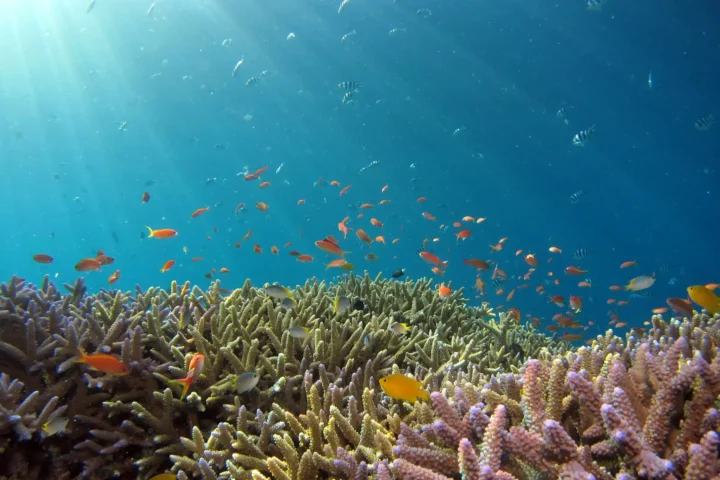
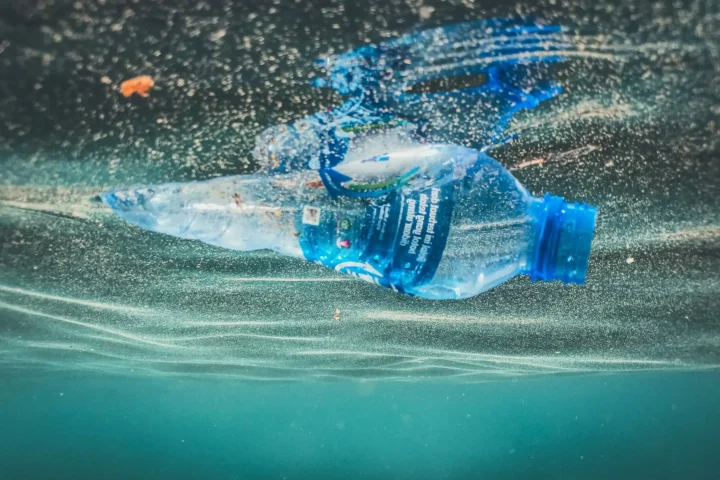
We are living in a paradox. The ocean—our planet’s life-support system—covers more than 70 percent of the Earth’s surface and regulates our climate, supports biodiversity, and sustains billions of lives. Yet, this very foundation of life is unraveling. Coral reefs are bleaching, cyclones intensifying, ecosystems collapsing. As French President Emmanuel Macron dramatically put it, “The globe is burning, our oceans are boiling.” And he is right.
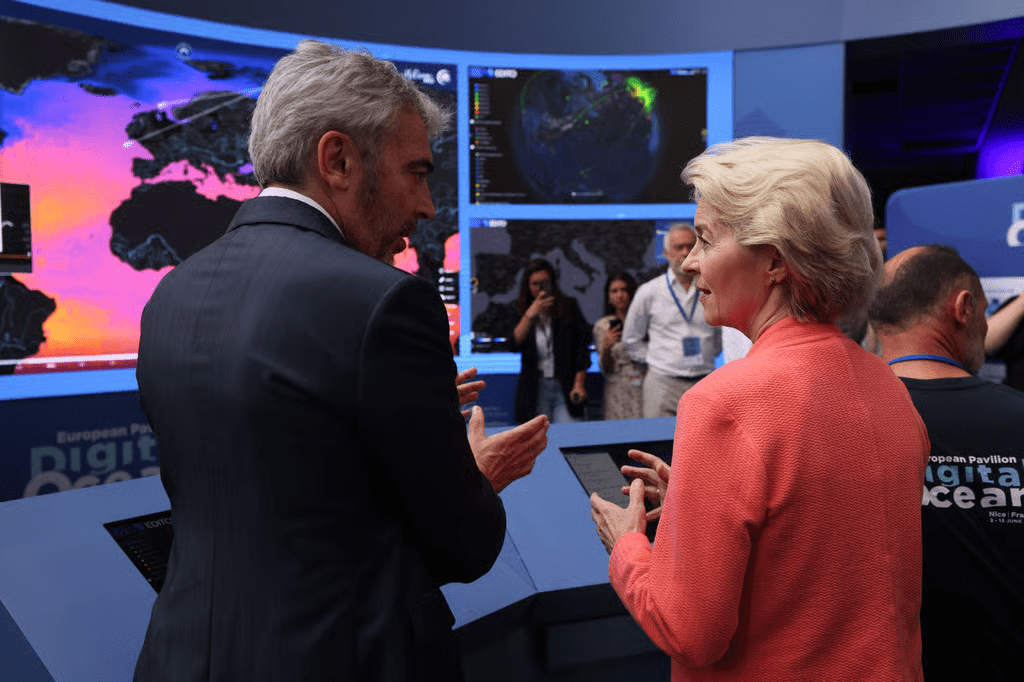
But crisis breeds clarity, and UNOC3 reflected a turning point in how we respond to this emergency. Amid the despair, a profound sense of hope was housed inside “The Whale”—a rebranded Palexpo in Nice—where the European Commission’s Digital Ocean Pavilion stood as a bold testament to what is possible when data, policy, and technology converge.
At the heart of this revolution lies the European Digital Twin of the Ocean (EU DTO), a real-time, AI-powered simulation tool that allows us to see the ocean like never before. It translates terabytes of data—from satellites, drones, sensors, and decades of models—into living, breathing digital mirrors of our seas. And with it, decision-makers no longer need to shoot in the dark. They can test, predict, and respond to pollution, biodiversity loss, and coastal risks with informed precision.
This is no mere gimmick. As Ursula von der Leyen, President of the European Commission, rightly noted during her visit, the DTO is a “tool that helps us better understand the ocean, from pollution to navigation but also from risk to our coasts to biodiversity.” More than that—it’s a governance breakthrough. For too long, global environmental policy has been stymied by data gaps, fragmented science, and political inertia. Now, real-time simulations can turn ocean science into actionable knowledge. The DTO isn’t just a model; it’s a compass.
Moreover, the EU has embedded this technology into its broader strategy—the European Ocean Pact—which lays out a blueprint for resilience and sustainability through 2029. This is the kind of long-term thinking the world desperately needs. Instead of empty pledges, the EU is offering a framework anchored in monitoring, transparency, and science-backed decision-making.
What’s even more remarkable is the collaborative architecture behind it. Mercator Ocean International, a leader in operational oceanography, is poised to become an intergovernmental organization—solidifying a global scientific alliance that supports digital ocean services for countries worldwide. From Costa Rica’s Cocos Island to sub-Saharan Africa, the EU is exporting not just expertise, but empowerment.
And yet, this story is not without its cautionary note. The ocean community, as Charlina Vitcheva of DG MARE emphasized, must continue its relentless pursuit of knowledge. Tools like the DTO only matter if they lead to action—if governments align investment, regulation, and innovation to protect our most vital natural asset.
The ocean doesn’t need more speeches. It needs infrastructure. It needs surveillance. It needs policy enforcement. Most of all, it needs the kind of transformative global collaboration that Europe demonstrated at UNOC3.
What we saw in Nice was not just a conference—it was a blueprint. The world has waited too long for a coherent ocean strategy. Europe just delivered one. Now it’s up to the rest of us to follow its lead, or risk becoming the generation that let the ocean die on our watch.