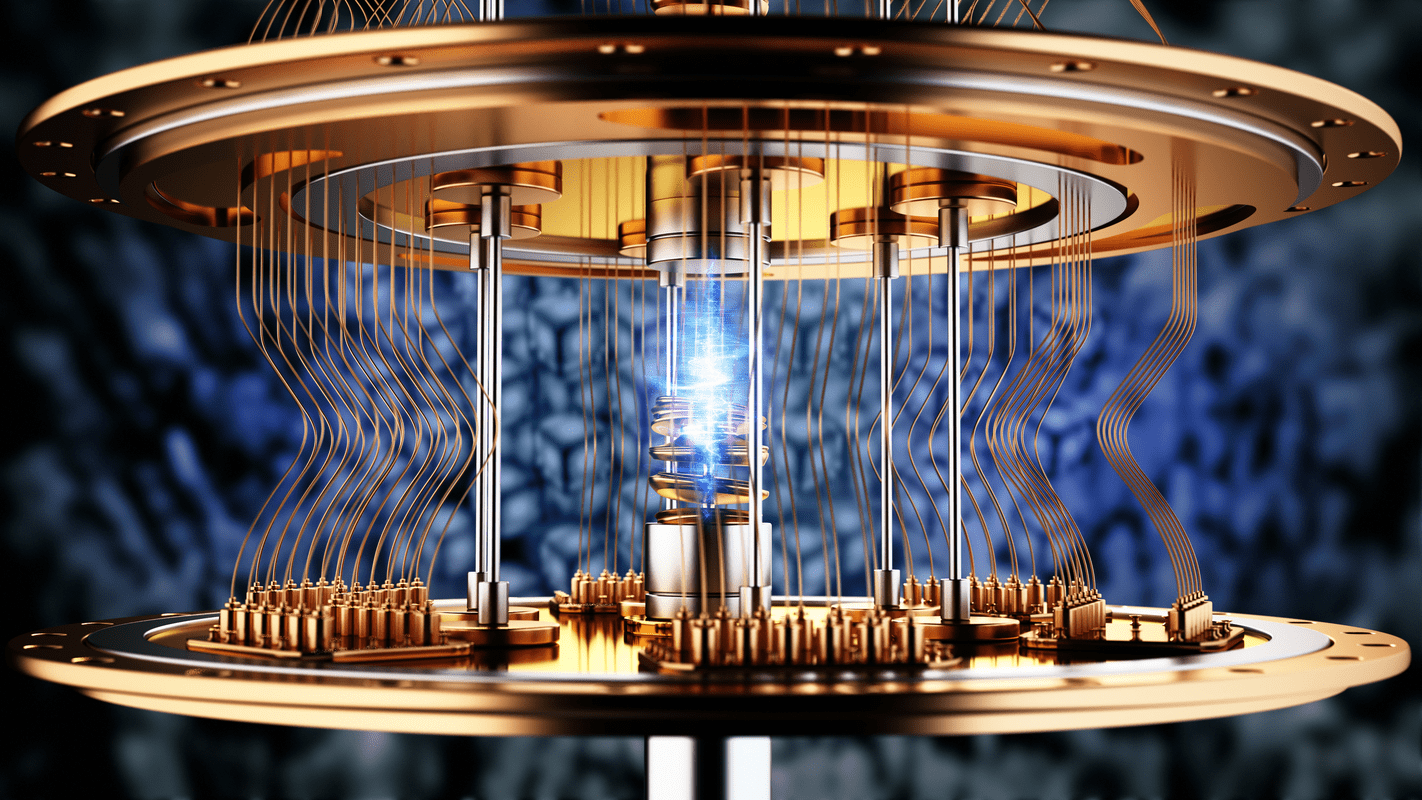
Europe is laying out an ambitious plan to propel quantum computing from the laboratory into factories, hospitals and even outer space, hoping to close the gap with the United States and China. Yet while Brussels woos investors and researchers with its new Quantum Strategy, security chiefs are sounding the alarm: without urgent action, the very networks that bind Europe together could be shattered by the machines it is trying to build.
A bid to regain lost ground
On Wednesday, the European Commission unveiled a roadmap designed to translate the bloc’s scientific prowess into commercial lead. Officials admitted Europe “can’t afford to trail the pack” after watching much of the private money in quantum race westward to Silicon Valley or eastward to Shenzhen. Despite producing more academic papers on quantum theory than any other region, Europe attracts barely five percent of global private funding, Commission figures show.
The strategy—over a year in the making—promises easier access to public grants, streamlined rules for cross-border research, and safeguards to stop promising start-ups being snapped up by foreign buyers. The message from Brussels is blunt: Europe must not only invent the future of quantum, it has to own it.
The security time-bomb
But the faster Europe chases quantum power, the faster it approaches what cybersecurity experts call “Q-Day” — the moment when a sufficiently advanced quantum computer tears through today’s encryption like wet paper. Virtually every online bank transfer, medical record and government cable now relies on public-key cryptography, a system propped up by math problems that would take classical supercomputers centuries to solve. A full-scale quantum processor could crack them in minutes.
“Everything breaks,” warned Nigel Smart, professor of cryptology at Belgium’s KU Leuven. “Not in the sense that your laptop stops working, but in the sense that nothing you do online can be trusted to stay private.”
That spectre is already shaping spycraft. Intelligence services are quietly vacuuming up encrypted traffic—harmless today, potentially priceless tomorrow—in what professionals call “store now, decrypt later.” Once quantum machines hit their stride, the historical record of emails, chats, diplomatic cables and industrial secrets could be laid bare.
A 2030 line in the sand
Recognising the threat, Europe’s network of national cyber-agencies last month published the continent’s first detailed transition plan to post-quantum cryptography—algorithms built to withstand quantum attacks. The roadmap urges member states to shield critical infrastructure by the end of 2030, a deadline that mirrors goals set in Washington, London and Canberra.
“This is a turning point,” said Stephan Ehlen of Germany’s Federal Office for Information Security, one of the document’s authors. “For the first time every EU government has agreed on a shared schedule.”
The urgency is underscored by industry timetables. IBM, a pioneer in the field, says it expects to deliver a fault-tolerant quantum computer by 2029. If that forecast proves accurate, Europe will have only a one-year buffer to retrofit everything from power-grid controls to digital ID cards.
The migration migraine
Switching the continent’s digital skeleton to quantum-safe locks, however, is no small feat. “It affects billions of devices and lines of code,” cautioned Bart Preneel, another KU Leuven cryptographer. “You don’t fix it with a few bullet points on an A4.”
Even algorithms are only half the problem. Hardware inside satellites, traffic-light controllers and medical implants may need replacing. Supply chains will have to certify new chips, routers and smart meters as quantum-resistant. And until post-quantum standards harden, patchwork fixes risk opening fresh holes.
Guarding the crown jewels
National capitals are becoming protective of quantum know-how. Several governments have quietly tightened export controls, classifying certain quantum sensors and processors alongside missile technology. Their fear: a hostile power could use European innovations to read its own diplomats’ secrets.
Manfred Lochter, a senior official at Germany’s cyber agency, says Europe has no choice but to master the technology. “If you don’t have access to quantum, you’re lost,” he argued. “But we must build the defences in parallel—otherwise we hand our adversaries the keys.”
The road ahead
Europe’s Quantum Strategy outlines €1 billion in fresh funding through existing research programmes and a proposed “Quantum Valley” network linking labs from Helsinki to Málaga. Yet success hinges on private capital following suit—and on companies starting the unglamorous task of swapping out cryptography before the countdown hits zero.
Experts disagree on whether Q-Day will resemble a sudden cataclysm or a gradual erosion. What they share is a conviction that time is running short. In the words of Nigel Smart: “Quantum computing will be a revolution. The question is whether it’s also a catastrophe.”