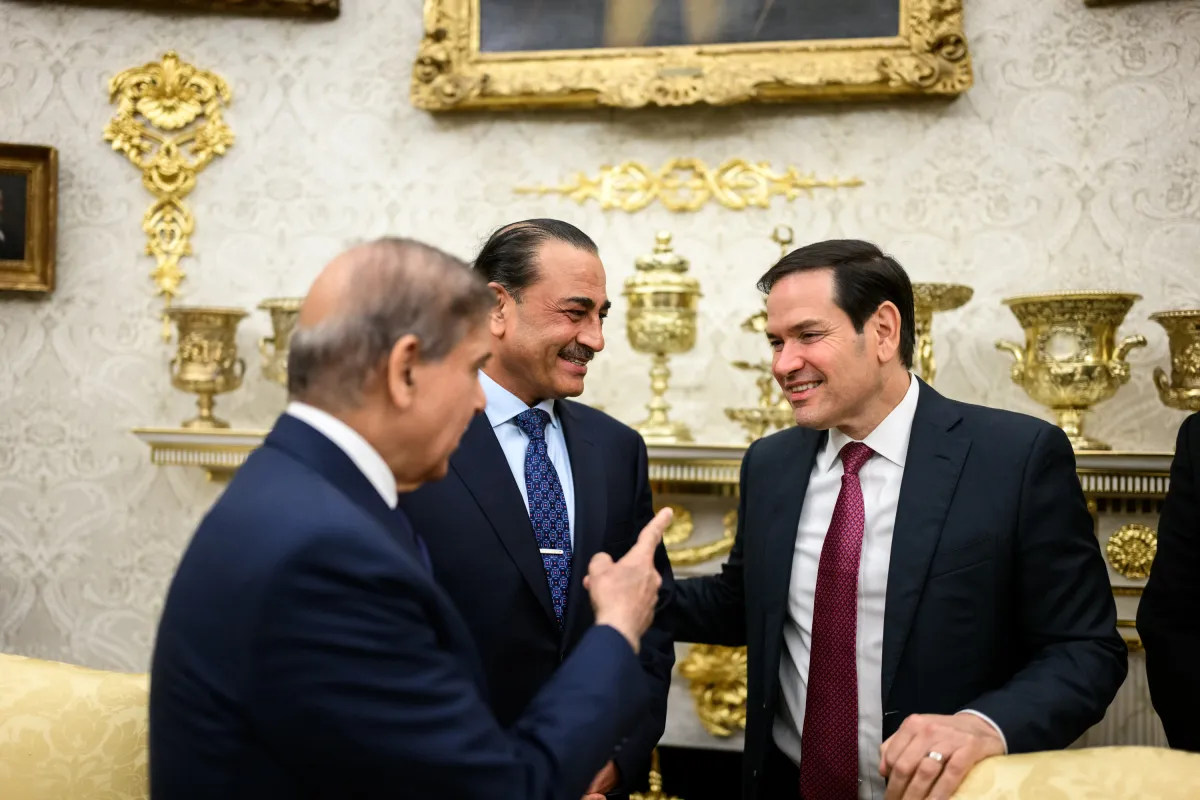
Pakistan’s sudden usefulness as a mediator between the United States and Iran maybe real for now, but it is unlikely to harden into a durable strategic partnership with Washington. The reason is simple: Pakistan is useful in a crisis, yet still viewed in Washington as an unreliable long-term bet, especially because of terrorism concerns, chronic instability, and a weak economic base.
Pakistan’s diplomatic moment emerged from a convergence of events rather than a wholesale American rethinking of the relationship. Reporting this spring described Islamabad as helping Washington and Tehran communicate during the Iran-Israel-U.S. war, with Pakistan hosting talks and serving as a back-channel bridge at a moment when direct communication was badly needed. Analysts also linked this opening to earlier Pakistan-U.S. channel-building under Donald Trump, including the improved mood after Pakistan helped with a suspect tied to the 2021 Kabul airport bombing and Trump publicly praised Islamabad.
That matters because the relationship is being renewed for a narrow purpose, not because old suspicions have disappeared. In Washington, Pakistan is being valued for access and utility, not for trust.
On Capitol Hill, however, the basic story has not changed much: Pakistan is still often treated as a partner whose help is welcome but whose assurances are questioned. Coverage from 2025 and 2026 shows lawmakers continuing to raise the familiar accusation that Pakistan shelters or tolerates militant groups, with Brad Sherman publicly urging Pakistan to clamp down on Lashkar-e-Taiba and Jaish-e-Mohammed, and citing the 2002 murder of Daniel Pearl as a stark reminder of the human cost of that ecosystem.
That skepticism is not partisan noise; it reflects a long record of U.S. frustration. Brookings noted that Washington has repeatedly accused Pakistan of providing support or safe haven to the Afghan Taliban and the Haqqani network, and BBC reported that the Trump administration cut security assistance over concerns about terror groups destabilizing the region and targeting U.S. personnel. The result is a basic credibility problem: even when Pakistan is helpful, many U.S. officials still assume the help may be conditional, transactional, or reversible.
This is why names like Ted Cruz and Cory Booker matter in the debate, even when their public exchanges are not specifically about Pakistan. Cruz has become one of the most forceful Senate voices warning about terrorism risks, while Booker has represented the counterweight of caution and institutional oversight in recent debates over threats and security policy. In the Pakistan context, the broader point is that Capitol Hill remains highly sensitive to any sign that Islamabad might be playing both sides of the counterterrorism ledger.
Brad Sherman’s recent remarks sharpen that concern. He explicitly linked Pakistan-based groups to attacks and urged stronger action against sanctuary and impunity, reinforcing a bipartisan pattern: members of Congress may differ on tactics, but many still see Pakistan through the lens of militant tolerance rather than strategic reliability. That makes it difficult for any temporary diplomatic breakthrough to become a deep strategic reset.
Pakistan’s economic fragility also limits how far the relationship can go. Recent IMF-linked reporting shows Pakistan under renewed pressure from oil volatility, external vulnerabilities, and weak access to commercial borrowing, while the IMF cut its growth outlook and warned about how regional shocks can hit countries with limited reserves and high import dependence. In practical terms, that means Pakistan is a crisis manager, not yet a magnet for sustained American trade or investment.
A long-term strategic partner is usually one that can absorb capital, protect assets, and offer predictability. Pakistan’s macroeconomic record, by contrast, points to repeated balance-of-payments stress, IMF dependence, and investor caution. So even if Washington wants Pakistan to help on Iran, it still has little reason to treat Pakistan as a stable economic partner on the scale of India, the Gulf, or other larger destinations for U.S. commercial strategy.
Internal security problems further narrow Pakistan’s appeal. Balochistan remains one of the country’s most fragile and insurgency-hit regions, with a 2026 security brief describing coordinated attacks that killed civilians and security personnel and noting a sharp rise in violence during 2025. These are not isolated incidents; they are reminders that Pakistan’s periphery remains contested and that state authority is uneven in territory that matters for transit, ports, and extraction.
That has direct implications for foreign confidence. Investors do not simply look at growth rates; they look at whether supply chains, personnel, and contracts can survive chronic insurgency and political volatility. Balochistan therefore weakens Pakistan’s case as a long-term trade or infrastructure partner, even as it occasionally strengthens Pakistan’s leverage as a state that must be engaged because it sits on a dangerous fault line.
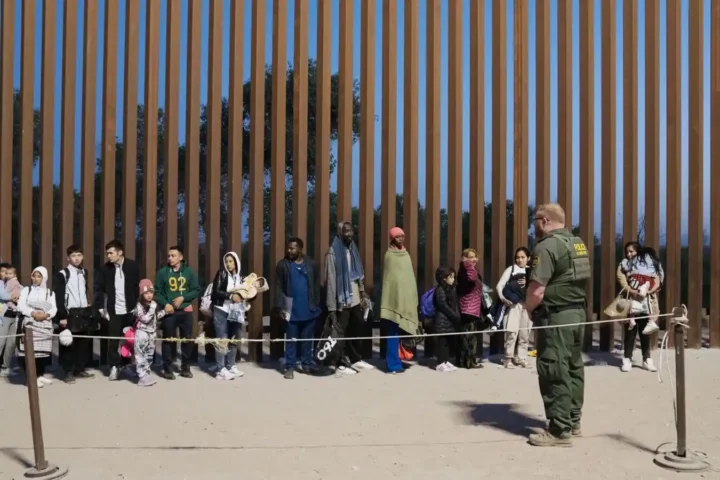
The Afghanistan dimension adds another layer of reputational damage. Amnesty International said Pakistan’s “Illegal Foreigners Repatriation Plan” has involved arbitrary and forcible expulsions of Afghan nationals, including refugees and asylum seekers, and warned that the policy violates the principle of non-refoulement. Human Rights Watch likewise reported that forced returns expose Afghans to persecution, destitution, and deteriorating conditions inside Afghanistan.
This is not just a humanitarian issue; it is a diplomatic one. When Pakistan is seen tightening pressure on vulnerable Afghans while simultaneously seeking recognition in Washington as a responsible interlocutor, the contrast undercuts its moral and political case. It also raises the question of whether Pakistan is solving regional problems or simply externalizing them onto weaker neighbors and displaced populations.
Pakistan’s current relevance in Washington is therefore likely to be episodic rather than structural. It can still matter in moments of war, mediation, and back-channel diplomacy, especially when the Trump administration or other U.S. actors need a channel to Tehran. But mediation utility is not the same thing as strategic trust, and trust is what long-term partnerships require.
The deeper problem is that Pakistan’s strengths and weaknesses are tied together. Its location, channels, and intelligence reach make it useful in emergencies, yet its record on militancy, its weak economy, its provincial insecurity, and its Afghan policy make it hard to imagine as a dependable long-horizon partner. Washington may keep talking to Pakistan because it has to, but that is a very different thing from rebuilding a durable strategic compact.
The most likely future is a transactional one: occasional cooperation, periodic praise, recurring suspicion. Pakistan may remain diplomatically relevant in Washington, but relevance is not the same as reassurance—and it is reassurance, above all else, that Pakistan has failed to earn over the long run.