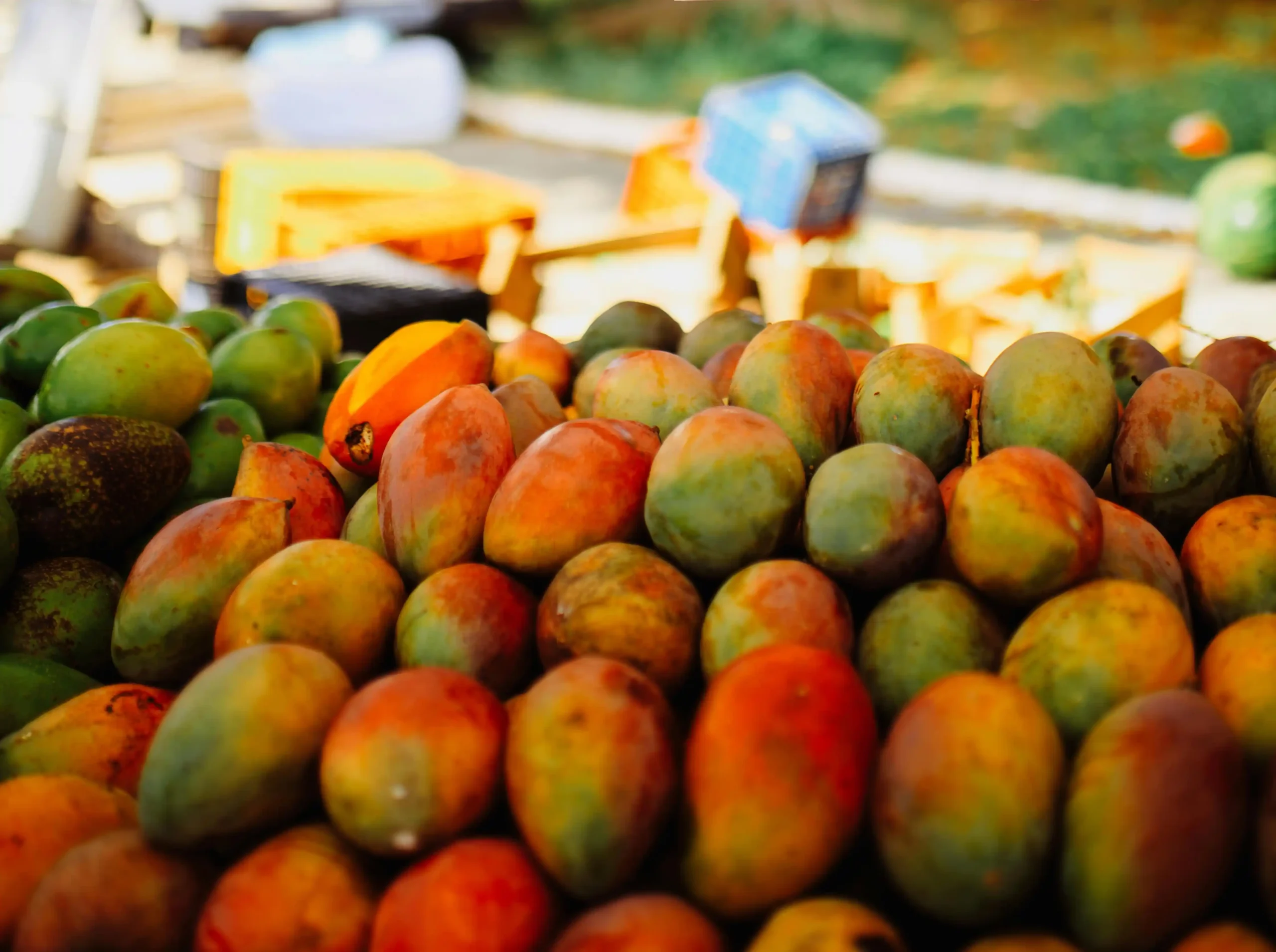
Every spring, a small fruit briefly reveals how globalization really works. Indian mangoes, especially Alphonso and Kesar varieties, arrive in the United States not as ordinary produce but as objects of longing, nostalgia, and status, the kind of luxury that can sell out before the pallet is unloaded. The recent Wall Street Journal report on Americans “doing anything” to get Indian mangoes captures the spectacle, but the more interesting story is economic: why a fruit abundant in India remains scarce, expensive and fiercely desired here in the U.S.
India is the world’s mango powerhouse. It produces more than 20 million metric tonnes a year, roughly half of global supply, yet exports only a small share of fresh fruit. APEDA says India shipped 29,938.4 metric tonnes of mangoes worth $56.5 million in 2024-25, with the UAE, the U.S., the U.K., Kuwait, and Qatar among the main destinations. That is the central paradox of Indian mango economics: an agricultural giant with a premium export niche so narrow that even tiny shifts in demand can make the market feel feverish.
The U.S. market is a case study in scarcity pricing. Indian mangoes are typically sold in boxes that can cost around $50 to $60, with some reporting boxes selling out before arrival. By contrast, the mangoes most Americans buy year-round, generally from Mexico and Latin America, can cost under $10 per box, reflecting a completely different supply chain and product positioning. The gap is not merely about taste. It is about seasonality, perishability, import frictions and the willingness of buyers to pay for memory, authenticity and distinction.
That willingness is strongest among Indian Americans, for whom mangoes are not just fruit but a seasonal return ticket to childhood and home. Yet the market is broader than diaspora nostalgia. The current frenzy suggests that Indian mangoes are also becoming a curated American food experience, the way certain coffees, cheeses or single-origin chocolates move from ethnic specialty to luxury commodity. In other words, Indian mangoes have crossed from immigrant commerce into premium consumer branding.
What makes the business so costly is the physical reality of the fruit. Mangoes are fragile, have a short shelf life and tolerate little delay. Unlike hardier agricultural exports, they cannot sit comfortably in a warehouse while distributors wait for better prices. The supply chain requires rapid, carefully timed handling from orchards to irradiation facilities to air cargo to retail shelves. A minor paperwork error or transport delay can erase the value of an entire shipment.
The U.S. import regime is another reason Indian mangoes remain a premium item. Indian fruit must undergo irradiation at certified facilities and inspection under the USDA-APHIS framework before entering the American market. That regulatory process protects plant health, but it also adds cost, time and operational risk. In May 2025, 15 shipments were rejected after documentation problems tied to irradiation paperwork, a reminder that the mango trade is as much about compliance systems as agricultural skill.
And yet demand keeps rising. APEDA-linked reporting and trade updates show exports to the U.S. growing sharply, including a 130% jump in value to $10.01 million in FY24 from $4.36 million in FY23. That growth occurred despite high costs and repeated logistics stress, suggesting that Indian mangoes are not competing on price alone. They are competing on identity, variety and the psychology of scarcity. A product becomes more valuable, not less, when buyers believe the season will be over before they can think twice.
The economics here are unusually revealing because they show the difference between abundance and accessibility. India grows immense quantities of mangoes, but much of that crop is consumed domestically. Exporting fresh mangoes requires meeting exacting standards, moving quickly and preserving quality over long distances. The result is a world in which the largest mango-producing nation is still a relatively modest exporter, and the U.S. market for Indian mangoes remains small in tonnage but large in emotional value.
There is also a labor story hiding inside the luxury aura. The mango economy depends on growers, graders, irradiators, freight handlers, importers and retailers operating within a narrow window. Profit margins are thin, even when consumer demand is intense. This is why mango season feels less like a simple retail cycle than a high-wire act: one bad certificate, one delayed flight, one missed temperature target, and the fruit is no longer premium, just perishable.
The market’s expansion also reflects a larger change in how Americans eat. In the last decade, the U.S. grocery aisle has become more open to regional specialties, imported fruits and stories of origin. Indian mangoes fit this shift perfectly. They are seasonal, limited, transport-intensive and recognizable enough to be marketed by variety. Alphonso, often called the “king of fruits,” and Kesar have become labels that signal taste as much as geography.
But there is a limit to the mango boom. The fruit’s economics are constrained by climate, supply, certification and airfreight costs. Unlike a packaged snack or bottled drink, a mango cannot be scaled endlessly without sacrificing what makes it desirable. That means the current demand surge is likely to remain a premium niche rather than a mass-market revolution. The fruit will stay expensive precisely because it is hard to move, hard to store and hard to replace.
That scarcity may ultimately be the point. In a food economy dominated by convenience and sameness, Indian mangoes offer the opposite: a brief, intense, seasonal object that must be chased, tracked and consumed quickly. Their value comes from the combination of terroir, memory and logistics. They are not just fruit in transit; they are a reminder that the most coveted goods are often the ones least able to behave like ordinary commodities.
Indian mangoes may never become cheap or common in America. But they have already become something arguably more interesting: a high-end proof that trade is never just about supply and demand. It is about regulation, transport, identity and the emotional premium people assign to a taste they cannot get all year. That is why the frenzy persists. The mango is not only delicious; it is rare in the specific way modern consumers understand rarity, as an inconvenience they are happy to pay for.