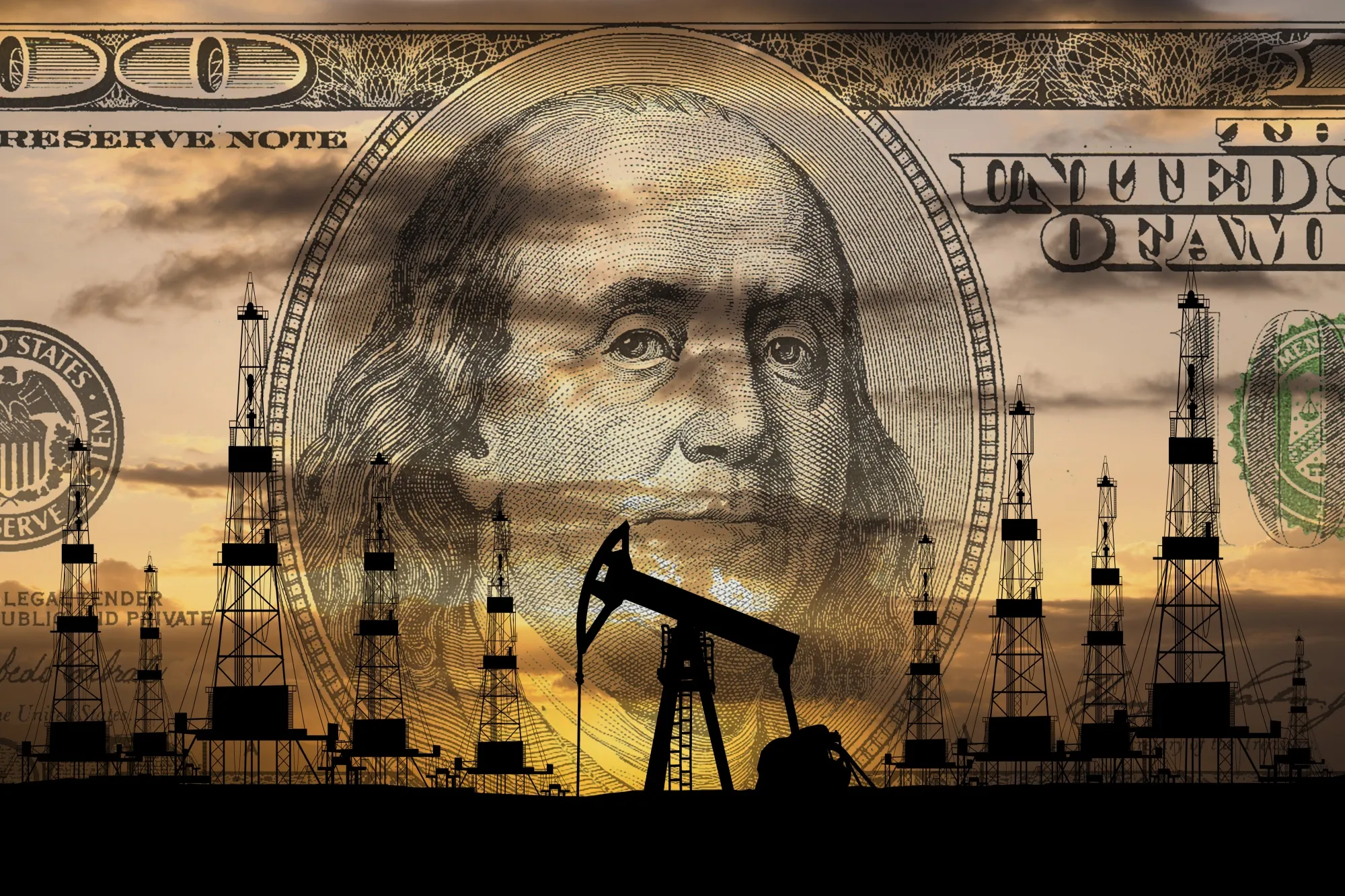
For the first time since World War II (not taking into account the COVID years), U.S. public debt has eclipsed the nation’s annual output, and that watershed is already altering risk calculations across global markets. Debt held by the public reached about US$31.27 trillion while nominal GDP for the 12 months to March was roughly US$31.22 trillion, pushing the debt-to-GDP ratio just over 100% and forcing investors and policymakers to reassess vulnerabilities in the dollar-centred order.
A debt-to-GDP ratio above 100% is not merely symbolic: it changes incentives for large foreign holders of U.S. assets and raises the odds that a geopolitical shock could trigger a painful re-pricing of those assets. Gulf sovereign wealth funds together manage a very large stock of U.S. investments — estimated in the low trillions of dollars — and officials in several Gulf states are openly reassessing allocations amid regional tensions linked to U.S.-Israel operations around Iran. That mix — concentrated external exposure to U.S. markets plus rising political uncertainty — turns what might have been a long-term fiscal debate into an immediate market risk.
U.S. Treasuries and other dollar assets are prized for their depth and liquidity, but that same openness is a structural vulnerability: investors can — and when confident wanes, do — sell quickly. Large-scale selling by Gulf holders to raise liquidity or diversify away from dollars would depress bond and equity prices and reduce the value of collateral across leveraged portfolios. Falling collateral prompts forced deleveraging, which pushes prices down further and spreads stress through credit and funding channels, producing the sort of vicious loop seen in 2008.
Central-bank swap lines — dollar liquidity arrangements between the Federal Reserve and foreign central banks — are the obvious short-term remedy, and U.S. officials have signalled requests for such facilities from Gulf and Asian partners. Swap lines were decisive in 2008 because they allowed foreign banks to obtain dollars without selling assets into a collapsing market, preventing a cycle of fire sales. But they are emergency plumbing, not a structural fix: by sending dollars outward, swap lines temporarily reverse the petrodollar flow and deepen dependence on repeated interventions, masking rather than solving the underlying fiscal mismatch in U.S. finances.
The post-1970s bargain — oil priced in dollars, petrodollars recycled into U.S. assets, and Gulf security backed by Washington — is showing cracks. Iran’s pressure campaign across the Gulf, threats to shipping in the Strait of Hormuz, and doubts about the steadiness of U.S. security guarantees have prompted Gulf managers to prioritise liquidity, currency diversification and sovereign control over revenues. The United Arab Emirates’ decision to leave OPEC effective May 1, 2026, exemplifies this shift: Abu Dhabi signalled a desire for greater autonomy over production and the ability to manage revenues outside cartel constraints, a move that reduces OPEC’s cohesion and could increase medium-term oil-market volatility.
The UAE’s exit underlines two linked dynamics: Gulf producers want the freedom to monetize capacity and shield budgets from cartel-driven constraints, and they are hedging geopolitical risk by loosening institutional ties that once channelled petrodollars back into the U.S. financial system. Analysts note that the UAE’s spare capacity means it can adjust exports to stabilise or influence markets, but the exit also signals fragmentation that could increase price swings and complicate forecasting for importers and investors.
If Gulf holders reduce U.S. exposures, U.S. bond prices would fall (yields rise), stock valuations could weaken, and dollar funding markets might strain — prompting more frequent use of swap lines and other emergency measures. Normalising such crisis tools undermines the long-run credibility of U.S. assets and accelerates the shift toward currency diversification already underway among many emerging economies. For importers such as India, this environment presents a mixed picture: lower or more flexible UAE production could ease India’s import bill and reduce fuel-price volatility, but higher global yields and a disorderly market re-pricing would raise India’s external financing costs and could pressure capital inflows.
Beyond headline numbers, the risks come from decades of financialisation — stretched valuations in equities, bonds and property — coupled with geopolitical rivalry and a gradual erosion of the institutions that supported dollar dominance. Swap lines and monetary backstops buy time, but repeated reliance on them treats symptoms rather than causes: they stabilise prices temporarily while leaving fiscal imbalances and geopolitical fragilities unresolved.
For the United States: restoring investor confidence requires credible medium-term fiscal strategies, not merely episodic liquidity. Without a plausible path to stabilise the debt trajectory, every geopolitical flare-up will look like a potential trigger for portfolio reallocation. For Gulf governments: diversifying currency exposure and increasing liquidity in sovereign portfolios is prudent insurance, but selling too quickly risks crystallising losses and depressing asset values at the worst moment. For countries dependent on energy imports, judicious hedging, larger reserves and flexible supplier relationships will be crucial.
Crossing the 100% debt-to-GDP threshold is a stress test for the dollar-centred order more than an immediate solvency crisis. Gulf capital — including the multi-trillion-dollar pool managed by sovereign funds — is reassessing how much to park in U.S. markets as regional warfare, threats to shipping and political uncertainty grow. That reassessment is both signalled and accelerated by the UAE’s exit from OPEC, which underscores the region’s desire for revenue control and policy autonomy. For countries who rely heavily on imports, such as India, the immediate upside could be lower or more stable fuel costs if Abu Dhabi boosts flexible exports and bilateral arrangements; yet India must also prepare for the secondary effects of higher global yields and episodic market turbulence by strengthening buffers and diversifying financing options.
If policymakers continue treating swap lines and repeated interventions as substitutes for fiscal discipline, they will buy short-term calm at the expense of a slowly eroding anchor for international finance. The alternative — a credible mix of fiscal consolidation, better international liquidity frameworks and deeper, diversified energy and currency arrangements — is politically difficult but necessary to prevent future crises from quickly becoming global ones.