Iran’s push to collect Strait of Hormuz oil transit tariffs in Chinese yuan signals a real, though gradual, erosion of the US “petrodollar” system at the margins, but it does not yet amount to a decisive collapse of dollar dominance in global energy or finance. The move deepens de‑dollarisation within a China‑Russia‑Iran bloc and chips away at US leverage, even as the dollar still anchors most oil trade, global invoicing and central‑bank reserves.
What the petrodollar actually is
The “petrodollar system” emerged from US–Saudi deals in the mid‑1970s, after the collapse of the Bretton Woods gold standard and the 1973 oil shock. Under a series of largely secret agreements, Saudi Arabia agreed to price its oil exclusively in US dollars and recycle surplus oil revenue into US Treasuries and other American assets, in exchange for security guarantees and arms from Washington. Other OPEC states followed, and by the late 1970s virtually all internationally traded oil was priced and settled in dollars, creating automatic global demand for the currency and cementing its role as the dominant reserve and invoicing unit.
Iran’s yuan tariffs through the Strait of Hormuz
Amid the current conflict, Iran has threatened or imposed tariffs on vessels transiting the Strait of Hormuz and indicated that these fees should be paid in Chinese yuan rather than US dollars. Estimates suggest such tariffs could yield between 40 and 50 billion dollars per year for Tehran if fully implemented, providing a significant revenue stream partly insulated from US financial sanctions. Reports indicate that some vessels bound for China, India and Japan have already paid these transit fees in yuan, and the Iranian parliament is working to formalise a system for such payments.
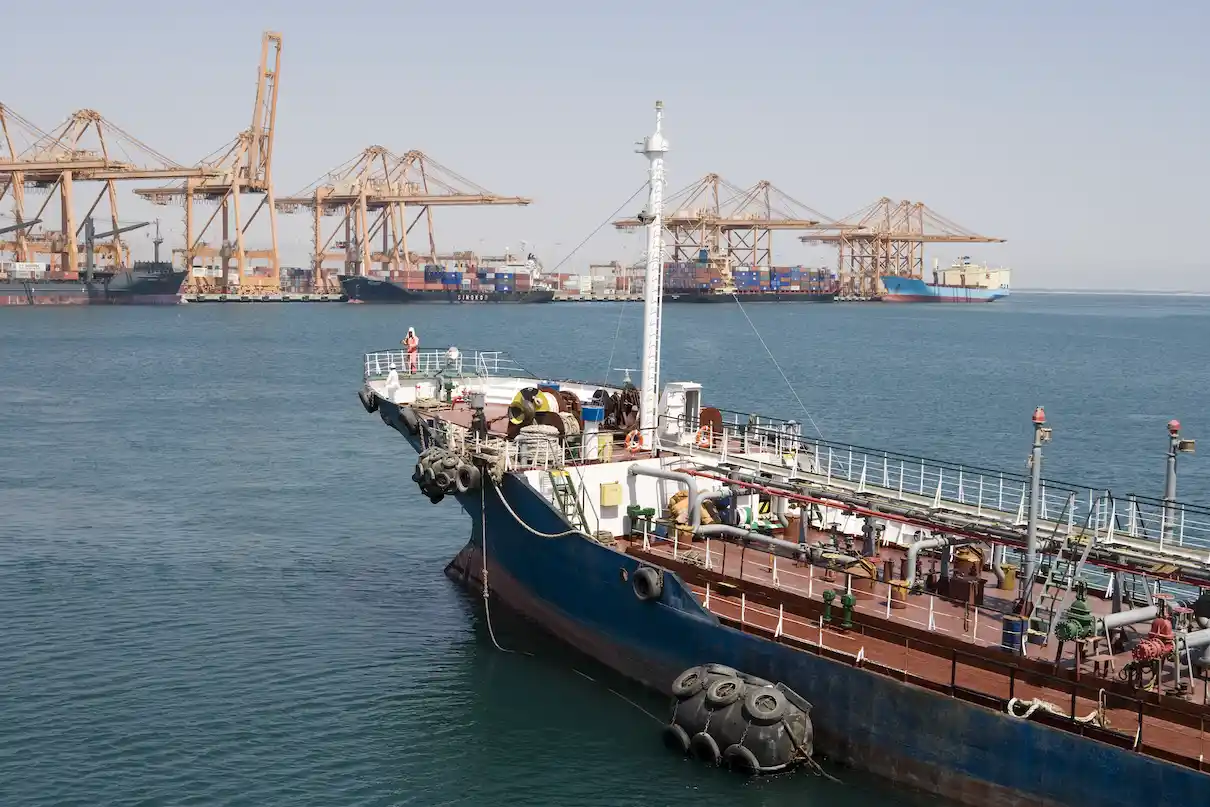
The strategic significance lies in Hormuz itself: in normal times around 20 percent of global oil and natural‑gas shipments pass through this narrow choke point, giving Iran substantial leverage over seaborne energy flows. During the current war, Iran has exported around 1.22 million barrels per day to China—down from a pre‑war high of roughly 2.16 million barrels per day in February, but still a large volume effectively tied into a yuan‑based payments ecosystem.
Iran–China oil trade and sanctions evasion
Even before the latest confrontation, China had become Iran’s indispensable energy customer, reportedly taking 80–90 percent of Iranian oil exports by 2025—about 1.4 million barrels per day, roughly 13 percent of China’s crude imports. Much of this trade already avoids the US‑dominated banking system through “dark fleet” tankers, discounted crude, and settlement in non‑dollar currencies, including yuan. For Tehran, steering Hormuz tariffs and oil sales into yuan channels further reduces exposure to US dollar clearing, surveillance and asset freezes, which are the core enforcement mechanisms of American sanctions.
For Beijing, paying in yuan deepens bilateral ties and uses Iran as a testing ground for its broader strategy of expanding the renminbi’s role in commodity trade without fully liberalising its capital account. This reciprocity—China as buyer of last resort for sanctioned oil, Iran as a willing “petroyuan” partner—creates a small but symbolically important alternative network to the petrodollar system.
The broader rise of the “petroyuan”
Iran is not alone in experimenting with yuan‑denominated energy flows. Russia’s Gazprom Neft has reportedly settled all crude sales to China in renminbi since 2015, while post‑2022 sanctions have pushed a growing share of Russia–China trade, including energy, into yuan settlement channels. Other commodity exporters such as Venezuela and some Indonesian suppliers have invoiced parts of their China‑bound oil or coal in yuan, although volumes remain modest relative to global trade.
In the Gulf, China has signed currency‑swap agreements with the UAE, Qatar and Saudi Arabia, and in March 2023 the UAE and a Chinese buyer completed the first LNG purchase settled in yuan. Saudi Arabia and China have also agreed on a swap line worth nearly 7 billion US dollars equivalent, and Riyadh is in active talks about pricing at least some oil exports to China in yuan, a shift that would directly encroach on the petrodollar’s core terrain.
Yuan’s reach: still small but growing
Measured globally, the yuan’s advance is noticeable but far from dominant. SWIFT data show the yuan’s share of global cross‑border payments rising from near zero in 2010 to around 3.7–4.7 percent in 2024–2025, making it the fourth most active payment currency behind the dollar, euro and pound. In March 2024 the yuan’s share of global payments hit about 4.69 percent, overtaking the yen and marking a record since SWIFT updated its metrics, while the dollar still accounted for roughly 47–49 percent and the euro around 22 percent.
In trade finance, the renminbi’s share reached roughly 6 percent of global trade finance by late 2023, triple its 2020 level, making it the third‑most used currency in that niche after the dollar and the euro. Around 26 percent of China’s own goods trade was settled in RMB by the end of 2023, and some partners—most notably Russia—now settle a large fraction of their exports to China in yuan. These numbers show that the yuan is becoming a meaningful regional and commodity‑trade currency, even as it remains a secondary player globally.
The dollar’s still‑entrenched dominance
Against this backdrop, the dollar’s structural position remains formidable. The Atlantic Council’s “Dollar Dominance Monitor” estimates that the dollar is used in about 54 percent of export invoicing worldwide and touches roughly 88 percent of all foreign‑exchange transactions, reflecting its role as the primary vehicle currency for trade and finance. European Central Bank research similarly finds that the dollar is used to invoice about 40 percent of global exports, far above the share of exports destined for the United States itself, underscoring its role as the default invoicing currency even in trade between third countries.
On the reserve side, IMF COFER data show that the dollar still represents around 56–59 percent of disclosed official foreign‑exchange reserves, a share that has edged down only gradually over the past two decades. The renminbi’s share of global reserves is roughly 2 percent, essentially flat in recent years despite China’s push, and remains constrained by capital controls and shallow, less‑liquid financial markets compared with US Treasuries. In international payments more broadly, the US Federal Reserve estimates that roughly half of all cross‑border payments are conducted in dollars, a ratio that has actually ticked up slightly in recent years.
How Iran’s move affects US power
The dollar’s dominance gives Washington outsized coercive power: any transaction that touches the US banking system or dollar‑clearing networks can be monitored, blocked or sanctioned, making energy exporters acutely vulnerable when they rely on dollar revenues parked in US‑linked institutions. By diverting a portion of oil‑related and transit revenues into yuan, Iran reduces its direct exposure to these tools, complicates enforcement of US sanctions, and signals to other states that alternative channels are possible—especially when aligned with China and Russia.
If major regional powers such as the UAE, Bahrain, Qatar, Kuwait and Saudi Arabia ultimately agreed to pay Iran’s Hormuz tariffs in yuan, some analysts argue it would mark a “systematic erosion of the petrodollar system and the emergence of the petroyuan as a credible, institutionally embedded alternative framework for settling global energy transactions.” Such a shift would force even US allies like Japan, South Korea and the Philippines—already under economic pressure from Gulf instability—to weigh higher costs for dollar‑based oil against deeper financial ties with China.
Structural limits to de‑dollarisation
Yet there are hard constraints on how far and how fast this trend can go. The yuan’s global role is expanding, but it still accounts for less than 7 percent of foreign‑exchange transactions and only a small share of global reserves, while the dollar retains deep, liquid markets, an unrivalled Treasury bond market and strong legal protections that many central banks and investors still trust. Much of the recent increase in yuan usage has been concentrated in a cluster of sanctioned or politically aligned economies—Russia, Iran and a few others—rather than broad‑based adoption across advanced and emerging markets.
Moreover, China maintains significant capital controls, a managed exchange rate and occasional opaque interventions, which limit the renminbi’s attractiveness as a truly global reserve and settlement currency for large, conservative asset holders like central banks and pension funds. Without more open and predictable access to Chinese financial markets, many countries may be willing to settle trades in yuan but will hesitate to hold large renminbi reserves, keeping the dollar’s central role intact even as transactional use diversifies.
Is the petrodollar in secular decline?
Put together, these trends point less to a sudden collapse of the petrodollar than to a slow diversification of the monetary order, with Iran’s yuan tariffs serving as an important early marker rather than an endgame. The dollar still dominates oil pricing, trade invoicing, reserves and FX transactions, but its share is gradually edging down, while the yuan and euro gain niche roles in specific regions, sectors and political blocs.
In energy markets specifically, a bifurcated pattern may emerge: dollar‑denominated “mainstream” barrels for most of the world, and yuan‑denominated flows concentrated among countries closely tied to China or shut out of Western finance, such as Iran and Russia. Iran’s demand for yuan tariffs is therefore both a symptom and a catalyst of this de‑dollarising trend—significant enough to erode the petrodollar’s aura of inevitability, but not yet powerful enough to dislodge the dollar from its central position in the global oil and financial system.