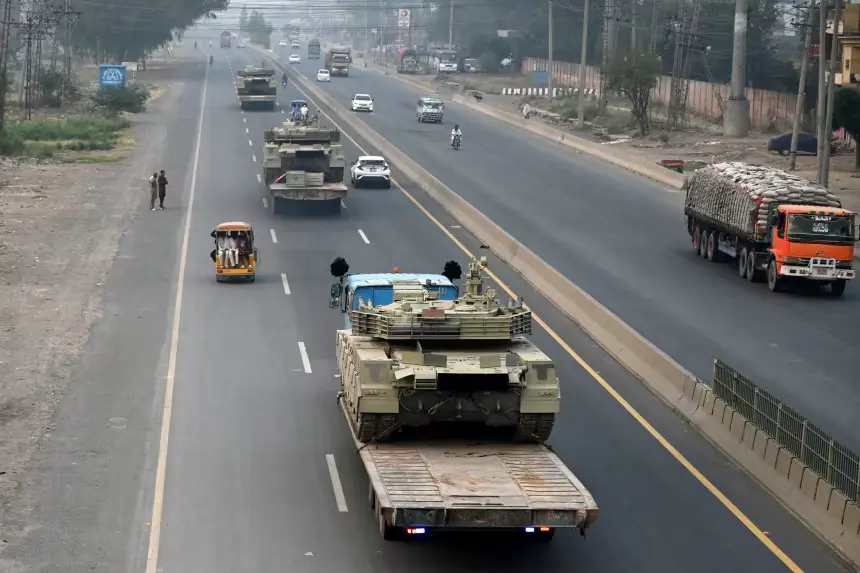
India’s four-day war with Pakistan in May 2025 left Pakistan facing intensifying political, economic, and social crises at home even as its leaders worked hard to project strength and diplomatic relevance abroad. One year on, the gap between Pakistan’s domestic troubles and its external narrative of resilience and “victory” has become a defining feature of its postwar reality.
The 2025 conflict was triggered by an attack on April 22 in Pahalgam, Jammu and Kashmir, where Islamist militants killed 26 mostly Hindu tourists, marking one of the deadliest attacks in India in decades. India blamed Pakistan-based groups and launched “Operation Sindoor” on May 7, striking terrorist infrastructures at nine locations across Pakistan and Pakistan-administered Kashmir.
The confrontation involved drones, missiles, fighter jets, and artillery fire, killed at least 50 people along the Line of Control, and displaced thousands on both sides before a ceasefire was reached on May 10.
While both governments subsequently claimed strategic success and deterrence gains, the war exacerbated Pakistan’s underlying structural vulnerabilities, especially because it hit during a period of economic fragility and intense political contestation.
Political Crisis and Militarised Governance
A year after the war, Pakistan’s domestic political landscape is marked by instability, deep distrust, and the continued dominance of the military over civilian institutions. Party competition between Pakistan Tehreek‑e‑Insaf (PTI), Pakistan Muslim League‑Nawaz (PML‑N), and Pakistan Peoples Party (PPP) has remained intense, with frequent power struggles and no cohesive long‑term governance strategy.
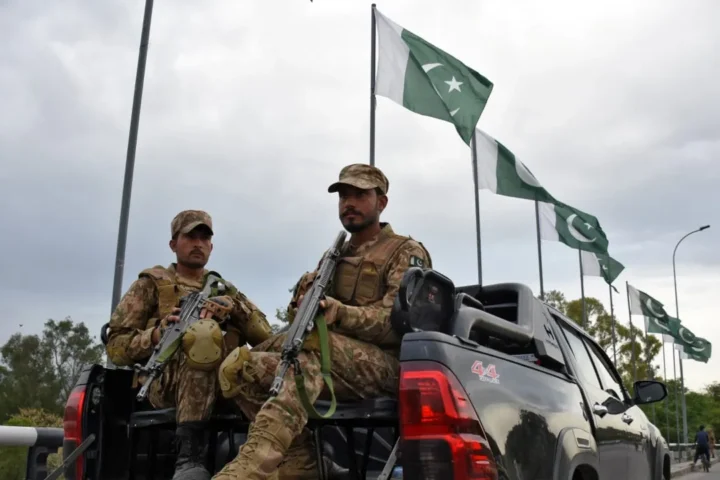
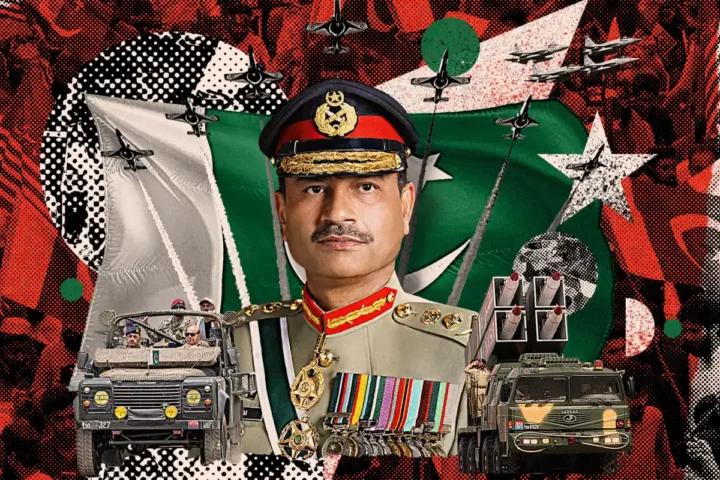
The armed forces, led by General Asim Munir, have consolidated influence over core state decisions and framed many political disputes as security problems, effectively “replacing governance with military management,” particularly visible in Balochistan and other restive regions. Reports note patterns of mass arrests, enforced disappearances, and politicised legal cases against opposition figures and activists, which deepen perceptions of a shrinking democratic space.
The 2025 war reinforced the military’s centrality by allowing it to present itself as the guardian of national sovereignty, but it did not resolve underlying grievances about federal power‑sharing, provincial autonomy, or civil-military imbalances. Instead, the conflict’s anniversary finds Pakistan still struggling with episodes of civil unrest and simmering demands for greater autonomy or independence in Sindh and Pakistan‑administered Kashmir.
Economic Stress and Social Strain
The war’s timing aggravated an already severe economic crisis characterised by high inflation, low growth, and looming debt problems. Analyses of Pakistan’s economic situation in 2025–26 highlight a combination of negative growth, inflation around 6 percent in FY25, and a poverty rate exceeding 42 percent, affecting over 100 million people. These pressures leave little fiscal room for post-conflict reconstruction or social protection.
The expiration risk of an IMF Stand‑By Arrangement by mid‑2025 raised fears of sovereign default without renewed external support, while India’s suspension of key provisions of the Indus Waters Treaty directly threatened Pakistan’s heavily agriculture‑dependent economy. Agriculture represents around a quarter of GDP and employs about 40 percent of the workforce, so disruptions to water flows translate into food insecurity, lost livelihoods, and heightened rural discontent.
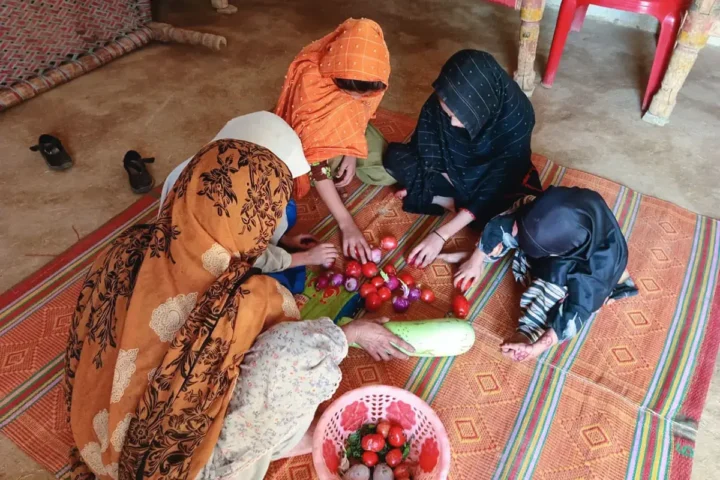
At the social level, the country faces what experts call an education and health emergency: some 23 million children are out of school and a large share of those enrolled experience learning deprivation, while child stunting affects around 40 percent of children and preventable diseases kill over a thousand children per day. These conditions interact with postwar uncertainty, persistent poverty, and displacement in border regions to create a combustible environment, especially as communities in Pakistan-administered Kashmir and Balochistan perceive themselves as bearing the costs of conflict without sharing in its supposed strategic benefits.
The “Frozen” Conflict and Security Overstretch
Regionally, the India–Pakistan relationship a year after the war is often described as a “frozen conflict”: large‑scale hostilities have paused, but core disputes remain unresolved and military postures have hardened. Diplomatic ties are downgraded, cross‑border trade is limited, and both sides retain forward‑deployed forces and offensive doctrines that keep escalation risks alive.
For Pakistan’s security establishment, this continuing tension is compounded by challenges on other fronts, including a more hostile security environment along the Afghan border and persistent insurgency in Balochistan. Analysts note that the Pakistani military is increasingly stretched between the eastern front with India, the western frontier, and internal security operations, all of which demand resources that the struggling economy can ill afford.
The military’s public messaging, however, has focused on deterrence and readiness. On the war’s anniversary, Pakistan’s armed forces warned that any future aggression would be met with “greater precision and determination,” echoing Indian rhetoric and contributing to a climate in which political leaders on both sides have limited incentives to pursue compromise.
Image Management
Despite these domestic troubles, Pakistan’s leadership has invested heavily in projecting an image of resilience and diplomatic relevance on the international stage. Islamabad has aligned itself with narratives emphasizing its role as a responsible nuclear state and a key mediator in broader regional crises, especially between the United States and Iran.
After the May 2025 conflict, Pakistan publicly endorsed U.S. President Donald Trump’s claims that Washington played a crucial role in brokering the ceasefire, in contrast to India’s insistence that the truce emerged from direct military channels. By thanking the United States and highlighting its cooperation on counterterrorism and regional diplomacy, Pakistan sought to rehabilitate its image with Western capitals and regain strategic attention lost in previous years.
Commentators have described this as an “image makeover,” in which Pakistan emphasizes its mediating role in U.S.–Iran tensions and presents itself as a stabilising actor, even as reports continue to link elements within the country to militant networks and highlight persistent human rights concerns. In this narrative, the 2025 war is framed as evidence of Pakistan’s resolve and victimhood rather than a symptom of policy failures, and official messaging tends to downplay or externalise domestic political and economic problems.
Balochistan and Pakistan‑Administered Kashmir
Two illustrative cases show how Pakistan’s domestic crises contrast with its quest for external prestige.
In Balochistan, observers describe a “structural crisis” where governance is increasingly militarised and political grievances over resource distribution, representation, and rights are recast as security threats. Military operations, enforced disappearances, and tight control over local politics have deepened resentment, while economic projects, including those linked to China–Pakistan Economic Corridor (CPEC), are frequently perceived by locals as extractive rather than developmental.
Internationally, Islamabad portrays Balochistan as a stable corridor for connectivity and investment, downplaying ongoing insurgency and rights abuses. This discrepancy between the external development narrative and the internal reality of repression and underdevelopment illustrates how the state simultaneously seeks foreign capital and legitimacy while failing to address the root causes of unrest.
In Pakistan‑administered Kashmir, border communities have lived with the direct consequences of the 2025 conflict and its aftermath. Villages near the Line of Control that were shelled during Operation Sindoor and Pakistani retaliatory fire report lingering fear, displacement, and slow reconstruction one year later. These residents often feel excluded from the national narratives of heroism and victory that dominate official commemorations, instead experiencing the war as another episode of loss and uncertainty.
Yet in international forums, Pakistan continues to present itself as the defender of Kashmiri rights against Indian abuses, focusing on diplomatic campaigns at the United Nations and in Western capitals. While concerns about rights in Indian-administered Kashmir are real and widely reported, this external advocacy often overshadows discussion of governance shortcomings and constraints on political freedom in Pakistan‑administered areas.
The Long‑Term Risks
A central dynamic one year after the India–Pakistan war is the coexistence of rival narratives of success and loss. In Indian discourse, Operation Sindoor is celebrated as proof of New Delhi’s willingness to impose costs on Pakistan for cross‑border terrorism, with leaders praising the “courage, precision, and resolve” of the Indian military. In Pakistan, officials argue that India failed to achieve its strategic aims, that Pakistani deterrence remains intact, and that Islamabad has gained new diplomatic leverage by engaging closely with Washington and positioning itself as a mediator.
However, experts caution that Pakistan’s focus on image management and external messaging does little to resolve its deep domestic challenges. Persistent political instability, militarisation of governance, economic fragility, and social crises threaten long‑term state resilience far more than any single four‑day clash with India. When large segments of the population face poverty, under‑education, and health emergencies, and when peripheral regions feel systematically marginalised, the country’s internal cohesion is at risk.
Moreover, the “frozen” character of the conflict with India keeps defence spending high and constrains opportunities for trade-led growth and regional integration that could help relieve Pakistan’s economic stress. As long as core disputes over Kashmir and cross‑border militancy remain unresolved, Pakistan’s security establishment will have incentives to sustain a narrative of external threat and national glory, even if that narrative masks growing trouble at home.