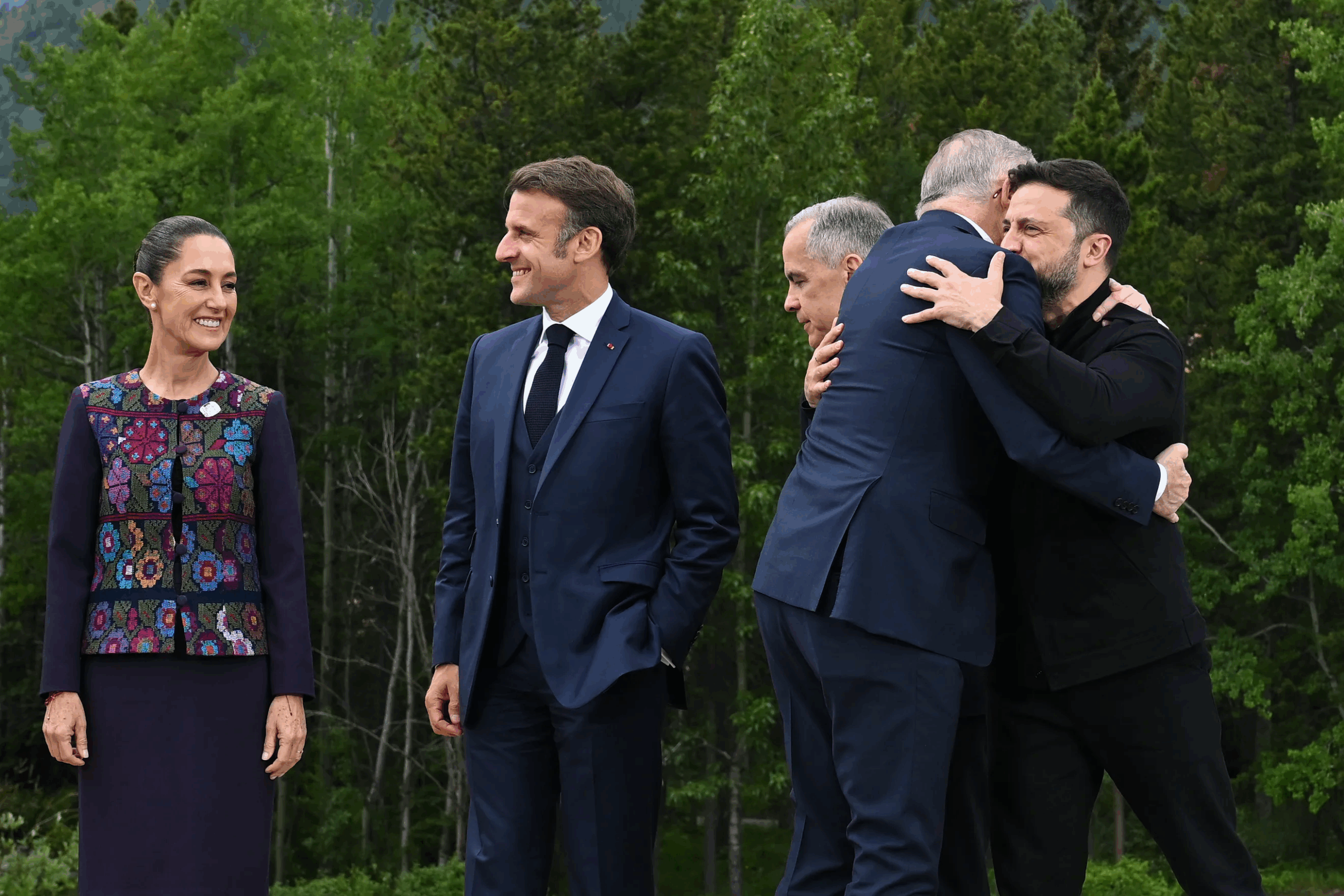
The 2025 G7 summit concluded in the Canadian Rockies under a cloud of fractured consensus and absent leadership, as world leaders failed to issue a unified declaration on the war in Ukraine — a conspicuous omission driven largely by U.S. President Donald Trump’s resistance to stronger language against Russia.
Despite earlier hopes among diplomats for a joint statement showing united G7 backing for Ukraine, negotiations faltered in the final stretch. According to Canadian officials and diplomats close to the discussions, the American delegation, led by Trump, balked at any wording that strongly condemned Moscow or outlined new collective sanctions.
Faced with a stalemate, Canadian Prime Minister Mark Carney, the summit’s host, opted to release a “chair’s summary” instead of a joint communique. The carefully worded document offered tepid support, noting that G7 leaders “expressed support for President Trump’s efforts to achieve a just and lasting peace in Ukraine” and “recognized that Ukraine has committed to an unconditional ceasefire.” It also reaffirmed the bloc’s intention to explore all options to pressure Russia, including financial sanctions — though without any specific measures or deadlines.
At a post-summit press conference, Carney denied any discord, insisting that the language had been agreed upon by all participants, including Trump, during a working dinner. He attributed the absence of a formal joint declaration to shifting geopolitical priorities, pointing instead to developments in the Middle East.
But behind the scenes, officials painted a more complicated picture. “It was clear that it would not have been feasible to find detailed language that all G7 partners could agree to in that context,” one Canadian diplomat said, citing the U.S.’s position as a key negotiator in separate peace talks. As a result, no draft joint statement on Ukraine was circulated among the leaders.
With Washington charting its own path, the rest of the G7 — now informally dubbed the “G6” on Ukraine matters — is pressing ahead. The United Kingdom and European Union reaffirmed plans to push for a lower global price cap on Russian oil, a policy initiative that faces practical hurdles without American alignment. British Prime Minister Keir Starmer admitted implementation remains a challenge: “We’re still looking at how we’re going to make that work.”
In a move to reinforce Canada’s independent stance, Carney announced billions in Canadian aid and loans for Kyiv, along with sweeping new sanctions on Russian entities — described by his office as one of the most significant packages since the onset of the 2022 invasion.
Managing Trump with Care
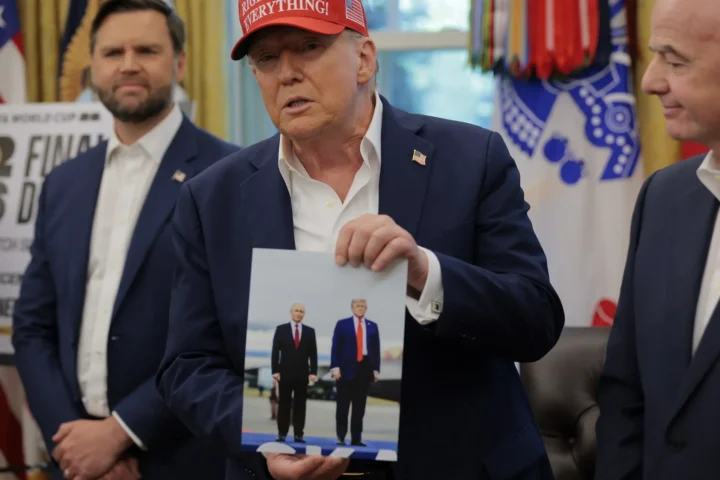
Throughout the summit, G7 leaders appeared to treat Trump with deference, keen to avoid confrontation. European Council President António Costa presented the U.S. president with a signed Cristiano Ronaldo jersey, while Prime Minister Starmer refrained from correcting Trump after he erroneously claimed to have struck a new deal “with the European Union” — instead of the U.K.
Trump departed the summit early, citing urgent developments in the Middle East. Only after his exit did Carney push back publicly against Trump’s revisionist take on Russia’s 2014 expulsion from the G8. “It was personally offensive, to put it mildly, to the citizens of Ukraine and the inhabitants of Crimea,” he said, reinforcing the original reasons behind Russia’s exclusion.
Despite the awkward diplomacy, G7 officials remained cautiously optimistic. “This is realpolitik,” shrugged a German official. “You don’t have to like it, but the U.S. remains indispensable.”
A Japanese delegate echoed the sentiment, saying that each country was “navigating relations with Trump in its own careful way” to preserve the group’s cohesion.
Signs of Progress — and Divergence
Though Trump skipped a key meeting with Ukrainian President Volodymyr Zelenskyy, American officials insist the administration is still committed to pressuring Moscow — albeit on its own terms. Washington is moving forward with a proposal to impose 500 percent tariffs on Russian fossil fuel imports, a measure largely targeting Chinese buyers.
Meanwhile, the EU is advancing its 18th package of sanctions against Russia, aimed at severing remaining energy dependencies.
French President Emmanuel Macron and German Chancellor Friedrich Merz both expressed restrained optimism. “The summit was more successful than expected,” Merz told reporters. On social media, he said he was “cautiously optimistic” that the U.S. would strengthen its Russia stance in the coming months.
Despite the summit’s murky outcome on Ukraine, leaders expressed hope that the G7 — a group once founded on postwar unity — could still find common ground where it matters most.
But this year, that unity appeared as fragile as ever.