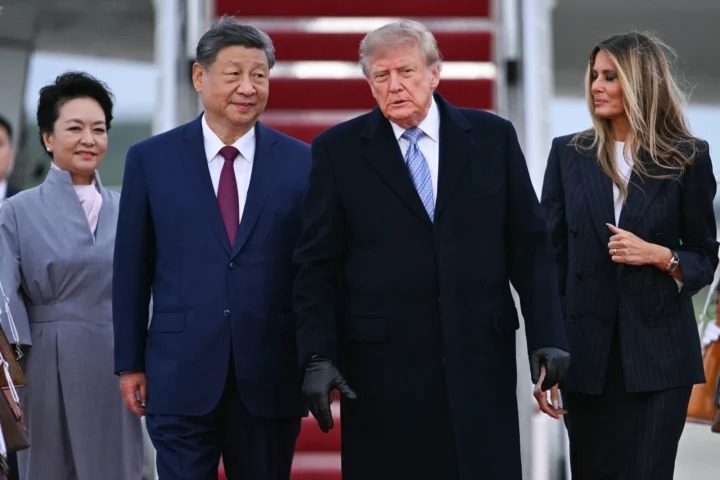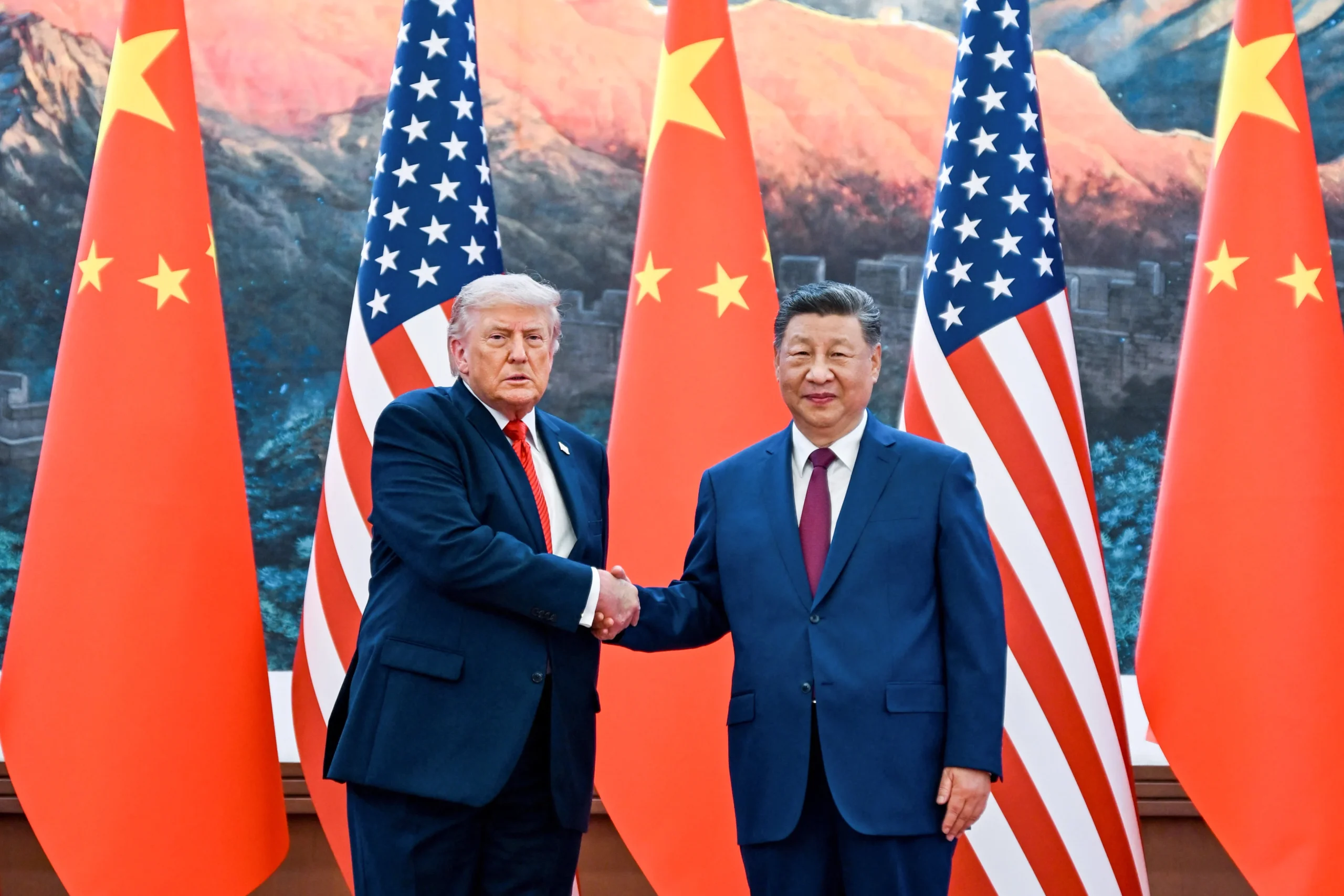
The Trump‑Xi summit in Beijing was staged as a pageant of great‑power stability: honor guards on Tiananmen, children waving flags, two leaders speaking of partnership and peace. Yet the most consequential subject between them—Taiwan—barely appeared in the White House’s account of their talks and never passed Donald Trump’s lips in public remarks. That studied silence is the elephant in the room, and the most dangerous thing about it is that both men likely see the island less as a democracy of 23 million people than as leverage in a larger strategic bargain.
Even as Trump praised a “great” meeting with Xi Jinping and lauded their personal rapport, the official U.S. readout conspicuously omitted any reference to Taiwan. Trump himself dodged a shouted question on the subject while posing with Xi, a restraint striking enough that analysts in Taipei described his silence as, paradoxically, “the best possible outcome.”
Beijing did not share Washington’s reticence. Chinese state media rushed out a readout while the talks were still underway, highlighting Xi’s warning that “the Taiwan question is the most important issue in China‑US relations” and that mishandling it could lead to “clashes and even conflicts.” The asymmetry is telling: Xi is speaking as if Taiwan is the hinge on which the entire bilateral relationship now turns; Trump is acting as if it is an awkward topic best kept off camera.
Beijing’s red line, spelled out
Xi’s message in Beijing did not materialize out of thin air. For months he has used phone calls and summits to drill home a consistent line: Taiwan is “the most significant issue” in the relationship, the “first red line” the United States must not cross. In a November call last year, he told Trump that Taiwan’s “return” was an “integral part of the post‑war international order,” casting unification not as revisionism but as a kind of historical restoration.
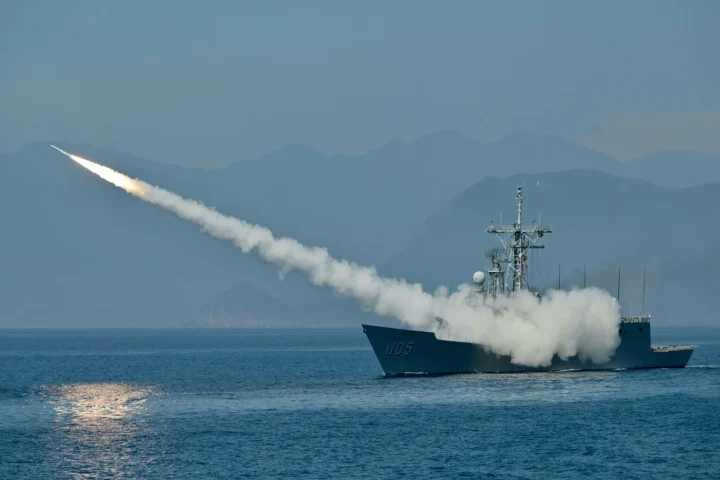
This is not just rhetoric for domestic consumption. China has intensified military pressure on the island—near‑daily incursions by aircraft and warships, gray‑zone harassment at sea, and exercises rehearsing blockades and strikes. Xi has repeatedly refused to renounce the use of force and has linked “national rejuvenation” to resolving the Taiwan question on his preferred timetable. When he tells an American president that mishandling Taiwan could lead to conflict, it is both a threat and a warning that Beijing is building the capabilities to make good on it.
Taipei watches from the balcony
From Taipei, the spectacle of Trump and Xi embracing in Beijing is less reassuring than anesthetizing. Taiwan’s government, led by President Lai Ching‑te, reacted to the summit by stressing that there were “no surprises” and insisting that the real threat to peace lies in China’s “persistent military harassment,” not in the island’s desire to maintain its way of life. Lai has pledged to “resist annexation” and repeatedly underscored that the Republic of China (Taiwan’s official name) and the People’s Republic of China “are not subordinate to one another.”
Beijing brands Lai a separatist; Lai describes Taiwan as a sovereign democracy rooted in a different historical trajectory, with a constitution dating to 1911 and a political system that has little in common with the Communist Party across the strait. The more Taiwan insists on its de facto independence while avoiding a formal declaration, the more it depends on the United States to deter the war Xi hints at but does not initiate. That gives Trump considerable power over the island’s fate—and makes his opacity at the summit all the more unnerving in Taipei.
Washington’s ambiguity, Trump’s transactionalism
For four decades, the United States has tried to keep the peace through “strategic ambiguity”—recognizing Beijing, maintaining unofficial ties with Taipei, and declining to say explicitly whether U.S. forces would defend Taiwan. The Taiwan Relations Act commits Washington to provide the island with “such defense articles and defense services” as are necessary for self‑defense and to view any non‑peaceful resolution as “a threat to the peace and security of the Western Pacific.” That legal architecture has been remarkably durable, even as voices in Washington now argue that ambiguity no longer deters an increasingly capable and assertive People’s Liberation Army.
Trump’s second term has not overturned these pillars, but it has destabilized the foundation beneath them. His administration has approved large arms packages to Taiwan—an $11 billion deal last December and another $14 billion package that has been languishing at the State Department, delayed in part to avoid angering Beijing ahead of this week’s summit. A bipartisan group of senators has pressed Trump to move ahead, warning him not to treat support for Taiwan as “a negotiating tool in wider economic or diplomatic discussions with China.” Their fear is precisely that a president who prides himself on making deals will see Taiwan’s security not as an obligation, but as a chip.
The risk of a grand bargain in the shadows
At the summit, the contours of a potential Trump‑Xi bargain were visible in the negative space. Xi tied the overall stability of the relationship to how Washington handles Taiwan, hinting that cooperation on trade or Iran might be easier if U.S. arms sales slow and rhetorical support for Taipei softens. Trump, preoccupied with de‑escalating conflicts elsewhere and touting the “great” chemistry with Xi, has every incentive to pocket visible wins and downplay a distant island democracy that cannot vote in U.S. elections.
Speculation in Washington and Taipei before the summit centered on whether Trump might quietly freeze or dilute arms packages, or offer assurances that the United States would not support “Taiwan independence,” in exchange for Chinese concessions on trade or Iran. Xi, for his part, appears reluctant to frame Taiwan openly as a chip—Chinese analysts note he prefers to insist it is a matter for “Chinese on both sides of the strait” to resolve—but his warning that missteps could trigger conflict serves as leverage all the same. A bargain need not be written down to be real; it can exist as a tacit understanding that Washington will be just a bit slower, just a bit stingier, just a bit quieter in helping Taiwan defend itself.
Why Taiwan is not a “problem to be solved”
What vanishes in this style of transactional diplomacy is any sense of Taiwan as a political community with its own voice. Lai has framed Taiwan’s 2024 election and his presidency as a choice “between democracy and autocracy,” arguing that drawing closer to the United States and other democracies is the only way to protect the island’s autonomy. Polling and electoral outcomes have repeatedly shown that most Taiwanese prefer a cautious status quo—neither rapid unification nor formal independence—but on terms that preserve their democratic system and de facto sovereignty.
To treat Taiwan as an irritant in U.S.‑China relations is to invert cause and effect. It is Beijing’s insistence that the island is an “inseparable part” of its territory, coupled with its military build‑up and coercive diplomacy, that has turned the Taiwan Strait into what U.S. strategists now routinely describe as the most dangerous flashpoint in the world. Taipei’s “crime” is not separatism so much as survival: insisting that 23 million people be allowed to decide their own future in the shadow of a larger power that denies their right to do so.
The real elephant: deterrence without delusion
The core problem exposed by the Trump‑Xi summit is not that Taiwan is being discussed too much, but that it is being discussed in the wrong register. Xi frames it as a non‑negotiable red line tied to national rejuvenation; Trump seems to perceive it as one file among many that can be bundled into a larger transactional package. Both approaches risk misreading the stakes. For Beijing, casting Taiwan as an inevitable prize of history can create a momentum toward force it may later regret; for Washington, treating it as fungible undermines deterrence and invites exactly the crisis it wishes to avoid.
A more honest starting point would acknowledge that the United States cannot “solve” the Taiwan issue at a summit in Beijing, and that any attempt to trade it away will be seen across Asia as proof that American security guarantees are negotiable. It would also concede that strategic ambiguity, as traditionally practiced, is fraying under the weight of Xi’s military buildup and the island’s deepening democratic identity. The elephant in the room is not Taiwan itself, but Washington’s unwillingness to say, clearly and publicly, that Taiwan’s security is not for sale—whether to placate a rising China or to secure a photo‑op of great‑power harmony.
Until that is said—by this president or his successors—each Trump‑Xi meeting will repeat the same dissonant choreography: warm words, military bands, and, offstage, an island that knows its future is being weighed in conversations it is not allowed to join.