China is not mainly arming Iran with finished weapons; it is enabling Iran’s missile and drone ecosystem through dual-use chemicals, electronics, machine parts, and financial networks. That distinction matters, because Trump’s threatened tariff on countries “supplying weapons” to Iran is easy to announce and hard to enforce unless Washington targets the full supply chain rather than the final product.
The core problem is that Iran’s military production depends on civilian-looking inputs that can be shipped under ordinary customs codes. The U.S.-China Economic and Security Review Commission says China has shifted from overt weapons sales to Iran toward dual-use technology transfers, including sensors, voltage converters, semiconductors, and other defense-related components used in drones and missiles. It also says Chinese and Hong Kong entities are deeply embedded in Iran-related sanctions evasion, with over 100 Chinese and Hong Kong entities added to the Entity List in recent years.
That makes the trade legally slippery and strategically potent. A shipping manifest may show industrial chemicals or aviation parts, yet the end use can be propellant, guidance, or airframe production. In other words, Beijing can deny that it is sending “weapons” while still enabling the weapons to exist.
Why chemicals matter
The sodium perchlorate angle is especially important because it shows how one shipment can translate into battlefield capacity. The Commission reports that Chinese authorities allowed two state-owned Iranian vessels in a Chinese port to be loaded with sodium perchlorate, a key precursor used in solid rocket fuel for missiles. It also notes that similar shipments from China to Iran in 2025 were linked to large volumes of missile propellant ingredients.
That is why the language battle is so central. China can insist, accurately but narrowly, that it is not exporting assembled missiles or drones. But the practical effect is the same: Iran receives the ingredients needed to sustain strike campaigns against Gulf energy infrastructure and regional air defenses.
Trump’s tariff trap
Trump’s 50 percent tariff threat sounds tough, but it targets the wrong legal category if it is limited to “weapons.” CNN and CNBC reported that the administration described the measure as applying to countries supplying military weapons to Iran, effective immediately and without exemptions. Yet the evidence points less to palletized arms shipments and more to dual-use trade, shell companies, and port-level permissiveness.
That creates a built-in enforcement problem. If Washington tries to treat sodium perchlorate or industrial electronics as “weapons” for tariff purposes, it risks stretching the definition beyond credibility and inviting retaliation. If it does not, the threat misses the real network it is supposed to punish.
Beijing’s strategy
China’s approach is consistency through ambiguity. The U.S.-China Commission says Beijing has avoided formal defense commitments to Iran while still supporting Iran through diplomacy, trade, and dual-use supply chains. That lets China preserve ties with Gulf states, keep access to Iranian oil, and deny that it is crossing a military red line.
This is why the official Chinese line after the vessel seizure was revealing. Beijing condemned the U.S. interception and rejected “false association and speculation,” which is defensible if the cargo is described as chemicals rather than weapons. The statement is not a lie so much as a carefully bounded truth.
What works better
A better U.S. response would mirror the fentanyl precursor strategy: target non-enforcement, not just end products. The same Commission notes that China’s role in Iran sanctions evasion runs through identifiable entities, ports, and registries, including front companies and transshipment hubs. That means tariffs or secondary sanctions should be conditioned on Beijing’s failure to police specific firms and routes Washington can name.
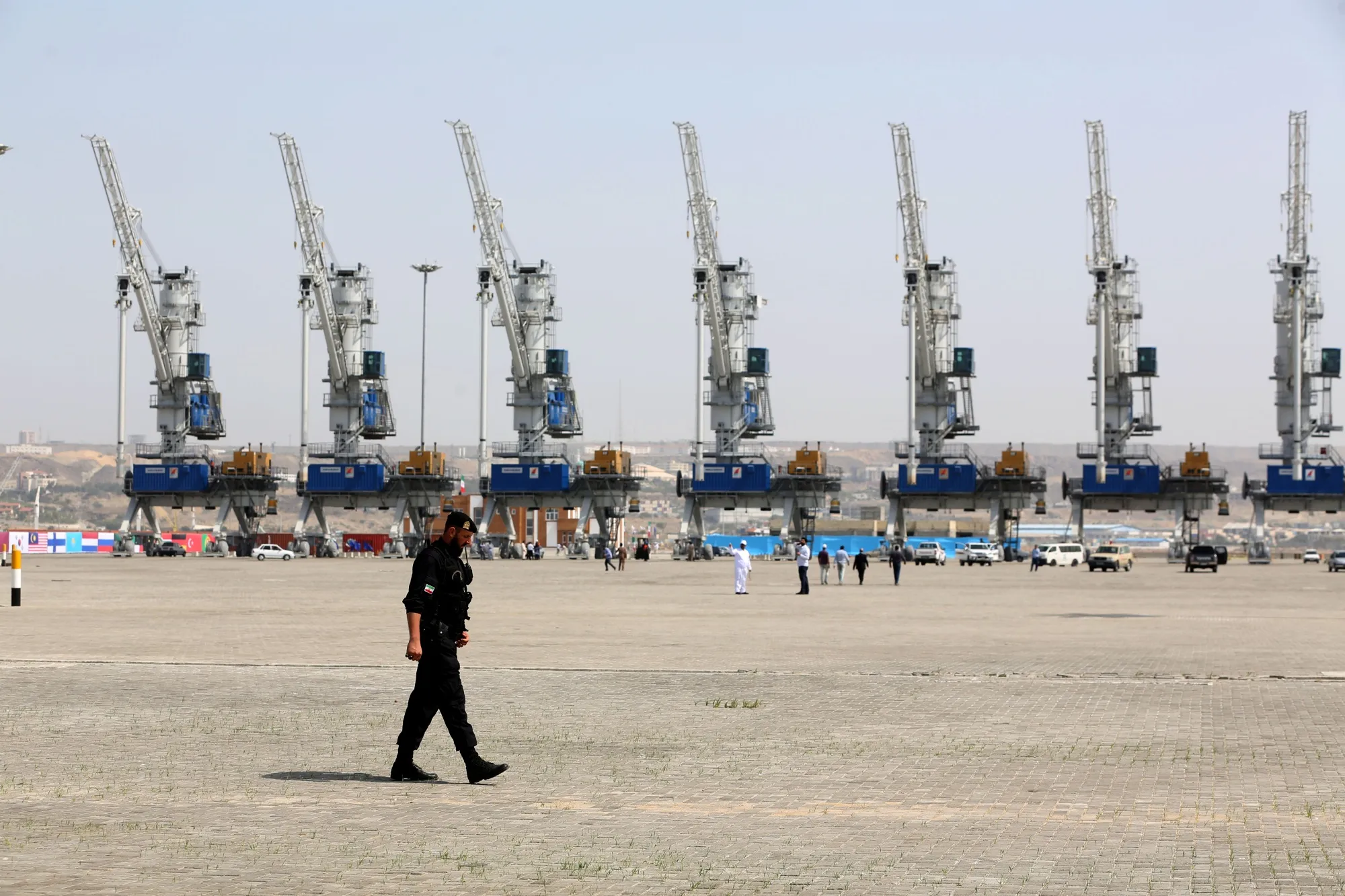
The practical target set is already visible: Chinese and Hong Kong intermediaries, port handling at places like Gaolan, and companies already sanctioned for export-control evasion. This approach is narrower than a blanket China tariff and more credible than pretending Iran’s arsenal depends mainly on formal weapons transfers.
The strategic lesson
The deeper lesson is that modern proliferation does not always look like arms dealing. It looks like shipping, machine parts, propellant precursors, and small firms with innocuous business scopes. That is why the China-Iran relationship is so difficult to deter: the decisive transfers are deniable, modular, and commercially ordinary until the moment they appear in a battlefield strike.
So Trump is right that something is being supplied to Iran. But if he wants his threat to matter, the policy has to reach beyond the word “weapons” and confront the civilian industrial ecosystem that makes the weapons possible.