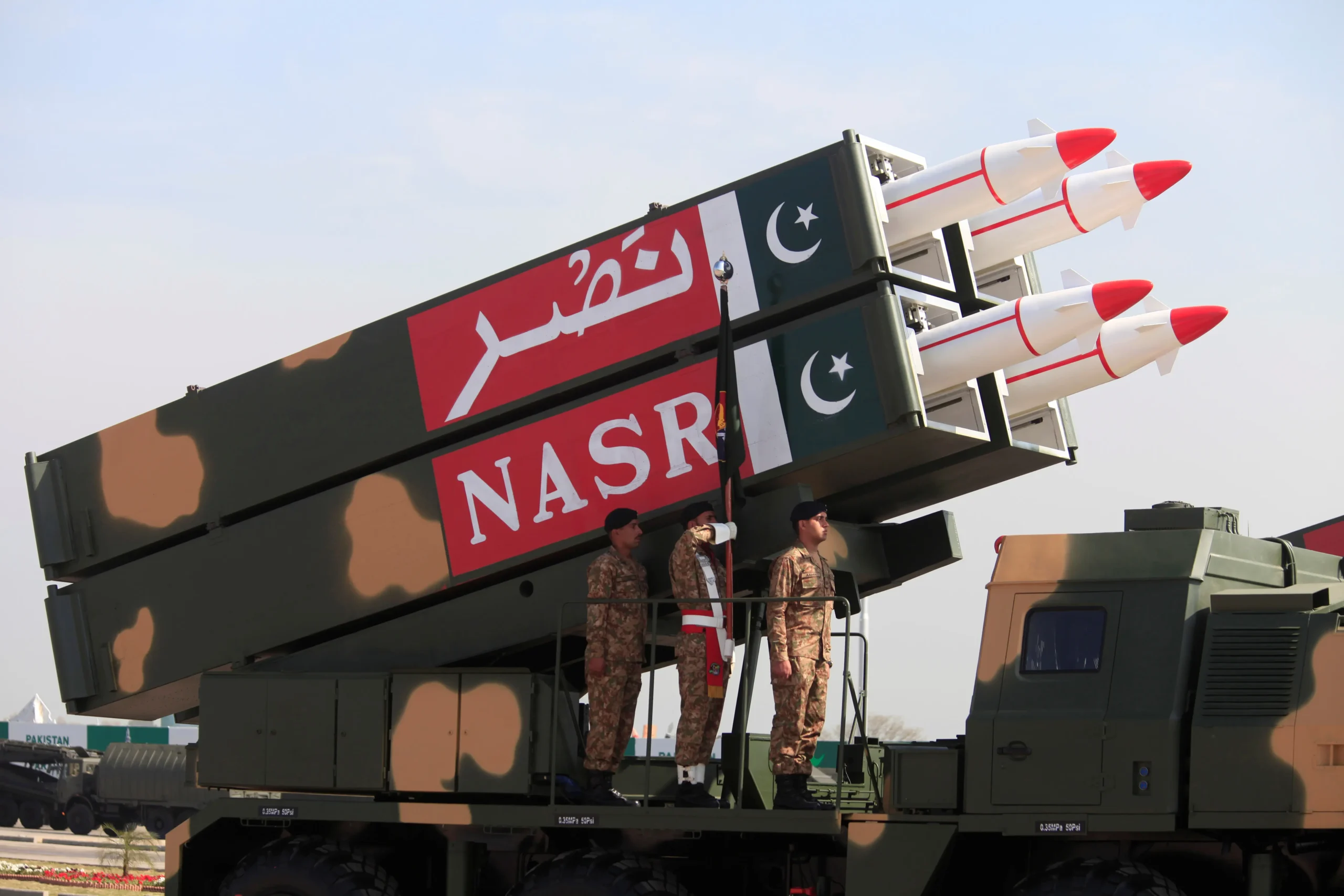
Director of National Intelligence Tulsi Gabbard has elevated Pakistan to the front lines of America’s nuclear threats, alongside Russia, China, and North Korea. Her recent testimony warns of Islamabad’s missile advances that could soon reach the homeland. With terror networks thriving amid economic freefall, the risks demand a harder U.S. line before desperation breeds disaster.
Tulsi Gabbard delivered her 2026 threat assessment with unsparing clarity: Pakistan’s “novel or advanced” ballistic missiles, she told senators, carry nuclear or conventional warheads with growing range—potentially to the continental U.S. This marks a departure from prior assessments that confined Pakistan’s arsenal to South Asia.
Tulsi Gabbard:
— Clash Report (@clashreport) March 18, 2026
The intelligence community assesses that Russia, China, North Korea, Iran, and Pakistan have been researching and developing an array of novel, advanced, or traditional missile delivery systems, with nuclear and conventional payloads, that put our homeland within… pic.twitter.com/X4g85J3DUh
Intelligence tracks Pakistan’s steady buildup. The arsenal expands not just in quantity but in sophistication, including multiple independently targetable reentry vehicles on systems like Ababeel. Driven by rivalry with India and bolstered by Chinese technology, these capabilities outstrip defensive needs.
Washington has wielded sanctions to curb this drift, but progress persists. Last December, the U.S. Treasury targeted four Pakistani entities, including the National Development Complex, for procuring missile transporter chassis and testing equipment. These firms support the Shaheen series, with ranges now exceeding 2,750 kilometers—far beyond India.
By April 2025, 19 more companies faced penalties for “unsafeguarded” nuclear and missile work, many linked to Beijing’s supply chains. Declassified reports detail Chinese-origin rocket motors enabling longer flights, raising alarms of intercontinental potential. Yet Islamabad deflects, claiming regional deterrence while U.S. officials see global ambition.
What if I told you there’s a country with nuclear weapons, developing ballistic missiles that can hit America and its partners, who hates Israel, is increasingly radicalized, and is highly untrustworthy?
— Derek J. Grossman (@DerekJGrossman) March 19, 2026
This isn’t Iran. It’s Pakistan. But the problem is Washington did nothing… pic.twitter.com/5awXMJaKSm
Compounding the nuclear peril, Pakistan harbors a terror infrastructure that mocks its alliance claims. Proscribed entities such as Lashkar‑e‑Taiba (LeT) and Jaish‑e‑Mohammed (JeM) remain operationally active in Pakistan and continue to command substantial influence over large segments of the administration and the radicalized public. The latest round of Pakistani airstrikes inside Afghanistan, extending from border provinces to the capital Kabul and reportedly killing well over 400 people, including civilians at a drug‑rehabilitation hospital, reads less like a calibrated security operation than a desperate, emotionally charged assertion of power by a state that feels cornered by its own internal failures.
Osama bin Laden, the 9/11 attacks mastermind, was killed by U.S. Navy SEALs during a covert raid on his compound in Abbottabad, Pakistan, in an operation that laid bare both the uncomfortable fact that a global wanted terrorist had long been hiding deep inside one of Washington’s nominal allies, and Pakistan’s deep complicity or blindness, even today, heightening fears of extremists nearing nuclear sites.
Pakistan’s economy, meanwhile, spirals toward the abyss. The IMF trimmed its FY2026 growth forecast to 3.2%, down from 3.6%, as exports cratered 8.7% and foreign investment halved. Inflation rages above 20%, poverty engulfs a quarter of 240 million people, and a fragile $7 billion IMF bailout props up defaults.
Finance Minister Muhammad Aurangzeb warns of “mega crisis” without reforms, yet political gridlock stalls progress. Desperation breeds risks: cash-strapped generals might peddle technology or lose control of assets. With missiles prioritized over bread, the nuclear stockpile grows unchecked.
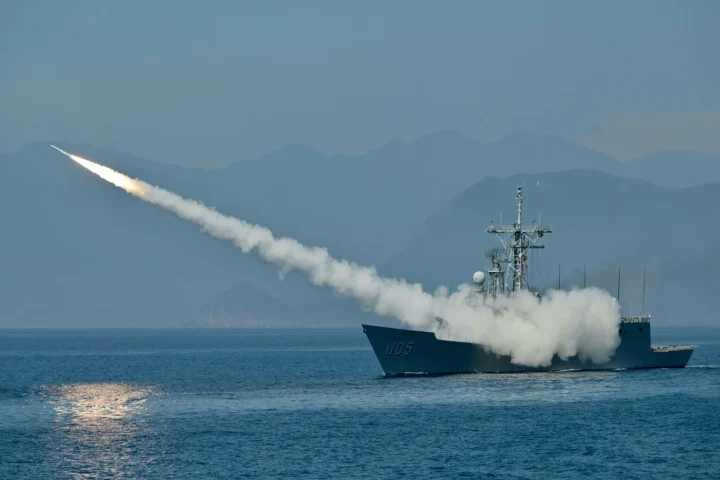
Skeptics note Pakistan lacks a deployed ICBM today. True enough—Shaheen-III tops out at 2,750 km. But tests of solid-fuel boosters and maritime launch trials point toward 5,500 km or more. A 2025 report flagged the development of nuclear-capable systems following India’s Sindoor operation, with U.S. range in sight.
Tulsi Gabbard named Pakistan among the countries that pose threat to the USA with their expanding nuclear capability, while presenting the Annual Threat Assessment Report to the Senate Committee.
— Marvi Sirmed (@marvisirmed) March 18, 2026
Her exact words:
“Russia, China, North Korea, Iran and Pakistan have been…
China’s role looms large, evading sanctions via proxies. This axis—Pakistan drawing from Beijing, much as North Korea does—erodes nonproliferation norms. Europe and Israel enter the missile shadow next; America follows.
Gabbard’s roster—Russia, China, North Korea, Iran, now Pakistan—signals a crowded threat horizon. Each advances missiles amid eroding arms control. Pakistan’s volatility sets it apart: unlike Pyongyang’s isolation, Islamabad wields terror proxies and claims alliance status, pocketing $1 billion-plus in annual U.S. aid post-Afghanistan.
The Abbottabad inference lingers: a nation that sheltered bin Laden can’t be trusted with doomsday weapons. Fanatics coveting nukes, economic collapse tempting sales—these aren’t hypotheticals but live risks.
Sanctions alone falter against determined actors. The administration must escalate. First, condition all aid on verifiable terror camp closures and missile test halts. Second, tighten secondary penalties on Chinese firms fueling proliferation. Third, accelerate U.S. missile defenses, including hypersonic interceptors, while sharing tech with allies.
Rally NATO and Quad partners for unified pressure. IMF loans could carry nonproliferation covenants, withholding tranches absent transparency. Diplomatically, expose Pakistan’s duality: ally against one threat, enabler of others.
Critics decry confrontation, fearing regional war. But appeasement invites bolder steps. India’s growing arsenal demands balance, yet U.S. interests transcend South Asia—homeland security first.
Pakistan’s path mirrors North Korea’s: sanctioned, isolated, nuclear. Early U.S. engagement failed there; repeat in Islamabad at peril. Gabbard’s warning arrives not a moment too soon.
America rebuilt global security post-Cold War through deterrence and diplomacy. Pakistan tests that legacy. With Trump back in the Oval Office, resolve this front decisively: no more blank checks for nuclear rogues.
The West slumbered as arsenals multiplied. Awake now, or face strikes from unexpected quarters. Bold leadership will preserve peace through strength.