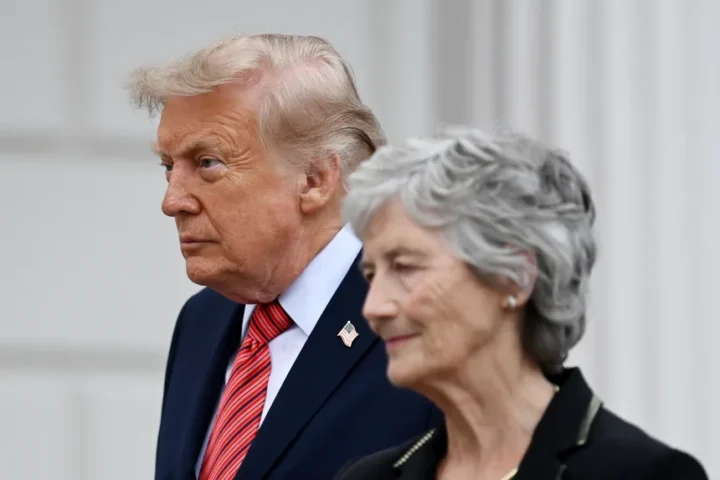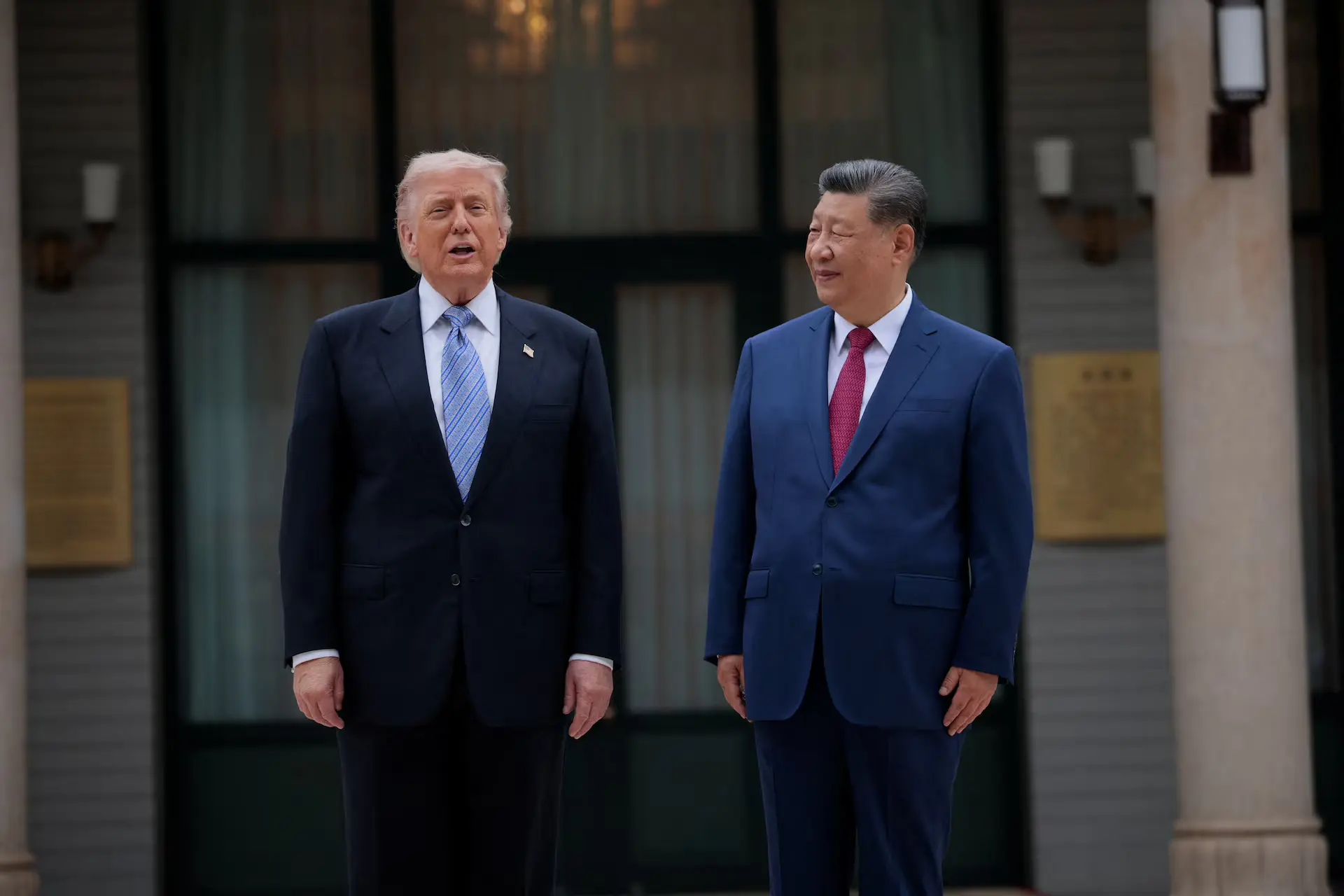
As Air Force One touched down in Beijing this month, the optics surrounding Donald Trump’s return to China were impossible to ignore. Nearly a decade after his first state visit in 2017, the American president arrived once again in the Chinese capital — this time accompanied by senior cabinet officials, defense representatives, corporate executives and technology leaders. The message was unmistakable: Washington had come not only with political influence, but with the visible weight of American economic power.
Beijing, however, responded with symbolism of its own.
China has long treated diplomacy as a carefully choreographed performance, where architecture, ceremony and cultural references often speak louder than official communiqués. During Trump’s first visit, Chinese President Xi Jinping famously guided Trump and former first lady Melania Trump through the Forbidden City, complete with tea ceremonies and a Peking opera performance inside the imperial palace complex. The 2026 visit followed a similar script — but with deeper historical undertones.
Following formal talks at Beijing’s Great Hall of the People, Xi escorted Trump to the Temple of Heaven, one of China’s most historically significant imperial sites. Built during the Ming dynasty in the 15th century, the complex was where emperors once prayed for favorable harvests and national prosperity. Towering blue-tiled roofs and circular marble altars symbolized the ancient Chinese belief that political legitimacy was tied to harmony between heaven and earth.
The location was far from accidental.
At a summit where agricultural trade featured prominently, the Temple of Heaven offered a subtle but pointed metaphor. In imperial China, rulers prayed there not for abstract peace, but for abundant grain and social stability. Today, with negotiations involving American soybeans, beef and grain exports once again at the forefront of bilateral talks, the symbolism was difficult to miss. By framing economic negotiations within a setting historically associated with harvest and prosperity, Beijing transformed a hard-nosed trade discussion into a cultural narrative about abundance and order.
The visit also echoed an earlier chapter in U.S.-China diplomacy. In 1971, Henry Kissinger visited the same temple during his secret mission to Beijing that paved the way for President Richard Nixon’s historic opening to China. Kissinger reportedly found the ancient site deeply moving, captivated by its atmosphere of continuity and timelessness.
That same emphasis on history resurfaced during Trump’s private walk through Zhongnanhai, the heavily guarded leadership compound at the heart of China’s political system. According to reports, Xi pointed out centuries-old trees lining the grounds, some believed to be over a thousand years old. When Trump asked whether other American presidents had been given similar tours, Xi reportedly answered that such visits were rare.
The message was subtle but deliberate: while American politics often moves with electoral cycles and market pressures, China presents itself as a civilization measured in centuries.
Yet the diplomatic staging was not confined to imperial symbolism alone. Beijing also leaned into softer cultural touchpoints designed to resonate with American audiences. State banquet menus featured both refined Chinese cuisine and dishes aligned with Trump’s well-known tastes, including roast duck, beef ribs and dessert selections familiar to Western palates.
Trump, for his part, shifted the tone from geopolitics to everyday cultural familiarity. In remarks during the visit, he highlighted Chinese workers who helped build American railroads, referenced the popularity of basketball in China and noted the ubiquity of Chinese restaurants across the United States.
Those comments, while characteristically informal, reflected a deeper truth about the relationship between the world’s two largest powers. U.S.-China ties have never been defined solely by tariffs, military strategy or summit meetings. Cultural exchanges — from tourism and food to sports and education — have often served as unofficial bridges during periods of political tension.
Basketball, in particular, remains one of the strongest examples of that connection. The NBA enjoys immense popularity in China, where generations of fans grew up idolizing stars such as Michael Jordan, Kobe Bryant and LeBron James, alongside Chinese basketball icon Yao Ming. Just weeks before Trump’s visit, the two countries marked the 55th anniversary of “ping-pong diplomacy,” the table tennis exchanges that helped thaw relations in the early 1970s. Today, basketball occupies a similarly symbolic role as a shared cultural language.
Ultimately, the summit underscored a familiar reality: diplomacy between Washington and Beijing is never conducted through policy alone. Every venue, every photograph and every ceremonial gesture carries meaning.
None of the symbolism resolves the deeper disputes dividing the two nations — from technology restrictions and trade tensions to Taiwan and broader competition for global influence. But diplomatic theater can still shape perception. It can soften rivalry, project stability and influence how citizens in both countries understand the relationship.
For Beijing, the visit reinforced an image of China as a confident global power rooted in history and cultural continuity. For Washington, it offered a reminder that engagement with China operates not only through negotiation tables, but through symbols carefully chosen to communicate endurance, prestige and national identity.
And the performance is not over yet.
At the close of the summit, Chinese officials announced that Xi Jinping is expected to make a return state visit to the United States later this year. If that visit proceeds, the diplomatic stage will shift from Beijing to Washington — raising a new question: how will America choose to present itself to China in return?