The federal government shut down early Wednesday morning after Congress failed to reach a funding agreement, leaving hundreds of thousands of federal employees facing furloughs and marking the first full government shutdown since 2013. The stalemate has deepened partisan divisions on Capitol Hill, with both Republicans and Democrats blaming each other for the impasse.
A Breakdown in Negotiations
Despite days of back-and-forth discussions, top congressional leaders did not meet Tuesday night to pursue a last-minute compromise. The shutdown began at midnight when government funding officially lapsed, following the expiration of the previous fiscal year on October 1.
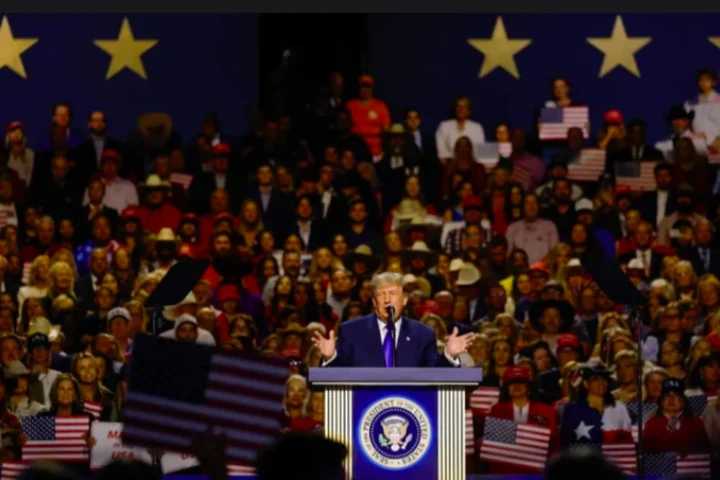
President Donald Trump, speaking from the Oval Office hours before the deadline, downplayed the potential consequences. “The last thing we want to do is shut it down,” Trump said, “but a lot of good can come down from shutdowns. We can get rid of a lot of things that we didn’t want, and they’d be Democrat things.”
The Office of Management and Budget (OMB) ordered federal agencies to begin closing operations Tuesday evening, calling Democrats’ negotiating stance “untenable” and warning that the duration of the shutdown is “difficult to predict.” According to estimates from the Congressional Budget Office, roughly 750,000 federal employees could be temporarily furloughed—though some could face permanent job cuts under a broader White House restructuring effort.
Health Care Subsidies at the Center of the Fight
The political standoff centers on whether to extend certain health care subsidies created under the Affordable Care Act (ACA). Democrats have pushed for an extension of Obamacare tax credits as part of any temporary funding bill. President Trump had initially signaled openness to negotiating on that front during a White House meeting Monday with congressional leaders, but later undercut the possibility of a deal by attacking Democratic leaders online.
House Speaker Mike Johnson and Senate Majority Leader John Thune met alongside Democratic leaders Hakeem Jeffries and Chuck Schumer earlier this week, joined by Trump and Vice President JD Vance. Following the meeting, Republicans insisted that discussions on health care should take place only after the government is reopened. “We need to keep the government open,” Thune said Tuesday. “We can talk about whatever else they want to talk about after that.”
Democrats, however, maintain that health care affordability must be part of the agreement. “This is not simply a negotiating tactic,” Jeffries said on CNN. “We are ready to find a bipartisan agreement. But that bipartisan agreement needs to address the health care crisis that exists in the United States of America.”
Escalating Political Tensions
The already fragile talks deteriorated further when President Trump posted an altered video on social media mocking Democratic leaders. The video depicted Jeffries wearing a fake mustache and sombrero, alongside fabricated audio implying Democrats were seeking votes from “illegal aliens.” Jeffries denounced the post as “bigotry,” but Trump followed it up with a second video on Tuesday.
The videos appeared to be part of a broader Republican effort to paint Democrats as prioritizing benefits for undocumented immigrants—an assertion Democrats have dismissed as false. Undocumented immigrants are not eligible for health coverage under the ACA.
Fallout and Future Uncertainty
The Senate on Tuesday failed to advance both a Republican short-term funding measure and a Democratic proposal. Two Democrats, Sens. John Fetterman (Pa.) and Catherine Cortez Masto (Nev.), along with independent Sen. Angus King (Maine), voted in favor of the GOP plan, but it still fell short. Meanwhile, all Republicans opposed the Democratic alternative.
With no new negotiations scheduled and House Republicans not expected back in session until next week, a resolution appears distant. Jeffries said House Democrats will remain in Washington to “work toward reopening the government.”
The White House, meanwhile, is preparing to use the shutdown as an opportunity to reshape the federal bureaucracy. An OMB memo sent to agencies requested that they identify discretionary programs that could be permanently cut if deemed inconsistent with Trump administration priorities—a move without precedent in modern U.S. history.
Political and Economic Stakes
The shutdown comes as polling shows the public may be more inclined to blame Republicans for the gridlock. A PBS/NPR/Marist survey found that voters were more likely to hold the GOP responsible for a shutdown, while a New York Times/Siena poll indicated that most voters opposed using a shutdown as leverage for political demands.
Still, President Trump appeared unfazed. “I don’t worry about that,” he said earlier this week. “Because people that are smart see what’s happening. The Democrats are deranged.”
With no compromise in sight, the nation enters another uncertain period of political brinkmanship—one that could test the resilience of federal institutions and the patience of American workers caught in the middle.