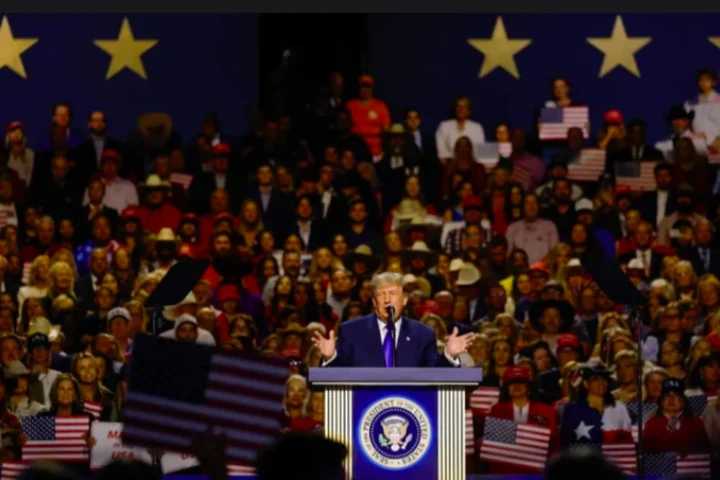
When President Donald Trump mentioned in passing aboard Air Force One that he planned to import beef from Argentina, it sounded like one more throwaway remark in his transactional approach to global trade. But to Republicans from ranching states—long the backbone of his political coalition—it landed as a gut punch. Within 48 hours, phones rang off the hook at the White House and the Department of Agriculture as senators and House members from the Midwest and Plains made their fury known. By the week’s end, even Trump’s most loyal allies were wondering aloud whether America First had quietly become Argentina First.
For years, congressional Republicans representing rural America have learned to swallow hard as Trump’s policies hit their constituents. His tariff wars against China and Canada, his use of emergency powers to slap duties on steel and machinery, and his erratic approach to farm subsidies all tested their patience. Yet they rarely broke ranks. Loyalty, electoral calculation, and hope for favorable trade outcomes kept them in line. The beef import move, though, pierced that facade of discipline. Suddenly, even senators who’d defended Trump through every controversy were saying out loud what many had whispered for months: that the populist trade agenda was spiraling into incoherence.
Argentina, Milei, and the Price of Steak
The administration’s defense of the beef plan rests on two claims: cutting consumer prices and securing a strategic alliance with Argentina’s libertarian president, Javier Milei. Officials argue that importing more Argentine beef—four times the normal quota—will ease the inflationary pressure on grocery staples and symbolically reward a Latin American partner who has embraced Washington’s anti-China rhetoric.
It’s a compelling geopolitical narrative, but an awkward domestic one. For Trump’s base in rural America, “cheap beef” sounds suspiciously like “cheap labor”—an undercutting of domestic producers in the name of consumer comfort. The administration’s populist calculus seems reversed: where Trump once championed the working man against Wall Street and the global trading class, his own policy now prioritizes affordability over American livelihoods.
Farm-state lawmakers, such as Representatives Jason Smith of Missouri and Adrian Smith of Nebraska, have framed their resistance in strikingly protectionist terms. In a letter to Agriculture Secretary Brooke Rollins and U.S. Trade Representative Jamieson Greer, they warned that “investment at home” is the true path to lower prices, not “policies that advantage foreign competitors.” The phrasing could have been lifted from Trump’s own 2016 campaign speeches. That irony is not lost on Capitol Hill.
The Tariff Backlash
At the heart of the pushback lies a deeper unease: Trump’s sweeping use of emergency powers to impose and adjust tariffs without congressional oversight. Across the Senate, a coalition of libertarian conservatives and pragmatic farm-state moderates is beginning to revolt. This week, several Republicans joined Democrats in symbolic votes to reverse 50 percent tariffs on Brazilian imports and to ease similar penalties on Canadian goods. The effort will die in the House, but the signal was unmistakable. Trump’s trade agenda—which once unified the party around a simple promise to “protect American jobs”—has become a wedge issue.
Senator Thom Tillis of North Carolina articulated the frustration pointedly, calling the president’s Brazil tariffs “a disagreement with a judicial proceeding,” referring to Trump’s displeasure with former Brazilian President Jair Bolsonaro’s legal troubles. “That’s not a strong basis,” Tillis said, “for using the trade lever.” Such comments, mild as they sound, are notable for their candor. In the Trump-era GOP, questioning the wisdom of tariff policy has often been treated as heresy.
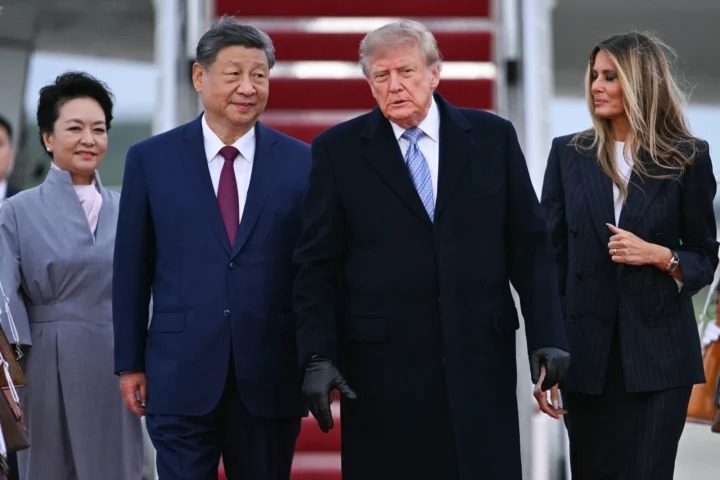
The timing could hardly be worse for Trump. Next week, the Supreme Court begins hearing arguments in a major challenge to his use of emergency trade powers, a case that could sharply curtail presidential authority over tariffs. And with Chinese President Xi Jinping in Washington for a high-stakes bilateral meeting, the White House is desperate to project discipline and unity. Instead, it’s confronting a visible fracture between the Oval Office and its most reliable base of support: rural America.
The Midwest Revolts—Quietly
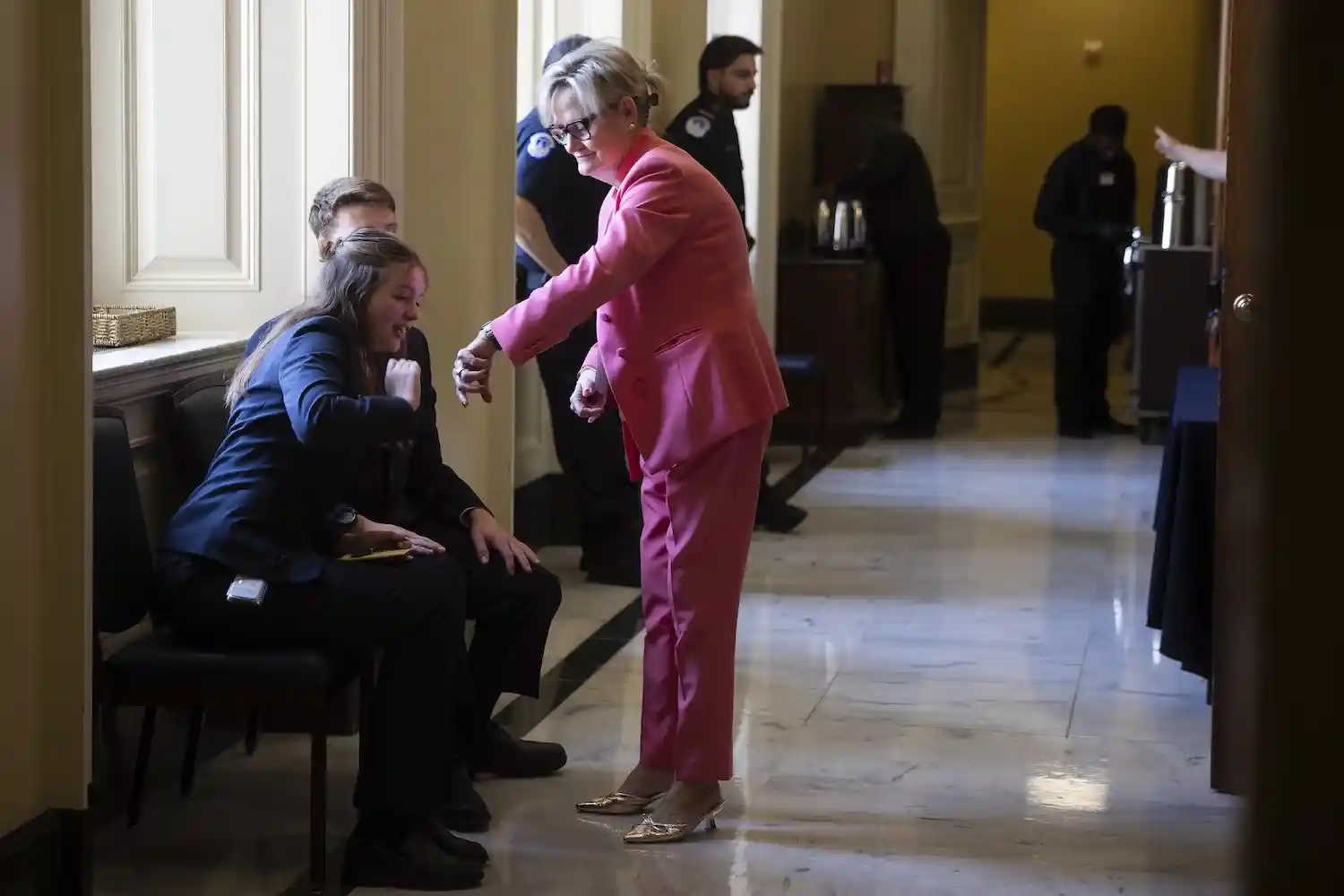
Inside a closed-door Senate Republican lunch this week, Vice President JD Vance found himself absorbing the heat Trump had unleashed. Senator Cindy Hyde-Smith of Mississippi, a reliable Trump ally whose own family are cattle ranchers, reportedly confronted Vance with data showing that cattle prices at the ranch gate are down while retail beef prices remain high—a spread benefiting the meatpacking conglomerates that small ranchers have long viewed as the villains of the industry. Her blunt message: “Ranchers are not the problem.”
That sentiment runs deeper than policy. In states like Iowa, South Dakota, and Montana, ranching communities have long viewed Trump as their champion against “Big Beef”—the handful of multinational packers dominating processing and pricing. But this latest import decision seems to take the side of those same corporations, for whom a surge of cheaper Argentine beef would mean lower input costs and fatter margins.
To be sure, Trump still holds overwhelming political capital across rural America. Yet the arguments now coming from his own senators sound less like quiet appeals and more like warnings. Senator John Thune, the Majority Leader from South Dakota, has long been a low-key skeptic of tariffs. This week he diplomatically described the policy as “a work in progress,” an artful phrase that barely conceals frustration. Others, like Senator Rand Paul, have gone further, denouncing Trump’s emergency tariffs as a “misuse of power” and an “abdication of Congress’s taxing authority.” That language is constitutional, not partisan—an early sign that the GOP’s free-market wing is stirring back to life.
The Politics of Pain
Politically, Trump’s calculation is characteristic: short-term optics over long-term consistency. For urban and suburban consumers, cheaper beef at the supermarket is a tangible win, especially amid lingering inflation. For rural producers, it’s a body blow—proof that the populist creed of “America First” can be suspended when it collides with consumer politics. The populism that once united steelworkers, farmers, and small-town voters now risks dividing them along the supply chain.
There’s also a foreign-policy dimension. Trump’s courtship of Javier Milei has clear ideological appeal: both men see themselves as anti-establishment disruptors railing against global elites and central banks. But what plays well on the campaign trail in Buenos Aires or Mar-a-Lago doesn’t necessarily translate into sustainable trade policy. For farmers in South Dakota or Kansas, Argentina is not a libertarian experiment—it’s a competitor with lower costs and fewer regulations.
The paradox is that Trump’s instinct to use trade as leverage for relationships has always depended on symbolic victories that can be sold domestically. The Argentine beef deal, by contrast, has no domestic payoff beyond cheaper burgers. It doesn’t build American capacity, and it doesn’t punish adversaries. It’s pure transactionalism—flavored with ideology, but devoid of strategy.
A Republican Reckoning
The GOP, for its part, faces a choice it has postponed for too long. Either it remains the party of free commerce and rural self-reliance, or it becomes the party of managed trade and presidential fiat. So far, most have chosen silence, waiting for the Supreme Court to rein in Trump’s emergency powers and give them political cover. But if the Court upholds those powers, the next rupture will be harsher: a Congress forced to decide whether its loyalty lies with the ranchers back home or the president at the top of the ticket.
For now, Trump’s coalition remains intact, if strained. Yet the “beef war” has illuminated something that the tariffs, shutdowns, and farm bailouts only hinted at—the limits of economic nationalism when it collides with local realities. Populism promises protection, but when the butcher’s bill arrives—literally—the costs are borne by those who believed the promise most deeply.