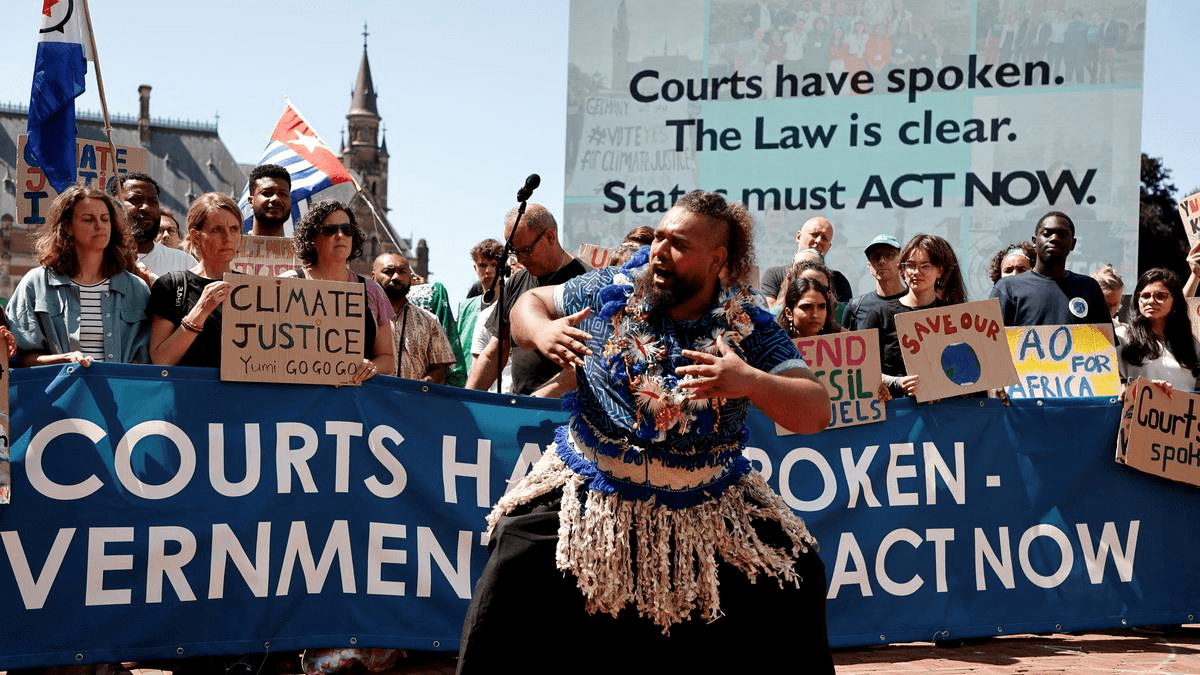
In a historic opinion issued in July 2025, the International Court of Justice (ICJ) declared that every country on Earth has a legal duty to protect the climate and prevent harm to the global environment. The advisory opinion, though nonbinding, could pave the way for future claims seeking reparations for climate-related damage.
The ICJ, established under the United Nations in 1945, affirmed that states must honor their existing obligations under international environmental law and human rights law. Countries that fail to act could be held legally responsible for harm inflicted on vulnerable communities and ecosystems.
Why the Opinion Matters
This landmark ruling comes after years of advocacy by Pacific Island nations, which are among the hardest hit by rising sea levels, extreme weather events, and ocean acidification. Countries like Vanuatu, Tuvalu, and Barbados—though responsible for only a fraction of global emissions—face existential threats as their coastlines erode and saltwater contaminates freshwater supplies and agricultural land.
“For us, this isn’t an abstract legal debate. It’s about survival,” said one Pacific Island leader, calling the decision “a turning point for frontline communities everywhere.”
Some low-lying nations, such as Tuvalu and Kiribati, have even explored creating digital nations or purchasing land abroad to ensure their citizens can relocate while preserving national identity. For these countries, climate change is not just an environmental crisis but also a cultural and political upheaval.
The Court’s Findings
The ICJ addressed two central questions: What obligations do states have to prevent climate harm, and what legal consequences should follow when they fail?
The court’s 140-page opinion concluded that all nations must actively work to reduce greenhouse gas emissions and prevent harm to the climate. Where a country breaches these obligations, the court stated, it must:
- Cease harmful activities—including excessive emissions.
- Ensure future compliance to prevent further damage.
- Provide reparations—such as financial compensation, environmental cleanup, or formal apologies—to affected states.
The court also reaffirmed the principle of “common but differentiated responsibility,” meaning nations that have contributed the most to climate change may bear a greater burden for remedying its impacts.
While the opinion does not directly impose penalties or name specific offenders, it sets a clear legal precedent that could bolster future climate litigation in both international and domestic courts.
Implications for the United States
The ruling’s legal impact on the U.S. remains uncertain. Though international law is recognized as part of U.S. law, American courts rarely enforce international norms unless they are explicitly adopted by Congress. Moreover, the U.S. has not accepted ICJ jurisdiction in climate-related disputes.
Nevertheless, the advisory opinion underscores that no country can avoid responsibility simply because climate change is a shared, global problem. It delivers a strong moral and political message: protecting the climate is not optional—it is a legal obligation.
A Turning Point for Climate Accountability
For small island nations and other vulnerable countries, the ICJ’s statement provides a new legal foundation to demand accountability for the damage caused by historical and ongoing emissions. It could influence future negotiations on climate finance and reparations, reinforcing calls for wealthier, high-emission countries to do more.
The ruling does not solve the climate crisis, but it signals a shift in how the international community views responsibility. As the world faces rising temperatures, intensifying storms, and shrinking coastlines, the ICJ’s message is clear: protecting the planet is a duty every nation shares.