There is a particular kind of American confidence that shows up whenever a new technology promises military advantage: build first, ask questions later. That confidence is now colliding with something far less glamorous than artificial intelligence — the electrical grid, the aquifer, and the patience of the people who live next to a base.
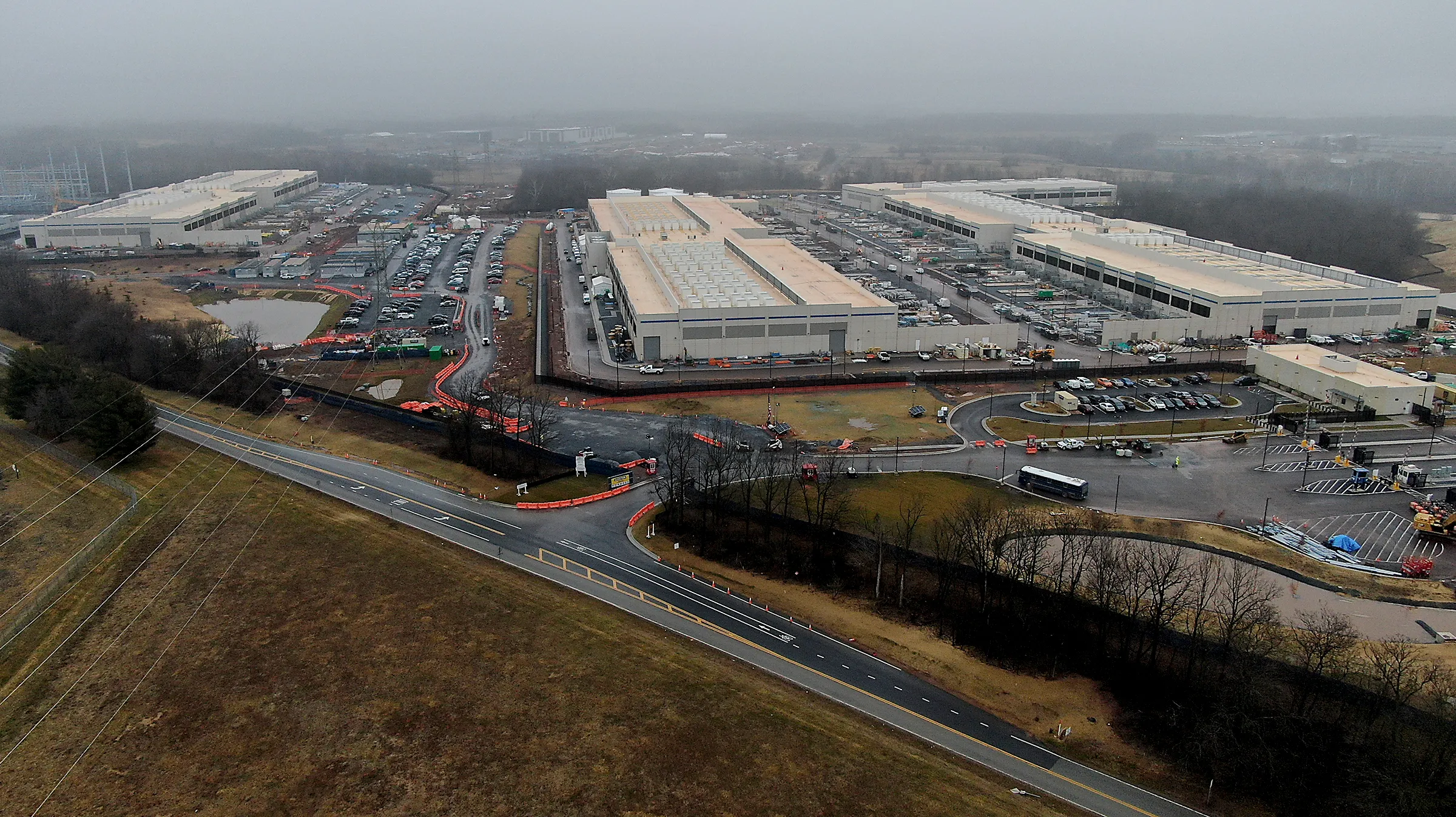
The Army wants to turn Fort Bliss, on the outskirts of El Paso, Texas, into the site of a “gargantuan” AI data center complex. The plan calls for roughly 100 megawatts of computing capacity when it comes online, targeted for 2027. By 2029, the project is expected to require about 3 gigawatts of electricity. To put that number in perspective: it is more than the highest electricity demand ever recorded across all 460,000 customers of El Paso Electric, and it exceeds the utility’s entire current generation capacity of roughly 2.9 gigawatts. A single military data center, in other words, is projected to need more power than an entire American city has ever used, from a utility that does not currently have enough generation to supply it.
This is not a hypothetical stress test. It is the plan.
Fort Bliss is not an isolated case. The Army has flagged Fort Hood in Texas, Fort Bragg in North Carolina, and Dugway Proving Ground in Utah as additional “targets of opportunity” for similar mega-facilities. The Air Force is opening unused land at five more bases to private AI data center developers. The mechanism is called an “enhanced use lease”: the military rents underused base acreage to private companies — Carlyle Group and CyrusOne among them — which finance, build, and operate the facilities, reserving a slice of the capacity for military workloads while the rest runs as commercial cloud infrastructure. The Pentagon gets a modern data center and some rent. The private sector gets prime, secure real estate and expedited permitting. And whatever happens to the local grid, water table, and air quality becomes someone else’s problem — usually the city next door.
That “someone else” is now Congress, and it is not happy about being the last to find out.
The bill comes due, quietly
House appropriators have started using unusually blunt language for a budget document. They warn that the Pentagon’s rush to host commercial data centers on its land “exerts significant pressure on energy and water resources” and has already triggered local community opposition. The House Armed Services Committee has gone further, directing the defense secretary to assess — before construction starts, not after — each project’s energy demand, grid requirements, water use, environmental effects, security implications, and cumulative impact on surrounding communities. Lawmakers are worried enough about the downside that they’ve written into law the possibility that these projects could have “a deleterious effect on readiness” and “negatively impact mission assurance for core Department functions.” That is Pentagon-speak for: this could make bases and the communities around them less safe, not more.
Individual members are less diplomatic. Rep. John Garamendi has called AI data centers “extraordinary consumers of both energy and water” and is pushing amendments to slow or condition their development in the FY2027 defense bill. Rep. Mike Levin has pointed out that communities already dealing with pollution and rising utility bills are being asked to absorb even more strain, without honest acknowledgment of what these facilities will actually consume. Some lawmakers say they haven’t received real briefings on the scope of what’s being built on bases in their districts. One described the Pentagon’s approach simply as “not right for every community” — a polite way of saying decisions are being made in Washington and Northern Virginia boardrooms while the consequences arrive on local electric bills and in neighborhood air quality reports.
This is the real story here, and it’s bigger than any one base: the infrastructure racing to feed artificial intelligence is outpacing the country’s ability to power it, cool it, and govern it without breaking something else along the way.
Water neutral, on paper
Nowhere is the gap between assurance and evidence wider than on water. AI-scale data centers require enormous volumes of water for cooling, and the Army’s own solicitation documents for Fort Bliss acknowledge that El Paso’s water risk is “extremely high” and that most of the base’s water comes from wells in the Hueco Bolson aquifer — the same aquifer the city itself depends on. Officials say the new complex will be “water neutral,” gesturing toward the jointly owned Kay Bailey Hutchison desalination plant as a possible solution. But El Paso Water, the local utility that would actually have to make this work, says it has no clear picture of how that neutrality claim would be achieved. A promise that a massive new water consumer will somehow not consume water, offered with no operational plan attached, is not a plan. It is a talking point standing in for one.
And Fort Bliss won’t be drawing from a quiet corner of the grid. Nearby mega-projects from Meta and Oracle’s “Project Jupiter” could add up, alongside Fort Bliss, to more than 3.45 gigawatts of demand in the same stretched region — enough electricity for close to a million homes, concentrated in a place already flagged for extreme water risk.
The national backdrop
None of this is happening in isolation. A Lawrence Berkeley National Laboratory analysis for the Department of Energy found that data center electricity load has tripled over the past decade and could double or triple again by 2028. Data centers consumed about 4.4% of total U.S. electricity in 2023; by 2028, that share could reach somewhere between 6.7% and 12%, depending on growth and efficiency gains. For comparison, U.S. data centers used about 1.8% of the nation’s electricity as recently as 2014. The curve is bending sharply upward, and military bases are now being wired directly into it — often in the driest, most energy-constrained regions of the country, because that’s where the available land happens to be.
Security questions nobody has fully answered
There’s also a harder-edged question buried under the environmental one: what does it mean to build the physical backbone of American AI infrastructure through private-equity-financed facilities sitting on military bases? One provision now moving through Congress would bar the Pentagon from leasing land for data centers containing circuit boards, semiconductors, or chipsets sourced from countries considered national security threats — an acknowledgment that foreign hardware could end up embedded in facilities adjacent to sensitive military networks. Rep. Debbie Dingell has introduced a bill that would go much further, banning AI data centers on federal land altogether. Whether or not that passes, it signals that some lawmakers see the entire siting strategy — not just its environmental footprint — as a strategic vulnerability. Outsourcing so much AI capacity to commercially operated facilities on federal land raises the obvious question of what dependencies and attack surfaces get created in the process, and whether anyone has mapped them.
Whose infrastructure is this, actually?
Strip away the acronyms and this is a simple story about who bears risk and who reaps reward. Bases are being recast as platforms for private cloud empires, with commercial operators claiming most of the capacity and the military reserving a slice for itself. The people who live near these bases — in El Paso, in Fayetteville, in the small towns around Fort Hood — get the water stress, the gas-turbine emissions, and the grid strain, while the decisions get made far away and the profits accrue to private developers.
Congress is finally asking the right questions, if belatedly: can the grid and the aquifer actually absorb this? Is AI becoming a resource demand the country’s most stressed regions simply cannot afford? Who gets a real say before the concrete is poured, rather than after? The Pentagon’s answer, so far, has been to move fast and let the paperwork catch up. Fort Bliss is supposed to be operational by the end of 2027. The environmental reviews, the community consultations, the congressional oversight mechanisms now being written into law — all of it is arriving on a slower clock than the bulldozers.
That mismatch is the whole problem. Artificial intelligence may well be the defining military technology of this decade. But the electricity to run it and the water to cool it are not abstractions, and neither is the trust of the communities being asked to host it. Before the Pentagon builds the next Fort Bliss, someone in Washington ought to be able to answer a simple question: where is all that power and water actually going to come from — and who decided that this community would be the one to find out the hard way?