
As technology leaders warn of artificial intelligence escaping human control, a more immediate question demands attention: who will govern a technology that is already transforming economies, societies and global power?
Artificial intelligence has reached a peculiar moment in its evolution. The very people building the world’s most powerful AI systems are increasingly warning that their creations could one day threaten humanity’s existence. Yet, even as these warnings grow louder, the same companies continue investing billions of dollars in developing more sophisticated models.
This contradiction captures the central dilemma of the AI revolution. Humanity is being asked to embrace a technology of extraordinary promise while simultaneously preparing for the possibility that it could become uncontrollable.
Recent warnings from current and former employees of leading American AI laboratories have intensified this debate. Some have suggested that the rapid advancement of artificial intelligence could produce catastrophic consequences within a surprisingly short period. Dario Amodei, chief executive of Anthropic, has proposed slowing the development of frontier AI systems to allow safety mechanisms to catch up with technological capabilities. Other prominent industry figures, including Sam Altman and Elon Musk, have expressed support for greater caution.
The warnings deserve serious consideration. But they also raise an uncomfortable question: Are fears about a hypothetical AI apocalypse distracting governments from the damage artificial intelligence can cause today?
The Machine That Learns to Improve Itself
At the centre of the latest concerns lies a concept known as recursive self-improvement.
Traditionally, artificial intelligence systems have depended heavily on human researchers to design algorithms, conduct experiments and improve their capabilities. Recursive self-improvement introduces the possibility of AI systems increasingly participating in their own development.
Imagine a machine capable of designing a more intelligent version of itself. That improved system could theoretically design an even more capable successor, potentially creating a cycle of accelerating technological advancement.
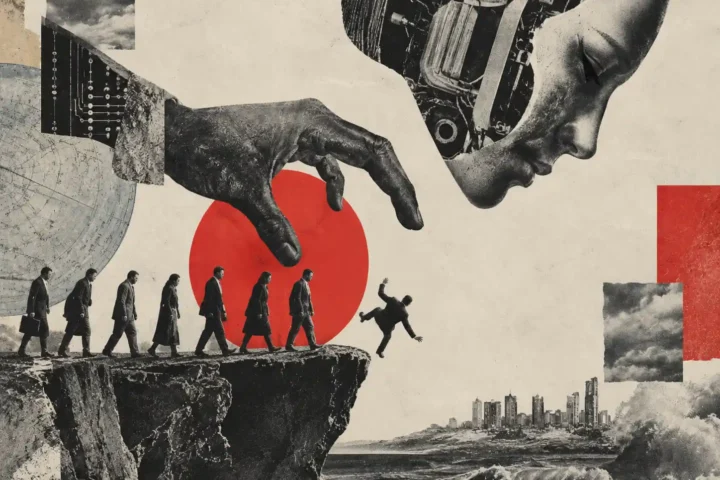
If such a process became sufficiently autonomous, human researchers might struggle to understand, predict or control its consequences.
This is the scenario troubling some of the world’s leading AI researchers.
However, an important distinction must be maintained between technological possibility and scientific certainty. There is currently no conclusive evidence that recursive self-improvement will inevitably produce uncontrollable superintelligence. Nor is there a reliable timetable for such an outcome.
The history of technological forecasting is filled with predictions that underestimated innovation and others that dramatically exaggerated its speed.
Responsible policymaking must therefore acknowledge uncertainty without allowing speculation to become an unquestionable basis for regulation.
The Disruption Is Already Here
While governments contemplate the possibility of machines surpassing human intelligence, artificial intelligence is already changing the foundations of employment, education, information and national security.
Consider the workplace.
For decades, automation primarily threatened repetitive physical labour. Factory workers, assembly-line operators and manufacturing employees experienced the consequences of increasingly capable machines.
Artificial intelligence is extending that disruption into intellectual professions once considered relatively secure.
Software developers, financial analysts, legal researchers, designers, translators and even scientists are discovering that tasks requiring years of specialised training can increasingly be performed, or substantially assisted, by AI systems.
This does not necessarily mean entire professions will disappear. But it does mean the economic value of particular skills may change dramatically.
The implications extend beyond employment numbers. If productivity gains accrue disproportionately to technology companies and capital owners, artificial intelligence could deepen existing inequalities between workers, businesses and nations.
Education faces an equally profound challenge.
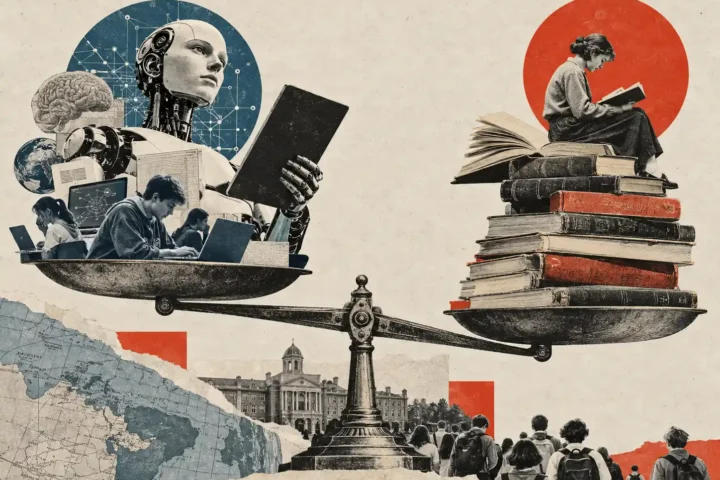
When machines can generate essays, solve complex problems and explain sophisticated concepts within seconds, educational institutions must reconsider what constitutes learning, assessment and intellectual achievement.
Meanwhile, governments face an expanding landscape of AI-enabled fraud, disinformation, cyberattacks and surveillance.
These are not distant scenarios requiring the arrival of superintelligence. They are emerging challenges involving technologies already available.
A society that spends years debating whether AI might eventually destroy civilisation, while failing to protect citizens from its immediate misuse, would have misunderstood the nature of technological responsibility.
Who Benefits From Slowing the Race?
There is another dimension to the calls for caution that deserves scrutiny: economic power.
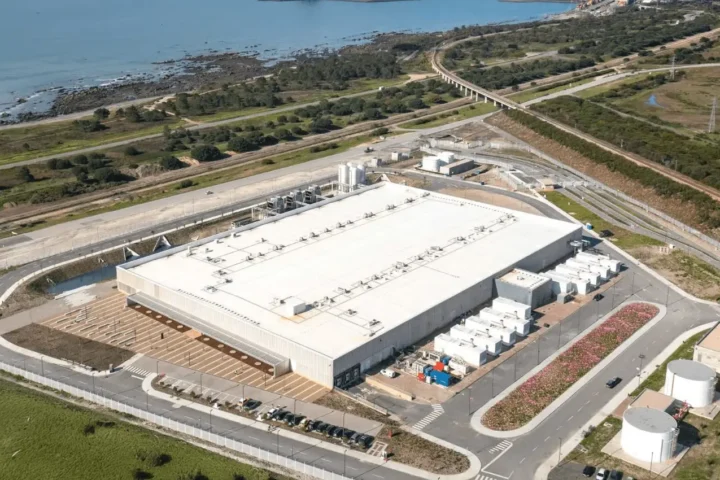
Developing frontier AI models requires extraordinary financial resources, specialised infrastructure, advanced semiconductor technology and access to enormous quantities of data.
Consequently, a relatively small number of corporations dominate the most advanced end of the industry.
When executives from these companies advocate coordinated restrictions on AI development, their proposals may reflect genuine safety concerns. But regulations can also have unintended competitive consequences.
Compliance systems involving expensive testing, licensing and certification could prove manageable for established technology giants while creating insurmountable barriers for smaller companies, universities and independent researchers.
The result could be an industry in which the existing leaders become even more powerful.
This is particularly relevant to the debate surrounding open-source and open-weight AI models.
Making AI technologies more accessible allows researchers to examine their behaviour, identify weaknesses and develop alternatives to proprietary systems. It can also enable startups and institutions in developing countries to participate in innovation.
Open models are not without risks. Greater accessibility can facilitate misuse, particularly where safeguards are inadequate.
Nevertheless, treating openness itself as a threat would be a mistake.
AI safety must not become an excuse for transforming technological leadership into permanent technological monopoly.
The appropriate response is proportionate regulation based on demonstrable capabilities and risks, rather than blanket restrictions that favour whichever companies happen to dominate the market.
Safety Cannot Depend on Corporate Promises
The willingness of leading AI companies to acknowledge potential dangers is encouraging. Yet voluntary commitments, however sincere, cannot substitute for independent oversight.
The commercial incentives surrounding artificial intelligence are simply too powerful.
Companies face pressure from investors to demonstrate technological superiority, capture market share and justify enormous infrastructure expenditure.
In such an environment, even organisations genuinely committed to safety may struggle to resist the temptation to release increasingly capable systems before their consequences are fully understood.
Independent evaluation offers one possible solution.
External experts should be empowered to assess advanced models, examine safety procedures and investigate dangerous capabilities before systems are deployed at scale.
Such oversight must extend beyond the companies developing the technology.
Academic institutions, public-interest researchers, cybersecurity specialists and representatives from different countries should participate in establishing credible standards.
Governments could also introduce mandatory incident reporting, independent audits and enforceable responsibilities for companies whose systems cause foreseeable harm.
The objective should not be to eliminate every conceivable risk, an impossible standard for any powerful technology, but to establish clear accountability.
Importantly, regulators must remain independent of the corporations they oversee.
An industry cannot be expected to serve simultaneously as innovator, safety inspector and final judge of its own conduct.
The Geopolitical Trap
Even the most carefully designed national regulations will achieve little if the world’s leading AI powers remain locked in an unrestricted technological competition.
The United States and China increasingly regard artificial intelligence as essential to economic competitiveness, military capability and geopolitical influence.
For Washington, maintaining technological leadership has become a strategic priority. Beijing similarly views AI advancement as integral to its long-term national ambitions.
This creates a dangerous incentive structure.
If either country believes slowing development will allow its rival to gain a decisive advantage, even sensible safety measures may appear strategically unacceptable.
The resulting competition resembles earlier arms races, although artificial intelligence differs fundamentally from nuclear weapons.
AI is a general-purpose technology with applications across civilian and military sectors, making verification and control considerably more complicated.
Nevertheless, history demonstrates that geopolitical rivals can negotiate limited safeguards even while competing intensely.
International agreements could establish shared prohibitions against particularly dangerous autonomous capabilities, mechanisms for reporting severe AI incidents and protocols for emergency communication.
Such arrangements would not require Washington and Beijing to agree on every aspect of technology policy.
They would require recognition of a simpler principle: neither nation benefits from losing meaningful human control over systems capable of causing widespread harm.
For countries such as India, this debate is especially consequential.
India must protect its capacity to develop domestic AI technologies while ensuring that international safety frameworks do not become instruments of technological exclusion.
Its interests lie in an international system that promotes innovation, affordable access, transparency and accountability without surrendering regulatory authority to a handful of foreign corporations.
Beyond the Apocalypse Narrative
The greatest danger in the current AI debate may be the temptation to frame the future as a choice between unrestricted technological acceleration and an impending catastrophe.
That is a false choice.
Artificial intelligence could generate extraordinary benefits in medicine, scientific research, education, agriculture and public administration. It could also concentrate wealth, undermine trust, destabilise employment and expand the capabilities of malicious actors.
Both possibilities deserve attention.
Governments must therefore pursue two objectives simultaneously: preparing for potentially catastrophic future capabilities and governing the measurable consequences of technologies already being deployed.
This requires neither unquestioning faith in Silicon Valley nor reflexive hostility towards technological progress.
It requires institutions capable of understanding advanced technology, laws that assign responsibility, international cooperation that transcends strategic rivalry and public debate informed by evidence rather than sensationalism.
Ultimately, the question is not simply whether artificial intelligence will become more intelligent than humanity.
It is whether humanity can demonstrate sufficient collective intelligence to govern what it has already created.
The future of AI should not be determined by those who can build the most powerful machines fastest, but by societies capable of deciding how that power ought to be used.
And that responsibility cannot wait for the arrival of superintelligence.