For the better part of a decade, vertical farming has been sold as the ultimate techno-utopian salvation for a broken global food system. Investors poured billions into startups promising to build glowing, sterile skyscrapers of food in the heart of our biggest cities. The pitch was intoxicating: zero pesticides, 95% less water, hyper-local distribution, and immunity from the erratic weather of a changing climate.
But as we pass the mid-2020s, the narrative has violently collided with reality. A wave of high-profile bankruptcies and restructuring—costing investors an estimated $2.2 billion by 2025—has exposed the fundamental flaws in the vertical farming model. To understand why vertical farming is not the panacea it was made out to be, we must look past the pristine LED-lit marketing and examine the hard data of crop biology, energy consumption, and unit economics.
The Caloric Arithmetic: Garnish vs. Dinner
The most fatal flaw in the vertical farming thesis is a fundamental misunderstanding of what actually feeds the world. Global food security is not measured in leafy greens; it is measured in calories.
To feed a population, a food system must produce dense, affordable carbohydrates, proteins, and fats. These come from staple crops: wheat, rice, maize, potatoes, legumes, and oilseeds. Vertical farms do not—and fundamentally cannot—grow these crops economically. Instead, they grow what agricultural analysts refer to as “garnish”: microgreens, lettuce, basil, and fast-growing herbs.
The barrier here is not just technological; it is biological and thermodynamic. Plants evolved over hundreds of millions of years to convert free, abundant solar radiation into biomass. Staple crops are incredibly light-hungry and require vast expanses of space to mature. When you move agriculture indoors, you are forced to replace the free, infinitely powerful sun with artificial LED lighting.
The “caloric arithmetic” of indoor farming is devastatingly inefficient for staples. The electrical energy required to power the LED lights to grow a crop of indoor wheat far exceeds the actual caloric energy yielded by that wheat. Growing bulk calories under electric light burns exponentially more energy than the food contains.
Because indoor farming is confined to light, fast, low-calorie, and high-value crops, its contribution to actual global hunger or urban food security is essentially zero. A massive vertical farm might produce millions of heads of lettuce, but lettuce is almost entirely water. You cannot feed a city on arugula. Therefore, the assertion that vertical farming will “replace traditional agriculture” or make cities self-sufficient is a dangerous distraction from the real challenges of producing staple calories sustainably.
The Energy Paradox and Environmental Footprint
One of the loudest claims made by vertical farming proponents is its environmental sustainability. It is true that vertical farms are phenomenally efficient with land and water. A 2024 Life Cycle Assessment (LCA) conducted by researchers at the University of Surrey and the University of Aberdeen found that vertical farming requires up to 28 times less land than traditional field methods and slashes water usage by up to 95% through closed-loop recirculation.
However, land and water are only part of the environmental equation. The Achilles’ heel of vertical farming is energy.
By replacing the sun with LEDs, and natural wind with massive HVAC (Heating, Ventilation, and Air Conditioning) systems for dehumidification and temperature control, vertical farms trade land and water consumption for a massive energy footprint. In the aforementioned 2024 LCA study, nearly 40% of the climate change impact of a vertical lettuce farm was attributed directly to its electricity consumption.
If a vertical farm draws its power from a standard grid reliant on fossil fuels, its carbon footprint per kilogram of produce can actually exceed that of traditional farming, even when accounting for the emissions saved by eliminating long-haul transportation. A head of lettuce trucked 2,000 miles from a sunlit field in California often has a lower carbon footprint than a head of lettuce grown indoors three miles from your apartment, simply because of the immense power required to run grow lights for 16 hours a day.
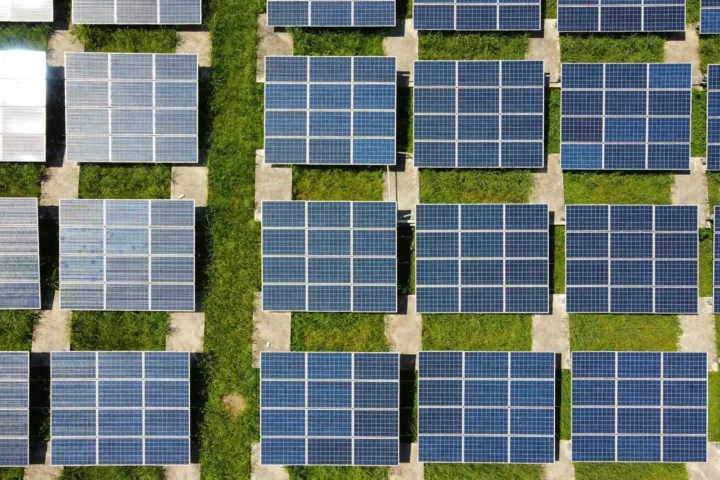
While proponents argue that the grid is greening and vertical farms can be powered by renewable energy, this introduces another layer of inefficiency. Using solar panels to generate electricity, transmitting that electricity, and using it to power LEDs to grow plants is vastly less efficient than simply letting the sun shine directly on the plants.
The Broken Unit Economics
The thermodynamics of vertical farming inevitably dictate its economics. Over the last few years, the industry has suffered a brutal reality check. Pioneers like AeroFarms filed for Chapter 11 bankruptcy in 2023, eventually restructuring to focus purely on high-margin microgreens. Other heavily funded startups faced similar fates or drastic downsizings.
The bankruptcies generally stem from two primary economic traps:
The CAPEX Trap (Capital Expenditures): Building a vertical farm is closer to building a semiconductor clean-room than it is to building a traditional farm. The infrastructure costs are staggering. A commercial-scale facility requires millions of dollars in LED arrays, complex fertigation (fertilizer + irrigation) plumbing, automated robotics, sensory equipment, and industrial-grade climate control systems. High yields are necessary just to service the debt on the facility. If a crop fails—or if a mechanical error ruins a harvest—the financial blow is catastrophic.
The OPEX Trap (Operational Expenditures): Once built, the farm costs a fortune to run. Electricity is not a minor line item; it can account for up to 50% of total running costs. Furthermore, the automation that was supposed to save money on labor often ends up requiring a different, highly expensive type of labor: software engineers, robotics technicians, and specialized agronomists.
Ultimately, vertical farms are forced to sell their products at premium prices. But they aren’t just competing with field agriculture; they are competing with high-tech greenhouses.
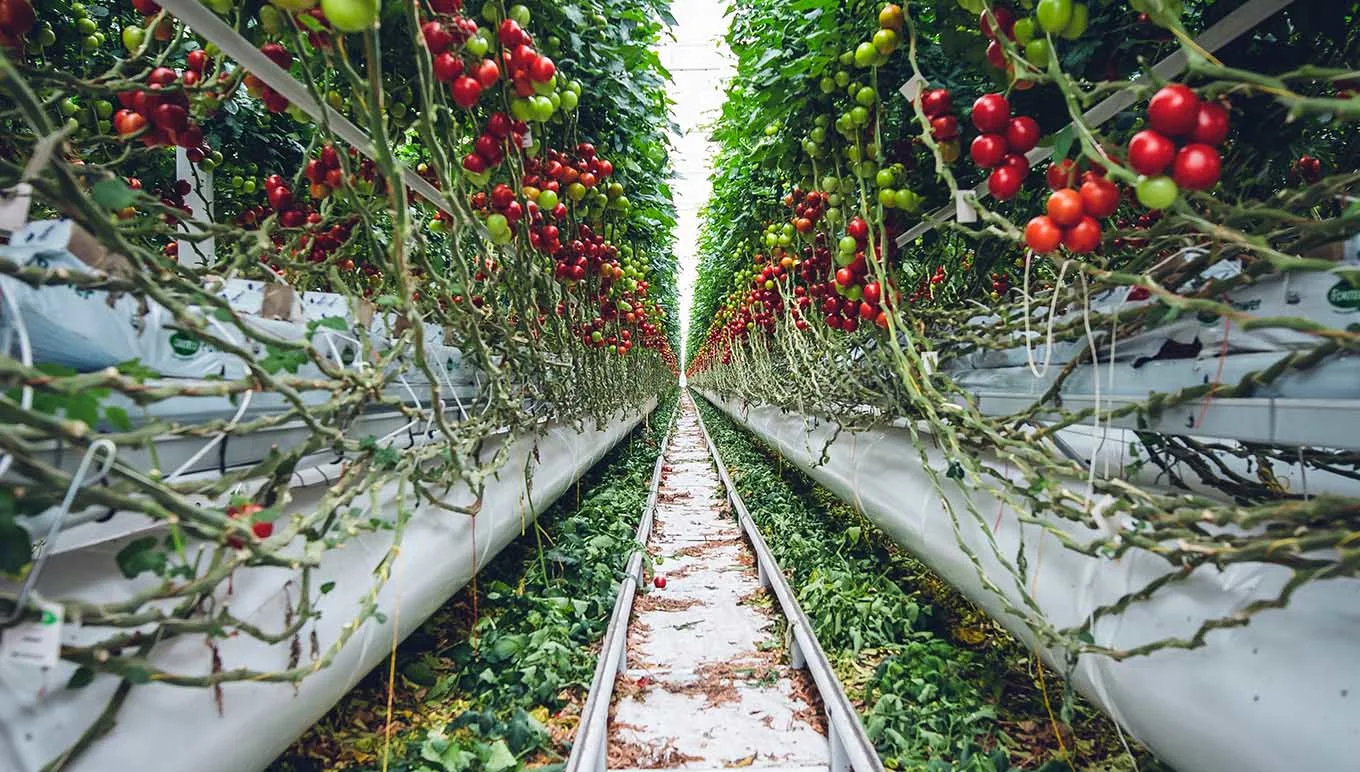
Advanced greenhouse agriculture (like the model perfected in the Netherlands) offers a devastatingly effective middle ground. Greenhouses provide the climate control, pest protection, and water efficiency of a vertical farm, but with one massive economic advantage: transparent roofs. By utilizing free sunlight and only supplementing with LEDs during dark winters, greenhouses produce similar yields at a fraction of the operating cost. For a vertical farm to survive, it must convince consumers to pay a massive premium for a product that is virtually indistinguishable from greenhouse-grown produce.
Where Does Vertical Farming Actually Belong?
Saying that vertical farming will not fix the global food system is not the same as saying the technology is useless. The industry is currently undergoing a necessary correction, moving away from messianic claims of “feeding the world” and settling into profitable, highly specific niches.
Vertical farming is highly effective in the following scenarios:
- Harsh Climates: In regions with extreme weather, no arable land, or severe water scarcity—such as the Middle East, Singapore, or polar research stations—the high cost of indoor farming is justified by the impossibility of traditional farming.
- High-Value Botanicals: Growing plants for pharmaceuticals, cosmetics, or specialized culinary herbs where extreme consistency and chemical profiles are required.
- Seedling Propagation: Many traditional farmers and greenhouse operators now use vertical farming techniques to grow hardy, disease-free seedlings before transplanting them into sunlit fields or greenhouses for their main growth phase.
Fixing the Real Food System
The story of vertical farming is a classic tale of Silicon Valley tech-solutionism meeting the unyielding laws of biology and physics. We tried to treat agriculture like a software problem—assuming that if we just optimized the code and upgraded the hardware, we could bypass nature entirely.
But food security is a complex, massive-scale challenge. True solutions to our agricultural crises will not be found in glowing windowless warehouses. They will be found out in the dirt and under the sun.
If we want to fix our food system, capital must be redirected toward methods that scale to meet caloric needs. This means investing in regenerative agriculture that restores soil health, expanding advanced sunlit greenhouse infrastructure, developing drought-resistant crop genetics, and tackling the supply-chain inefficiencies that cause 30% of all food to be wasted before it reaches a plate.
Vertical farming is a brilliant piece of engineering, but it is an industrial machine, not a global farm. It can provide a fantastic garnish, but we must look elsewhere for dinner.