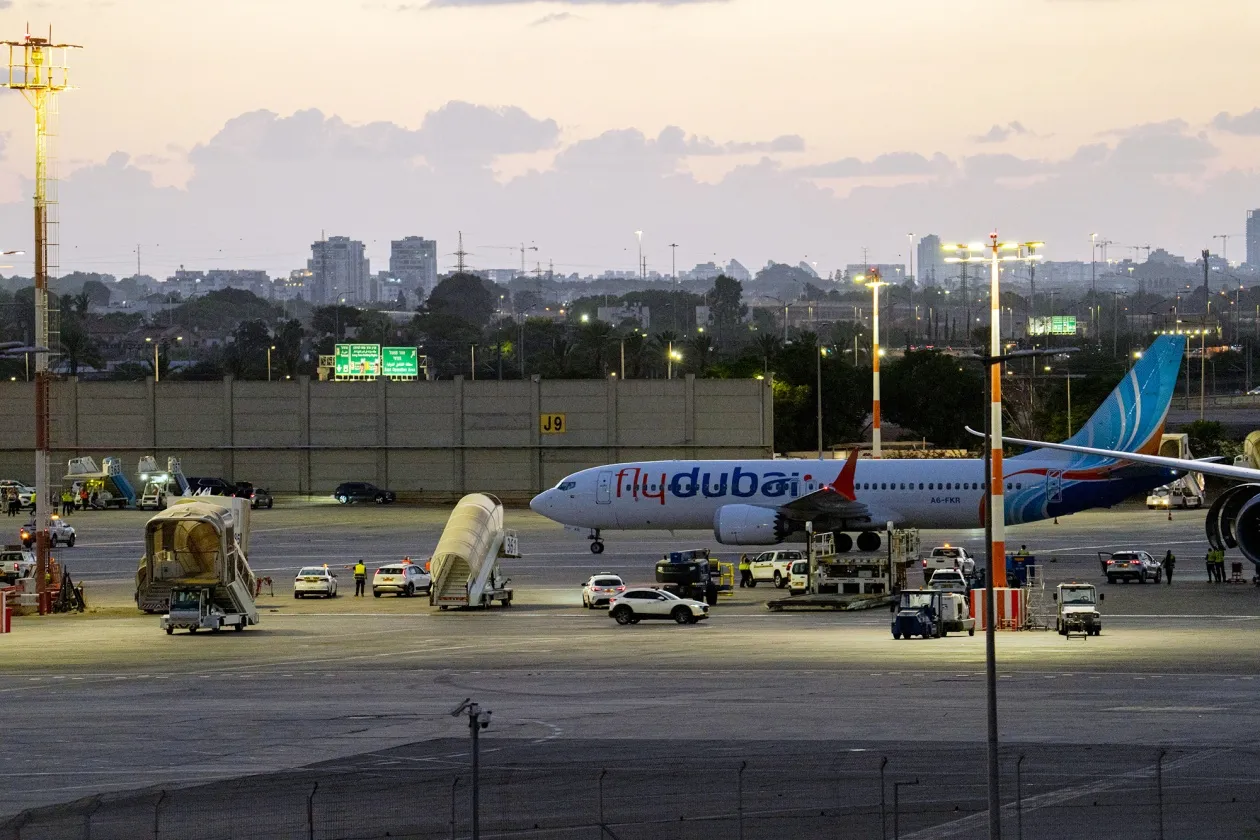
On the morning of 30 September, Flydubai flight FZ1073 left Dubai for Tel Aviv and, about two hours later, dropped more than 17,000 feet in under two minutes. Israeli officials say the co-pilot stabbed the captain and tried to crash the aircraft. Passengers and crew broke into the cockpit, overpowered him, and the jet landed safely at Tabuk in northwestern Saudi Arabia. No passengers were reported seriously hurt. The account below is drawn from flight data, airline statements, and reporting by the BBC, Reuters, CNN, and Israeli and Indian outlets. Motive and some cockpit details remain under investigation and are not uniformly confirmed.
🧵 THREAD
— Al Jazeera English (@AJEnglish) September 30, 2026
A Flydubai flight from the UAE to Israel was diverted to Saudi Arabia after issuing an emergency signal.
The airline said an altercation had occurred on the flight deck.
Here’s what we know so far ⤵️ pic.twitter.com/baBcJOKbmq
Flydubai, the Dubai-based low-cost carrier, was operating a Boeing 737 on the Dubai–Tel Aviv route that has run since the 2020 Abraham Accords. FZ1073 departed Dubai International at 07:05 local time (03:05 GMT) for Ben-Gurion Airport. Israeli Prime Minister Benjamin Netanyahu said 174 people were on board, almost all of them Israeli; other reports put the Israeli share at about 166, including children. The aircraft was over northern Saudi Arabia, near the Jordanian border, when it reversed course, entered a steep descent, and briefly crossed into Jordanian airspace before turning back.
Flight-tracking data recorded a loss of roughly 17,000 to 17,400 feet in less than two minutes. The crew first transmitted squawk 7700, the general emergency code, then 7500, the code for unlawful interference or hijacking, before reverting to 7700. Passengers described a sudden dive, screaming, and the sense that the aircraft was no longer under control. Israel scrambled fighter jets. The jet then began a controlled descent and touched down at Tabuk around 06:58 GMT. Tabuk airport said both pilots were injured and taken to hospital. Hours later the passengers left on a replacement Flydubai aircraft and reached Tel Aviv that evening.
The captain was Indian national Smit Machchhar. The Indian embassy in Riyadh confirmed his identity and said he was in stable condition in a Tabuk hospital. Indian reporting describes him as Gujarati, a former SpiceJet commander who joined Flydubai in June 2022 as a direct-entry captain, with more than 13 years of commercial flying and about 9,750 hours on Boeing 737s, including time as a line-training captain. Netanyahu called him a “true hero” who, despite being stabbed and seriously injured, fought back, resisted, opened the cockpit door, and enabled passengers and crew to overpower the attacker, “preventing a catastrophic mid-air disaster.” A spokesperson for Netanyahu told Reuters that Machchhar, covered in blood on the cockpit floor, used what was described as the last of his strength to release the cockpit door. Passenger accounts and cabin video showed him bloodied, with wounds reported to the head and hands. He did not land the aircraft himself. Once the door was open and the attacker restrained, other Flydubai pilots who had been seated in the cabin — one described by a passenger as British, another as European — took the controls and flew the diversion to Tabuk.
The attacker was the co-pilot. Israeli security officials told the New York Times, Reuters, and Israeli media that he is an Omani national who had worked for the airline for less than a year; Israel Hayom put his service at about nine months.
Breaking News: Passengers on a Tel Aviv flight intervened after a pilot “apparently attempted to crash” a FlyDubai jet, Benjamin Netanyahu said. Follow updates. https://t.co/q0TVUM2A8Z
— The New York Times (@nytimes) September 30, 2026
Oman has not confirmed the identification, and major international outlets have not published his name. Oman is a Muslim-majority country, and Israel’s defence minister, Israel Katz, called the episode an “attempted jihadist terror attack” that was stopped only because Israeli passengers broke into the cockpit and overpowered “the terrorist.” Netanyahu said one pilot stabbed the other and “apparently tried to crash the plane,” and that the attacker was arrested and was being questioned by Saudi authorities. Passengers said they found him with a knife, striking at instruments or trying to sabotage systems, after the aircraft had already gone into a spin. He was subdued, tied with zip ties and headphone cables, and also hospitalised. Flydubai’s own statement was narrower: it confirmed an “altercation” on the flight deck, said an on-duty crew member secured the flight, and asked parties not to speculate while authorities gathered facts. Saudi and Emirati investigators have not publicly adopted the Israeli characterisation. Other possibilities, including a non-political mental-health episode, were still being examined as of 30 September, and Israel had not formally designated the incident an act of terrorism even as its defence minister used that language.
Flydubai passenger describes putting attacker in chokehold after cockpit stabbing https://t.co/pxQVGo2D0J
— BBC News (World) (@BBCWorld) September 30, 2026
The intervention that stopped the dive was carried out by Israeli passengers, with at least one crew member. Netanyahu said he spoke to a passenger who described the aircraft entering a spin and descending, then breaking into the cockpit with a crew member and overpowering the stabber while he tried to sabotage the systems. Yaniv Hayun, later greeted by Netanyahu still wearing a blood-stained shirt, said the injured captain was near the door and opened it before collapsing; Hayun put the attacker in a chokehold, pulled him out, and then pulled on the controls to level the aircraft until another pilot took over. He told reporters he knew the basic recovery from watching the television series Air Crash Investigation. Assaf Rajwan was named as one of three Israelis who helped subdue the co-pilot. Other passengers, including Zvika Meness, said the attacker was tied down with his own zip ties and multimedia headphones. A doctor on board gave first aid. Passengers described blood in the aisle, children screaming, and some reciting the Shema. Cabin video reviewed by the BBC showed no sign of manipulation and matched the passenger accounts of a knife attack and a struggle for the cockpit.
The sequence that emerges from these accounts is narrow and specific. The co-pilot is alleged to have attacked Machchhar with a knife inside the locked cockpit. The captain, wounded, still managed to unlatch the door. Israeli passengers forced or were let through, restrained the co-pilot, and held the aircraft stable long enough for off-duty pilots to recover it. The 17,000-foot plunge was the visible result of that fight over the controls. Rudder damage was later reported. Both pilots left the aircraft for hospital; the passengers did not.
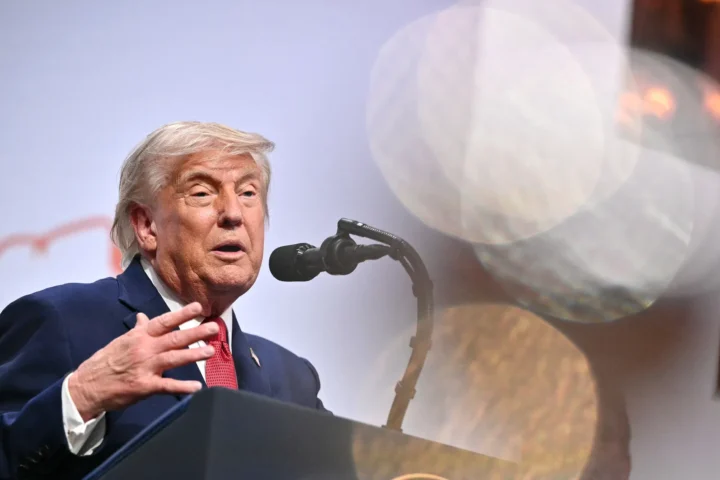
After landing, Saudi authorities held the scene. Israeli officials said the co-pilot was in Saudi custody for questioning. Flydubai sent two replacement aircraft, suspended its Israel flights pending investigation, and said other operations were unaffected. Israel’s transport minister, Miri Regev, ordered a review of Flydubai crew on Israeli routes, focused on the fact that the co-pilot held Omani citizenship and that Oman has no diplomatic relations with Israel. Netanyahu spoke with Donald Trump, who suggested the attacker was “perhaps a terrorist.” India’s embassy limited itself to confirming Machchhar’s identity and condition.
What is solid is the flight path, the emergency codes, the safe landing at Tabuk, Machchhar’s identity and injuries, and the passenger intervention. What is still allegation, pending Saudi, Emirati, and airline inquiries, is the co-pilot’s precise intent, whether the act was ideological, and the full cockpit timeline. The public record so far is that an Indian captain, stabbed and on the floor, opened the door; Israeli passengers, among them Yaniv Hayun and Assaf Rajwan, restrained the Omani co-pilot Israel’s defence minister called a jihadist attacker; and other pilots landed a jet that had already fallen more than three miles in two minutes.