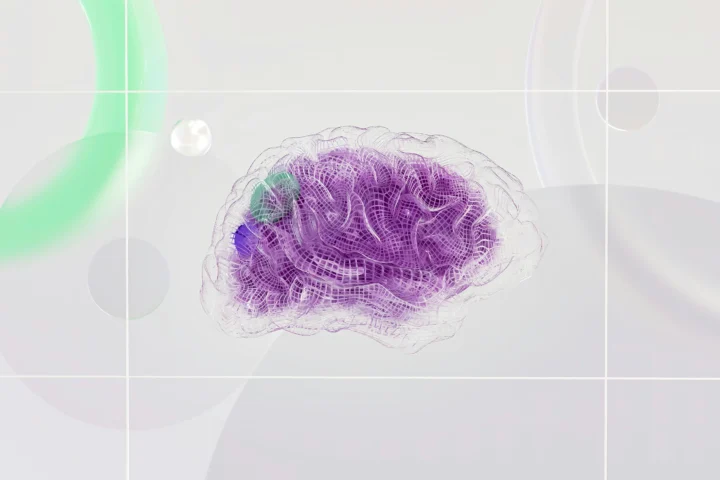
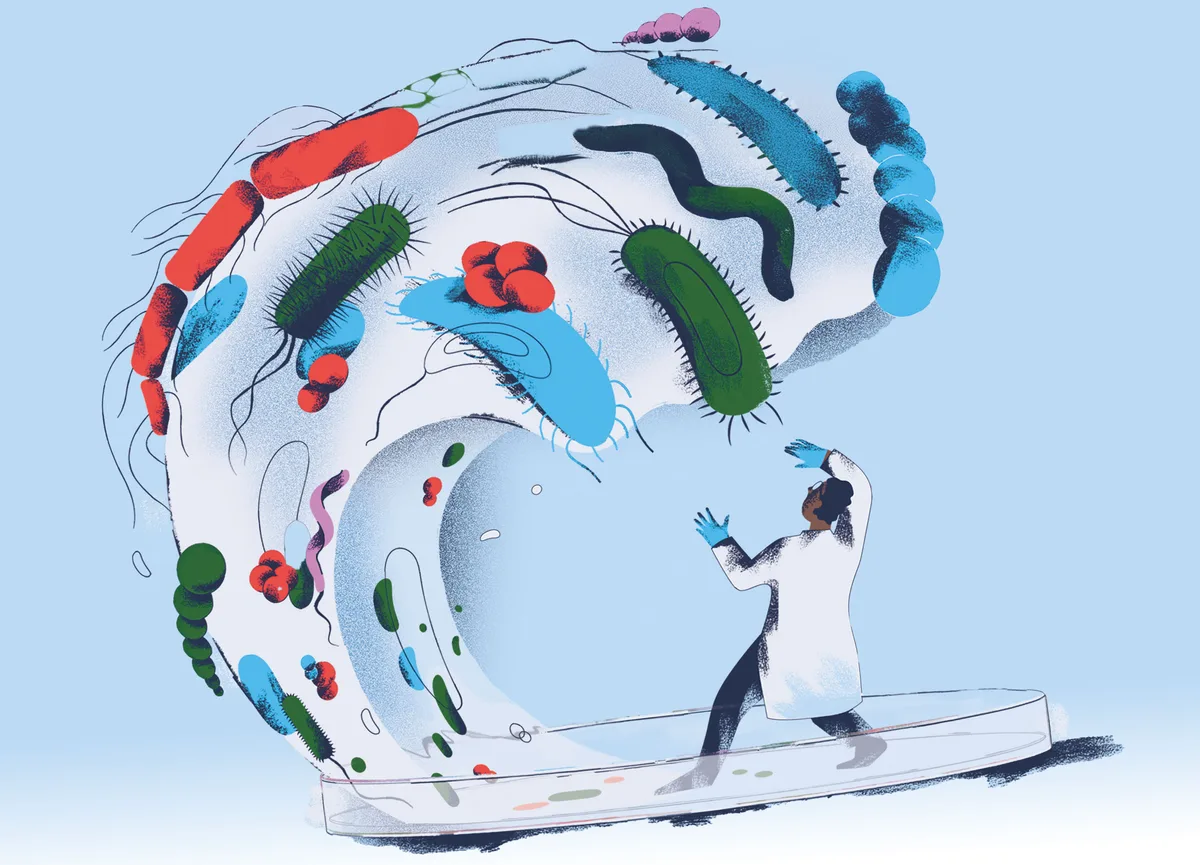
Scientists are exploring the possibility of creating organisms from molecules that are the mirror images of those found in nature. While the research holds medical promise, it also raises an unsettling question: Could humanity create a form of life that the natural world is unable to control?
Humanity has spent centuries attempting to understand the origins of life. From deciphering the structure of DNA to engineering microorganisms capable of producing medicines, scientific progress has steadily expanded our ability to manipulate the biological world. But what happens when science moves beyond modifying existing life and begins contemplating the creation of an entirely different version of it?
This is no longer merely a question for science fiction. Researchers are investigating the molecular foundations of what is known as mirror life, a hypothetical form of life constructed from biological building blocks that are chemically reversed versions of those found in nature.
The concept is fascinating. Its implications, however, could be profoundly troubling.
The Other Side of Biology
To understand mirror life, one must first appreciate a curious feature of the natural world. Many molecules essential to living organisms possess a property called chirality, derived from the Greek word for hand.
Just as our left and right hands are mirror images but cannot be perfectly superimposed, certain biological molecules exist in two mirror-image forms.
Nature has overwhelmingly favoured one orientation over the other. The amino acids used to construct proteins are almost exclusively left-handed, while the sugars forming the backbone of DNA and RNA are right-handed.
This molecular consistency is fundamental to how life functions. Enzymes recognise particular molecular shapes, proteins interact with other molecules in highly specific ways, and biological systems depend upon these relationships.
But chemistry does not inherently prohibit the opposite arrangement.
In theory, scientists could construct biological systems using right-handed amino acids and left-handed sugars, effectively reversing the molecular architecture upon which familiar life depends.
The result would not simply be another genetically modified organism. It would represent a fundamentally different biochemical system, potentially capable of functioning independently of the molecular conventions governing life on Earth.
The first such organism, if ever successfully created, would most likely be a bacterium.
And that is where scientific curiosity begins to intersect with biological danger.
When Nature’s Defences May Not Work
Throughout evolutionary history, living organisms have developed elaborate mechanisms to defend themselves against microbial threats.
Human immune systems recognise and attack invading pathogens. Naturally occurring enzymes break down biological molecules. Predatory microorganisms and viruses help regulate bacterial populations. Together, these mechanisms form an intricate system of biological checks and balances.
Mirror organisms could potentially disrupt this arrangement.
Because their molecular structures would be reversed, some of the mechanisms that recognise, digest or destroy conventional microorganisms might struggle to interact with them.
An enzyme designed to break down a naturally occurring protein, for example, may not function effectively against its mirror-image equivalent.
Similarly, components of immune systems that evolved to recognise familiar molecular structures might fail to detect certain features of mirror bacteria.
This does not mean that mirror organisms would automatically be invincible or that every immune defence would fail. Their actual behaviour remains uncertain because no complete mirror organism is known to exist.
Nevertheless, the possibility that such bacteria could evade important biological controls has alarmed researchers.
In 2024, an international group of scientists warned that mirror bacteria might pose serious risks to humans, animals, plants and entire ecosystems. Their concern extended beyond the possibility of new infectious diseases to the prospect of organisms spreading through environments where existing biological mechanisms might be poorly equipped to restrain them.
Unlike many laboratory hazards, a self-replicating organism could potentially escape the boundaries of the facility in which it was created.
Once established in the environment, controlling its spread might prove extraordinarily difficult.
A Medical Promise With a Dangerous Shadow
The debate becomes more complicated because research involving mirror-image molecules is not without potential benefits.
Scientists have already made progress in synthesising mirror versions of biological molecules and developing specialised systems for manipulating them.
One particularly promising application lies in medicine.
Many conventional therapeutic molecules are rapidly broken down by enzymes inside the human body. This can limit their effectiveness, requiring repeated doses or sophisticated delivery mechanisms.
Mirror-image molecules, by contrast, may resist degradation by enzymes that ordinarily act upon their natural counterparts.
This property could enable researchers to develop longer-lasting medicines, more stable therapeutic compounds and novel molecular tools for biotechnology.
Such possibilities make mirror-molecule research scientifically valuable.
Yet there is a crucial distinction between creating individual mirror molecules and assembling an entire self-replicating mirror organism.
The former may deliver considerable benefits without producing a new form of life. The latter could introduce risks extending far beyond the laboratory.
The challenge, therefore, is not to abandon an entire field of scientific investigation but to identify the point at which beneficial research begins to create unacceptable dangers.
One example is the proposed development of mirror ribosomes.
Ribosomes are the molecular machinery responsible for manufacturing proteins inside living cells. A mirror-image ribosome could potentially facilitate the production of mirror proteins for medical and industrial applications.
However, it could also represent a major technological step towards constructing a complete mirror organism.
This dual-use dilemma illustrates the difficulty facing scientists and policymakers: the same technological advances that promise medical innovation could also help make an exceptionally hazardous biological system possible.
A Threat That Can Still Be Prevented
Perhaps the most important feature of the mirror-life debate is that the feared technology does not yet exist.
Despite advances in synthetic biology, creating a fully functional mirror organism would require overcoming formidable scientific and engineering obstacles.
Researchers have suggested that the necessary breakthroughs could remain decades away, with estimates ranging from approximately 10 to 30 years, although such projections are inherently uncertain.
That provides an unusual opportunity.
Many technological risks become apparent only after a discovery has been commercialised, widely adopted or released into the environment. By then, reversing the consequences may be difficult or impossible.
Mirror life presents a different situation. Scientists have identified a potentially catastrophic risk before the technology capable of producing it has matured.
This gives governments, research institutions and international organisations time to establish meaningful safeguards.
The United States has already acknowledged the issue in its policy discussions on high-risk life-sciences research, explicitly identifying the creation of mirror organisms as an area of concern.
But isolated national restrictions would be insufficient.
Scientific knowledge crosses borders, research collaborations are international, and biological threats do not recognise geopolitical boundaries.
Preventing the creation of mirror organisms would therefore require coordinated international action.
Can Global Rivals Find Common Ground?
At a time when scientific and technological leadership has become central to geopolitical competition, international restraint may appear difficult to achieve.
The United States and China, in particular, are competing across fields ranging from artificial intelligence and advanced computing to biotechnology.
Yet mirror life offers an opportunity for cooperation precisely because its potential consequences would be shared by all nations.
Neither country would gain a meaningful strategic advantage from introducing an uncontrollable biological threat into the world’s ecosystems.
A coordinated approach between Washington and Beijing could help establish international standards distinguishing acceptable research involving mirror molecules from efforts directed towards creating self-replicating mirror organisms.
Such cooperation could include shared scientific assessments, voluntary research restrictions, oversight of particularly sensitive technologies and eventually formal international agreements.
There is historical precedent for scientific cooperation between geopolitical adversaries.
During the Cold War, the United States and the Soviet Union worked together to support the global campaign against smallpox. Despite deep ideological hostility, both recognised that eradicating a deadly infectious disease served a common human interest.
Their cooperation contributed to one of public health’s greatest achievements: the worldwide eradication of smallpox, officially declared in 1980.
The lesson is significant. Strategic rivalry need not prevent collaboration when the threat transcends national interests.
Mirror life may demand a similar recognition of shared responsibility.
The Need for Scientific Boundaries
Scientific progress is often celebrated as an inherently positive force. History provides ample justification for that confidence.
Advances in biology have transformed healthcare, agriculture, food production and our understanding of human existence.
Yet progress also requires judgment.
The ability to pursue a scientific breakthrough does not necessarily establish that it should be pursued.
This distinction becomes especially important when a technology could create irreversible consequences for ecosystems or human health.
Establishing boundaries around mirror-life research would not amount to rejecting scientific inquiry. It would represent an acknowledgement that research must be evaluated not only by what it can achieve but also by what it might unleash.
A responsible framework should preserve opportunities to develop beneficial mirror-image medicines while preventing the assembly of biological systems capable of autonomous replication and evolution.
Such safeguards would need to evolve alongside scientific understanding, informed by researchers across disciplines including synthetic biology, immunology, ecology, biosecurity and ethics.
Importantly, decisions should not be confined to laboratories or government committees. The potential consequences concern the entire biosphere, making public accountability and international transparency essential.
The Wisdom to Leave Some Doors Unopened
Human history is filled with discoveries that initially appeared impossible.
The manipulation of atoms, the decoding of genomes and the engineering of artificial intelligence all demonstrate how rapidly speculative ideas can become practical realities.
Mirror life may eventually join that list of technological possibilities.
But its emergence need not be inevitable.
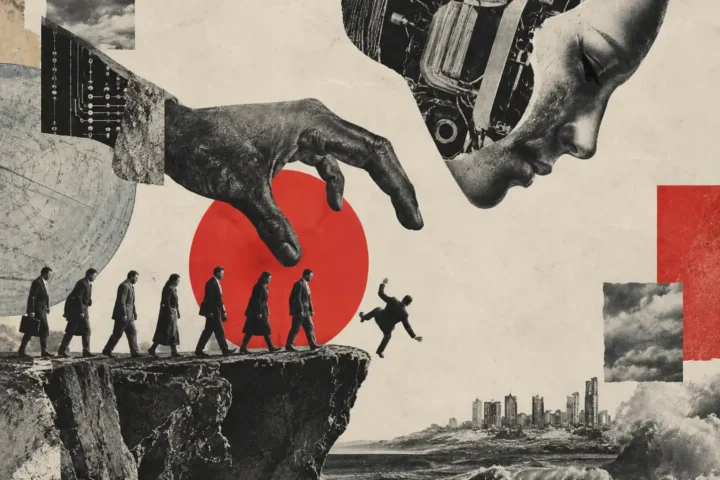
The most consequential decision humanity makes about this field may not be how to create mirror organisms, but whether to create them at all.
There is a profound difference between understanding how nature works and introducing an entirely new biological system into a world that has never encountered it.
For billions of years, life on Earth has evolved within a broadly shared molecular framework. The possibility of constructing organisms outside that framework demands exceptional caution.
The scientific community has offered something rare: an early warning about a danger that may still be entirely preventable.
Governments now have the opportunity to act before scientific ambition outruns collective wisdom.
Ultimately, the question surrounding mirror life is not whether humanity possesses the ingenuity to create something unprecedented. It is whether we possess the foresight to recognise when a remarkable scientific possibility should remain unexplored.
Sometimes, the greatest demonstration of human intelligence is not opening a new frontier, but understanding why certain frontiers are better left untouched.