
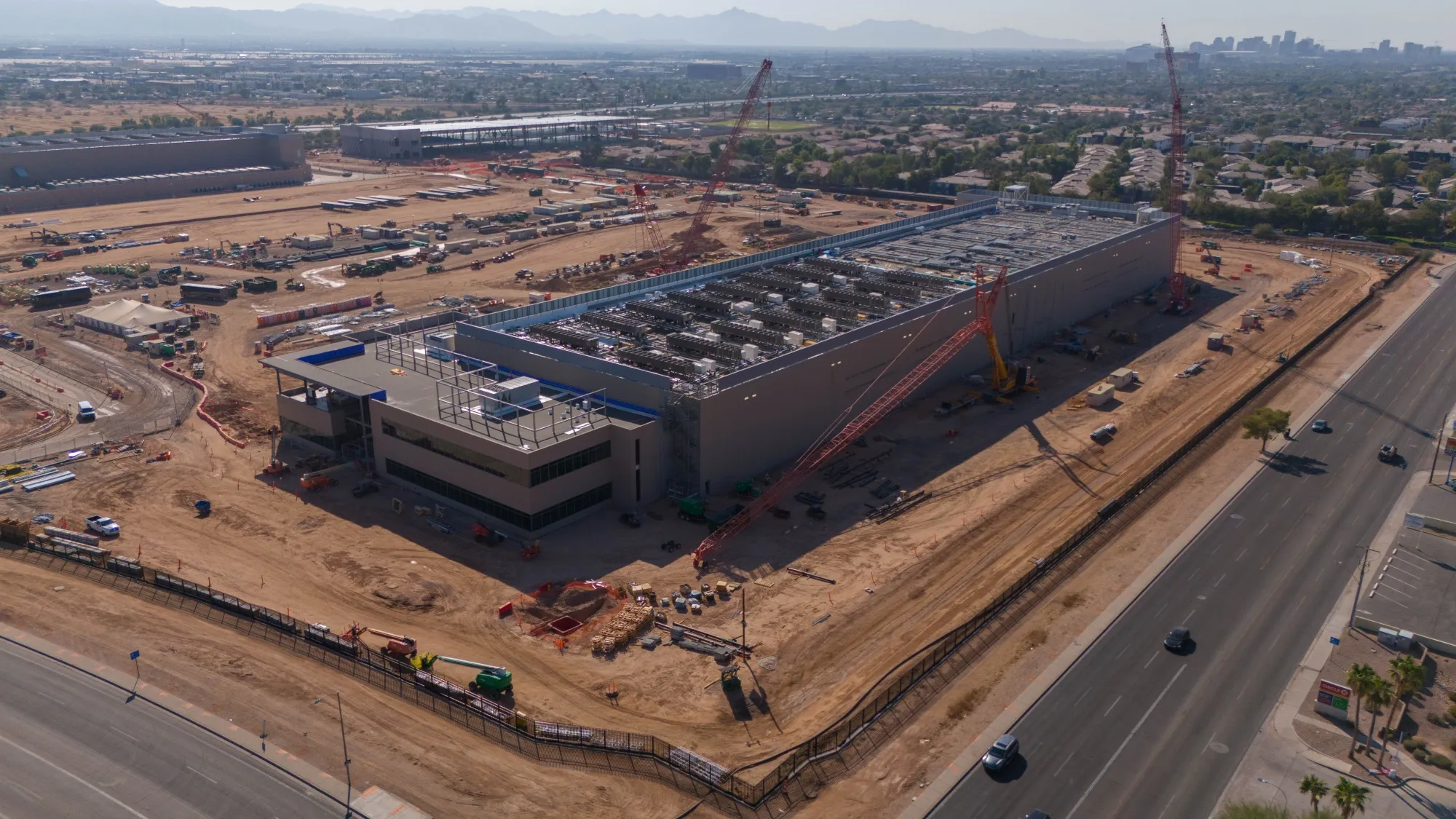
The rapid evolution of artificial intelligence (AI) has precipitated an unprecedented physical infrastructure boom, challenging traditional paradigms of corporate finance and macroeconomic forecasting. Between 2025 and 2032, total investment in AI data centers, power generation, and semiconductor chips is projected to reach $10.3 trillion, representing an estimated 3.63% of United States Gross Domestic Product (GDP) annually. This scale of capital mobilization eclipses historical infrastructure expansions, including the railroad network, the interstate highway system, and the late-1990s telecommunications buildout. Crucially, the financing of this colossal endeavor is undergoing a structural migration. Major technology firms are increasingly shifting capital expenditures off their corporate balance sheets, favoring complex joint ventures, private credit, special-purpose vehicles (SPVs), and circular financing arrangements. While this opaque capital structure shields immediate credit ratings, it obscures underlying economic risks and correlates exposures across the broader financial system. Although it is premature to classify the AI infrastructure boom as an immediate systemic risk akin to historical credit crises, this paper argues that the widespread adoption of off-balance-sheet financing necessitates proactive regulatory intervention. Enhancing measurement, transparency, and structural disclosure while the industry’s capital architecture is still evolving is critical to mitigating future financial instability.
1. Introduction
The contemporary narrative surrounding artificial intelligence frequently emphasizes algorithmic breakthroughs, sophisticated software architectures, and the transformative potential of large language models. However, the operationalization of these digital innovations relies heavily on a massive physical capital boom. The proliferation of AI is contingent upon sprawling data centers, advanced cooling mechanisms, exorbitant power generation requirements, and an insatiable demand for highly specialized semiconductor chips, such as Graphics Processing Units (GPUs).
As the industry pivots from conceptual model training to widespread enterprise deployment, the core dilemma facing stakeholders is shifting. The primary concern is no longer merely how quickly this infrastructure can be erected, but whether the sector can generate sufficient economic value to justify the astronomical capital being committed. The sheer magnitude of this endeavor—a projected $10.3 trillion from 2025 to 2032—makes the AI buildout a macroeconomically consequential event.
Simultaneously, the mechanisms utilized to fund this expansion are evolving rapidly. Historically, dominant technology companies (often referred to as “hyperscalers”) financed the construction of custom data centers directly on their balance sheets. Recently, however, there has been a pronounced “risk shift” toward renting capacity from specialized data center operators and utilizing off-balance-sheet financing vehicles. These arrangements introduce severe opacity into the financial system, blurring the lines of ultimate accountability in the event of an industry downturn. This paper explores the scale of the AI physical buildout, the mechanics and risks of its novel financing structures, and the urgent need for robust regulatory transparency.
2. The Scale and Scope of the AI Buildout
To contextualize the financial ramifications of AI, it is necessary to quantify the projected physical investment. Recent macroeconomic analyses estimate that the comprehensive AI infrastructure buildout will necessitate approximately $10.3 trillion in capital expenditures between the years 2025 and 2032. Spread across an eight-year horizon, this equates to an average annual investment representing 3.63% of the U.S. GDP.
This extraordinary allocation of capital eclipses several of the most transformative infrastructure booms in American history. During the 19th and 20th centuries, the construction of canal networks, the transcontinental railroad, and the interstate highway system required immense capital outlays. However, those historical projects typically enjoyed substantial direct state support, public usage mandates, or taxpayer guarantees. The current AI buildout, conversely, is distinctly lacking in direct front-door taxpayer funding, placing the onus of capital generation squarely on private markets and institutional investors.
The telecommunications and fiber-optic boom of the late 1990s serves as a closer historical analogue. During that period, speculative capital flooded the market, resulting in massive overcapacity that precipitated a severe market correction. Today, industry experts warn that AI capital spending is approaching similar peak levels, with the added vulnerability that facilities designed for current-generation computing hardware may face obsolescence before the initial capital outlays can be fully recouped.
The contemporary physical buildout encompasses three primary vectors: real estate (data centers), power grid expansion, and computational hardware (chips). The hardware component is particularly distinct from traditional real estate infrastructure because GPUs and related chips depreciate rapidly. In 2026, hyperscalers were projected to account for a staggering $800 billion in capital expenditures, largely driven by the acquisition of Information Technology (IT) hardware. As the foundational models increase in complexity, the hardware demands escalate concurrently, driving up the baseline cost of participation for AI developers.
3. The Migration to Off-Balance-Sheet Financing
As the capital requirements for AI infrastructure soar, the financial architecture supporting these projects is undergoing a profound transformation. Major tech corporations are moving away from transparent, on-balance-sheet financing in favor of opaque, off-balance-sheet structures. By migrating these massive liabilities off their primary ledgers, these firms avoid encumbering their capital structures with exorbitant capital expenditures and debt, which could otherwise pressure their credit ratings and impact shareholder equity.
3.1 Mechanisms of Financial Migration
This “great risk shift” away from building toward renting manifests in several distinct financial arrangements. New infrastructure is increasingly financed through joint ventures, private credit markets, securitization frameworks, special-purpose vehicles (SPVs), long-term lease commitments, and complex loan guarantees.
Alongside established tech giants, a new cohort of specialized data center operators—often termed “neocloud providers”—has emerged. These entities rely heavily on external capital to finance large-scale facilities tailored to enterprise AI customers. However, their reliance on complex financial structuring exposes them profoundly to macroeconomic headwinds, such as fluctuations in interest rates, tightening debt-market conditions, and the unpredictable timing of future client payments.
3.2 Circular Financing Dynamics
Compounding the complexity of these off-balance-sheet vehicles is the emergence of “circular financing” models within the AI ecosystem. Because hyperscalers and frontier AI laboratories operate simultaneously as investors, hardware suppliers, and primary customers for one another, the capital flows become deeply intertwined. As commentators have noted, this circularity “can be virtuous on the upside, and vicious on the downside”.
For instance, dominant chipmakers and cloud providers frequently take substantial equity stakes in emerging AI developers. These investments are often contingent upon explicit commercial agreements (quid pro quo) requiring the investee to purchase cloud computing capacity or hardware from the investor. Nvidia’s strategic investments in entities like OpenAI, Mistral AI, and CoreWeave, as well as multi-billion dollar stakes taken by Microsoft, Amazon, and Google in AI frontier labs, typify this dynamic.
This interconnectedness elevates sector-wide risk. A relatively small cohort of buyers accounts for a massive share of the AI hardware market. Furthermore, by establishing influence through minority equity stakes and strategic partnerships rather than outright acquisitions, these arrangements often evade the rigorous regulatory scrutiny traditionally applied to corporate mergers.
4. Unmasking Hidden Vulnerabilities
The structural migration to off-balance-sheet financing and circular capital flows effectively disperses the financial burden of the $10.3 trillion buildout. However, it fundamentally alters the visibility of risk.
Off-balance sheet arrangements derive their viability from the projected cash flows of AI companies and the estimated collateral values of data centers and specialized hardware. Consequently, these financial vehicles are acutely sensitive to several volatile variables: uncertain long-term AI demand, rapid technological obsolescence, the logistical constraints of securing reliable power grids, and the sustained credit quality of a small, highly concentrated pool of data center tenants.
The leverage inherent in these vehicles is particularly concerning. In heavily indebted off-balance-sheet structures, even minor deviations in revenue projections can be catastrophic. As noted by economic researchers, a mere 10% drop in cash flows can be sufficient to entirely wipe out the equity tranche of a project. Losses exceeding that threshold immediately begin to impair the debt, which in many of these arrangements constitutes up to 90% leverage.
Currently, hyperscalers continue to bear a substantial portion of the systemic risk, largely because they maintain direct ownership of the IT hardware—the $800 billion in annual capex mentioned previously. Yet, an increasing volume of short-term debt is being utilized specifically to finance depreciating assets like GPUs, adding another layer of fragility to the ecosystem.
When infrastructure providers encounter difficulties in raising capital—often due to broader market volatility or rising borrowing costs—the consequences ripple throughout the supply chain. Proposed listings and financing initiatives have already faced delays or withdrawals as investors reconsider the risk profile of AI infrastructure. Such funding constraints create a critical mismatch between the industry’s ambitious long-term growth expectations and its immediate capacity to finance and finalize ongoing construction projects.
5. Systemic Risk: Evaluation and Regulation
The critical question facing policymakers is whether this unprecedented capital mobilization constitutes a systemic risk to the broader global economy. In the event of a material divergence between the anticipated economic value of AI and its actual realization, the allocation of losses remains disconcertingly ambiguous. If the boom falters, it is unclear who ultimately bears the loss regarding construction guarantees and residual hardware values. Does the liability revert to the commercial banking system, remain trapped within tech conglomerates, or cascade down to private capital investors and institutional funds?
At the present juncture, economic analysts suggest that it is premature to definitively conclude that AI infrastructure poses a systemic risk comparable to previous credit crises, such as the 2008 subprime mortgage collapse. The absolute size of the exposure relative to the broader global bond and equity markets is still manageable, and the primary stakeholders (the hyperscalers) possess historic levels of liquidity and cash reserves.
Nevertheless, the off-balance-sheet nature of these structures matters profoundly because it obscures visibility. Correlated exposures across different asset classes become incredibly difficult to detect before a macroeconomic downturn occurs. If multiple private credit vehicles, pension funds, and insurance companies are unknowingly exposed to the exact same underlying AI infrastructure assets through convoluted SPVs and circular lease agreements, the systemic fragility is significantly higher than surface-level data might suggest.
5.1 The Imperative for Proactive Measurement and Disclosure
Given the nascent but accelerating nature of these risks, the most urgent policy contribution is the implementation of enhanced measurement and structural transparency. Regulatory bodies must proactively map the exposures hidden within off-balance-sheet vehicles before the industry’s capital structure fully calcifies.
It is essential for regulators to mandate detailed disclosures identifying which specific financial institutions—banks, bond funds, insurance companies, and private credit entities—hold exposure to these infrastructure assets. The objective of such regulation is not to artificially stifle the flow of capital or halt the investment boom. If AI legitimately triggers a strong, sustained productivity boom, it will yield tremendous long-term benefits for the U.S. and global economies.
Instead, the goal of increased transparency is to facilitate accurate asset pricing, allow regulators to monitor hazardous concentrations of risk, and protect institutional investors. By enforcing disclosure while the capital structure is still in its evolutionary phase, policymakers can drastically reduce the probability of a scenario where global financial institutions simultaneously discover the same hidden, impaired obligations during an economic contraction.
6. Conclusion
The projected $10.3 trillion investment in AI infrastructure between 2025 and 2032 represents one of the most ambitious physical and financial undertakings in modern economic history, demanding up to 3.63% of the U.S. GDP annually. This buildout extends far beyond algorithmic software, deeply impacting real estate, global energy consumption, and semiconductor manufacturing.
However, the sheer scale of the required capital is forcing a structural evolution in corporate finance. The widespread transition from transparent, on-balance-sheet corporate debt to obscure, off-balance-sheet joint ventures, private credit SPVs, and circular financing arrangements introduces profound complexities. These mechanisms, while effective in shielding the immediate credit profiles of leading technology firms, fundamentally obscure the distribution of risk.
While it is currently premature to label the AI infrastructure boom as a systemic threat to the global financial system, the underlying vulnerabilities are palpable. The heavy reliance on extreme leverage, the rapid depreciation of specialized hardware, and the circular dependency among a small cohort of industry giants create a fragile ecosystem highly susceptible to demand shocks and rising borrowing costs.
To ensure that the $10 trillion AI buildout fulfills its promise of driving macroeconomic productivity rather than precipitating a financial crisis, regulatory foresight is imperative. Implementing robust measurement frameworks and demanding rigorous transparency regarding off-balance-sheet exposures is the critical first step. By clarifying the true distribution of risk today, policymakers can safeguard the financial system of tomorrow, ensuring that the burden of a potential technological bust is not unwittingly borne by those least equipped to absorb it.