Ten million dollars will not build a refinery. By the standards of heavy industry, it is small change. Yet the pledge Washington made in Atlanta on Saturday, to fund facilities in India and Southeast Asia that pull critical minerals out of electronic waste and scrap, may matter more than its size suggests.
Meeting on the sidelines of the G20, US Secretary of State Marco Rubio and his counterparts S Jaishankar, Toshimitsu Motegi and Penny Wong also agreed to ease the cross-border movement of recyclable materials. They announced more than $85 million in technical and financial help to widen access to trusted artificial intelligence across the Indo-Pacific, partly through the Quad AI Accelerator.
Read together, the two announcements describe a single bet: that the next contest over technology will be decided less by who digs the deepest mines than by who controls processing, recycling and code. On each of those fronts, India has quietly made itself hard to leave out.
A chokepoint, not a shortage
The world is not running out of critical minerals. It is running out of places to refine them. The International Energy Agency’s 2025 outlook found that China is the leading refiner of 19 of the 20 strategic minerals it tracks, with an average market share of about 70%.
Between 2020 and 2024, the top three refining countries’ share of key battery and critical minerals rose from 82% to 86%. Concentration deepened even as governments promised diversification. In rare earths, China still held roughly 85% of refining in 2025, according to the IEA’s 2026 outlook.
Beijing has shown it will use that leverage. Licensing curbs on seven rare earths from April 2025 forced some automakers to cut output or briefly halt lines. A sweeping October 2025 expansion, reaching even foreign-made goods containing traces of Chinese rare earths, was suspended after the Trump-Xi meeting in Busan; the pause now runs to 10 January 2027. A pause is not a solution, and every Quad capital knows the tap can close again.
The mine above ground
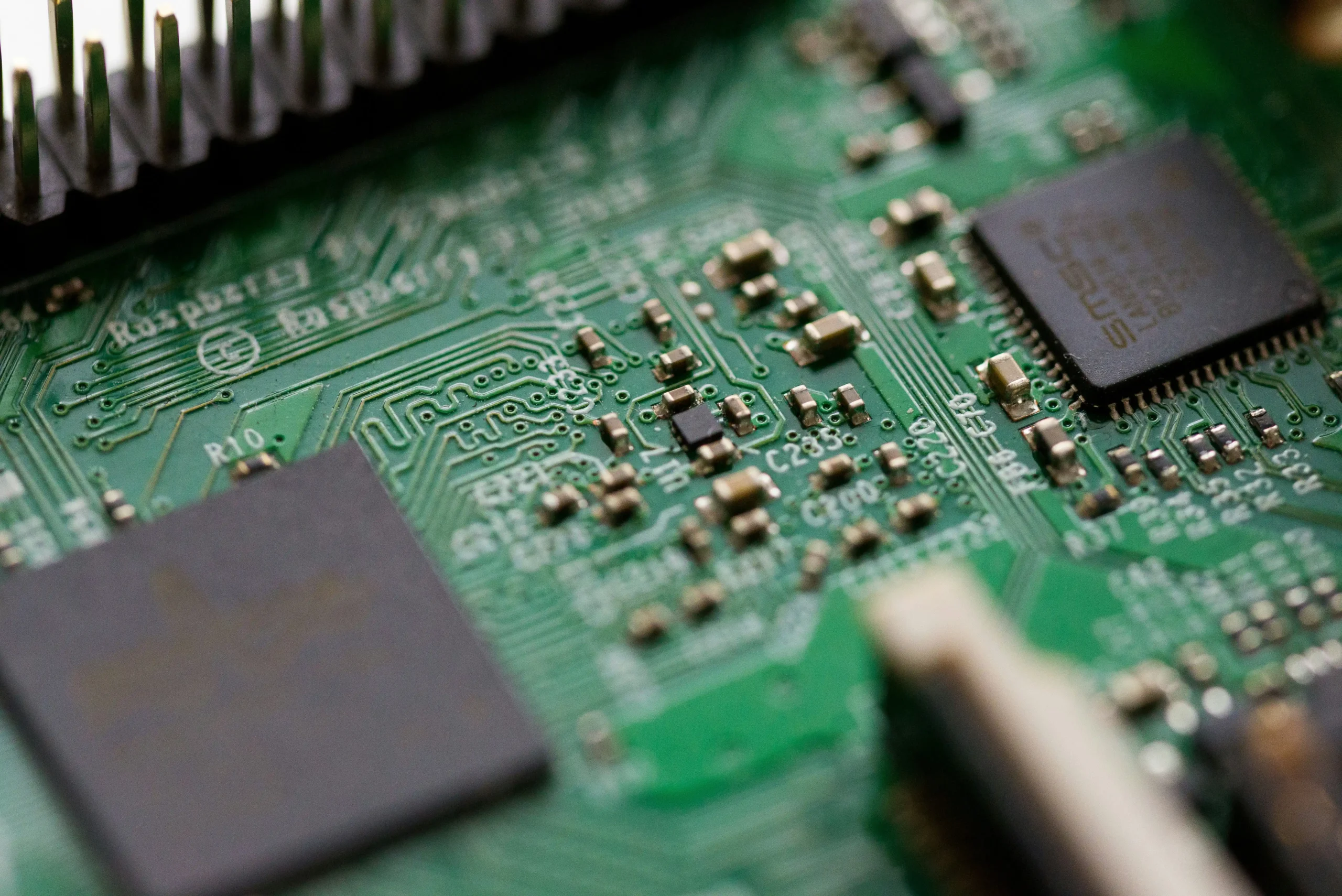
That is why e-waste deserves more attention than it gets. The UN’s Global E-waste Monitor 2024 counted a record 62 million tonnes of discarded electronics in 2022, heading for 82 million tonnes by 2030. Only 22.3% was documented as properly collected and recycled. The metals in that heap were worth an estimated $91 billion, and about $62 billion of recoverable resources went unaccounted for.
India sits near the centre of this story. It is the world’s third-largest generator of e-waste, after China and the United States. Official generation of notified electronics roughly doubled from 0.71 million tonnes in 2017-18 to nearly 1.4 million tonnes in 2024-25. The Ministry of Mines puts total e-waste at about 1.75 million tonnes a year, plus 60,000 tonnes of spent lithium-ion batteries. That is a growing, domestic, non-Chinese feedstock: an urban mine that refills every time a phone is upgraded.
Less noticed is how fast the formal system has caught up. Under the Extended Producer Responsibility regime, the share of generated e-waste formally collected and processed rose from under 10% in 2017-18 to about 70% in 2024-25, on Central Pollution Control Board data.
New Delhi has also put money behind the next step. In September 2025 the Cabinet approved a ₹1,500 crore (roughly $170 million) scheme to recover critical minerals from e-waste, battery scrap and catalytic converters. It targets 270,000 tonnes of annual recycling capacity and about 40,000 tonnes of critical-mineral output. It sits inside a ₹34,300 crore National Critical Mineral Mission, alongside a ₹7,280 crore plan for 6,000 tonnes a year of rare earth magnet capacity.
Set against those numbers, the American $10 million is not a rescue. It is a co-investment in a pipeline India was already laying, which is precisely what makes it a sound one.
Trust is also infrastructure
The AI pledge follows the same logic. Most of the Indo-Pacific will not train frontier models; it will adopt them. The real question is whose platforms, cloud and standards it adopts, and on what terms. “Trusted AI” is diplomatic shorthand for an alternative to systems built and governed in Beijing.
Here, too, India arrives with more than a request. Under the ₹10,300 crore IndiaAI Mission, more than 38,000 GPUs have been offered to start-ups and researchers at about ₹65 an hour. Another 20,000 were announced at the AI Impact Summit in New Delhi in February, which drew delegations from over 100 countries. India signed the US-led Pax Silica declaration at that same summit.
It also has a record of exporting digital public goods. UPI now runs in nine countries, and India has signed agreements with 24 nations to share parts of its digital public infrastructure.
That mix of low-cost compute, open digital rails and experience serving a billion users on modest budgets is what smaller Indo-Pacific economies need. A Quad AI effort that runs partly through Indian institutions will reach further, and look less like charity, than one run purely from Washington or Tokyo.
What $10 million cannot buy
None of this is guaranteed. Recovering lithium, cobalt or rare earths from scrap is chemistry-heavy, capital-intensive work, and India’s processing capacity is thin. Much of its black mass, the metal-rich powder left after shredding batteries, is still exported because there is too little domestic refining.
The informal sector remains large. A NITI Aayog report estimates it handles about 62% of India’s e-waste and employs around half a million people, often in hazardous conditions. Formalising that workforce without destroying livelihoods is a social task as much as an industrial one.
The money also needs perspective. The IEA notes that global investment in critical minerals fell 9% in 2025, and a single refinery can cost far more than every Quad pledge combined. These sums are seed funding. Their real value lies in de-risking private capital, which the ministers explicitly invited into collection networks, processing plants and refineries. The agreement on cross-border movement of recyclables matters too: it lets scrap flow to wherever processing is most efficient.
From scrap to strategy
For two decades, the Indo-Pacific’s supply-chain debate was about where to move factories. The Atlanta announcements point to a subtler shift: recovering what the region already owns, and building digital systems it can trust.
India brings the volume of waste, the policy scaffolding and a frugal technology model; its partners bring capital and markets. The arithmetic is modest, but the direction is right. If the Quad is serious about resilience, the cheapest critical-mineral deposit it will ever find is already sitting in drawers and landfills from Delhi to Jakarta.