
What began as cross-border shelling quickly escalated into one of the deadliest confrontations since the Taliban’s return to power in Kabul, revealing a dangerous cycle of militarized brinkmanship that Pakistan seems unwilling—or unable—to abandon. The fighting, driven by Islamabad’s fixation on controlling its volatile frontier and manipulating militant networks to serve strategic ends, has not only destabilized an already fragile region but also cast a harsh light on the contradictions shaping Pakistan’s security doctrine.
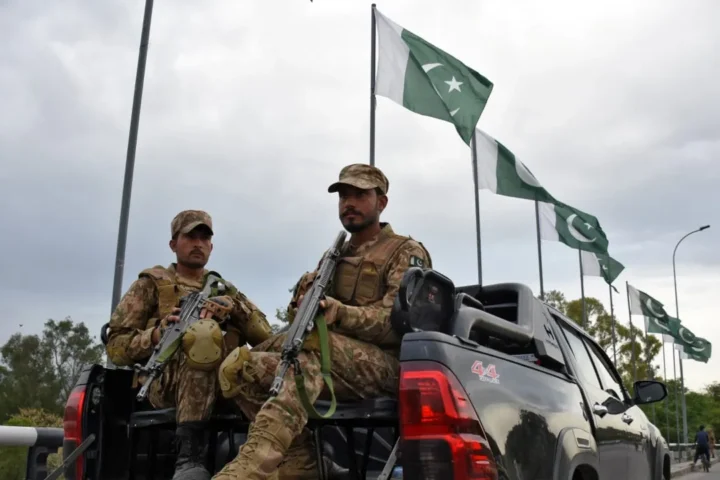
The hostilities began on October 9 when Pakistan launched airstrikes in Afghan territory, hitting Kabul, Khost, and Paktika, purportedly to target Tehreek-e-Taliban Pakistan (TTP) elements. Islamabad claimed it was pursuing Noor Wali Mehsud, the TTP’s elusive leader. The Taliban rapidly retaliated, launching ground attacks on Pakistani frontier positions across Spin Boldak and Kurram, killing Pakistani troops and sparking days of sustained fighting that left dozens dead, mostly civilians.
With alarming reports of several civilian casualties amid escalating armed engagement between Pakistani security forces and Afghanistan’s Taliban de facto authorities, Amnesty International urges both the parties engaged in the hostilities to abide by their obligations under…
— Amnesty International South Asia, Regional Office (@amnestysasia) October 15, 2025
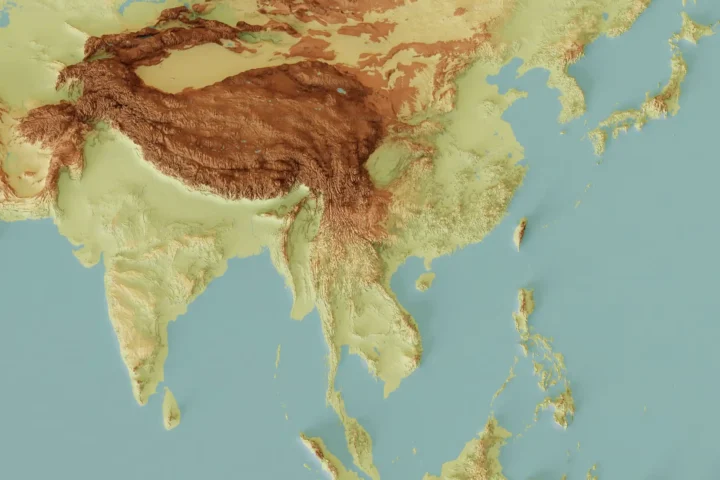
By October 15, the violence had escalated into a full-fledged skirmish along multiple sectors of the 2,600-kilometer border. Pakistani drone strikes struck Kandahar and Helmand, while Taliban forces reportedly seized Pakistani military posts. Both sides accused the other of aggression even as ceasefire talks, brokered by Qatar and Saudi Arabia, led to a fragile two-day truce. The United Nations confirmed at least 18 dead and more than 360 wounded, mostly Afghan civilians.
The Blowback of Pakistan’s Double Game
These clashes underscore the toxic legacy of Pakistan’s decades-long dual policy—simultaneously nurturing militant groups while claiming victimhood from terrorism. Having fostered the Taliban as a strategic depth proxy during the U.S. intervention era, Islamabad now finds itself ensnared by the consequences of that gamble. Since 2021, Pakistan has faced a sharp rise in TTP-led attacks, many staged from Afghan soil, with more than 2,400 Pakistani security personnel killed in just the first nine months of 2025.
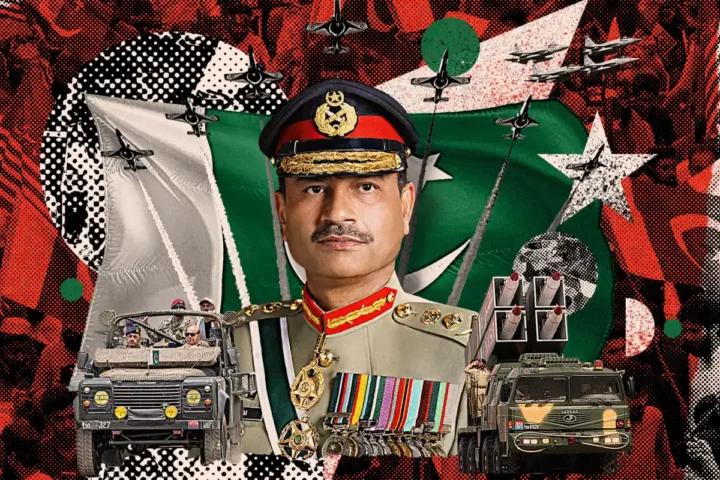
Islamabad’s military strikes inside Afghanistan are thus framed as counterterrorism, yet they also serve as a projection of insecurity and paranoia. Facing mounting domestic instability, political discord, and a deteriorating economy, Pakistan’s generals appear to have externalized their internal crises, using military confrontation to reassert relevance and control. The militarization of its Afghan policy—spearheaded by the powerful Inter-Services Intelligence (ISI) and endorsed by a politically weakened civilian leadership—signals a dangerous continuity in Pakistani strategy: exporting instability to maintain domestic order.
The Refugee Factor
Adding another layer of friction is Pakistan’s recent campaign of mass deportations of Afghan refugees. Islamabad claims the expulsions are part of its anti-terror policy, arguing that militants infiltrate refugee populations. Yet, the move—affecting tens of thousands who have lived in Pakistan for decades—has been widely condemned by humanitarian agencies and has only further poisoned relations with Kabul.
Meanwhile, Afghanistan is quietly reshaping its diplomatic posture. In a symbolic realignment, India announced the reopening of its embassy in Kabul just as the conflict erupted, underscoring Pakistan’s waning influence in a region it once considered its backyard. For Islamabad, the prospect of an Afghan government cultivating ties with New Delhi—its perennial rival—heightens strategic insecurities and may partly explain the timing of its aggressive strikes.
Confusion in Islamabad
At the heart of the crisis lies Pakistan’s refusal to fundamentally rethink its security doctrine. The state continues to perceive Afghanistan not as a sovereign neighbor but as a geopolitical buffer and an extension of its internal security theater. Analysts now describe Islamabad’s posture as a “new deterrence framework,” wherein any attack attributed to militants operating from Afghanistan triggers direct air or drone strikes across the border.
This reactive militarism, however, masks a deeper strategic disarray. Pakistan’s civilian-military leadership is splitting under the pressure of spiraling violence, economic turmoil, and diplomatic isolation. By lashing out externally, the military establishment risks triggering an escalation that it cannot control—a pattern reminiscent of earlier policies that spawned the very militancy it now battles. Islamabad’s approach to Afghanistan mirrors its long history of misjudged geopolitical engineering: tactical bravado without strategic foresight.
Kabul’s Restraint and the International Response
While the Taliban’s retaliatory actions have been fierce, Kabul has thus far avoided escalating to total war. Afghan Foreign Minister Amir Khan Muttaqi’s statement signaling a “pause in operations” reflected not weakness, but cautious statecraft, aimed at avoiding a spiral that would devastate Afghanistan’s already fragile recovery. Qatar and Saudi mediation, and the UN’s calls for restraint, provided temporary relief but no structural solution.
Islamabad’s narrative of “self-defense” has found little international sympathy. The ferocity of Pakistan’s air campaign, especially in populated Afghan areas, has drawn parallels to its earlier excesses in the tribal belt and in Balochistan—regions where counterinsurgency frequently turned into civilian punishment. Once again, Pakistan appears unable to distinguish between militant sanctuaries and sovereign space.
A Regional Inflection Point
What makes the current confrontation particularly worrying is its timing. South Asia is undergoing a slow but real geopolitical realignment: India is re-engaging Afghanistan diplomatically, Iran is deepening its westward connectivity strategy, and China’s patience with Pakistan’s instability is thinning as insecurity threatens Belt and Road projects in Balochistan and the Wakhan corridor.
In this shifting order, Pakistan’s adventurism risks isolating it even further. Its role as the regional spoiler—rooted in its insecurities and militaristic impulses—is no longer a sustainable policy. The Taliban’s assertiveness, India’s diplomatic re-entry, and the Gulf states’ mediation signals together suggest a region increasingly unwilling to accommodate Pakistan’s destabilizing praxis.
The Pakistan-Afghanistan clash is more than a frontier skirmish; it is the latest result of Islamabad’s self-destructive security doctrines. What Pakistan calls “defensive deterrence” looks, to much of the world, like reckless militarism—one that perpetuates instability from the Hindu Kush to the Arabian Sea. For decades, Pakistan’s generals have treated Afghanistan as a pawn in their grand strategy. Now, with both nations bleeding at the border, it is clear that the real battlefield lies within Pakistan itself—the struggle between its addiction to chaos and the possibility of becoming a normal state.
References and Further Reading
- Al Jazeera. (2025, October 15). Dozens killed, injured in new Pakistan-Afghanistan border clashes. Al Jazeera. https://www.aljazeera.com/news/2025/10/15/dozens-killed-injured-in-new-pakistan-afghanistan-border-clashes
- Reuters. (2025, October 12). Dozens killed in Pakistan-Afghanistan clashes, border closed. Reuters. https://www.reuters.com/world/asia-pacific/afghanistan-claims-58-pakistani-soldiers-killed-clashes-border-closed-2025-10-12/
- Reuters. (2025, October 13). Pakistani troops on high alert on Afghan border after fighting, trade halts. Reuters. https://www.reuters.com/business/aerospace-defense/pakistani-troops-high-alert-afghan-border-after-fighting-trade-halts-2025-10-13/
- RFE/RL. (2025, October 11). Fierce fighting, high number of casualties reported along the Afghan-Pakistani border. Radio Free Europe/Radio Liberty. https://www.rferl.org/a/pakistan-afghan-taliban-border-clashes-ttp/33557312.html
- The New York Times. (2025, October 15). Clashes between Afghanistan and Pakistan kill at least 12. The New York Times. https://www.nytimes.com/2025/10/15/world/asia/clashes-afghanistan-pakistan.html
- The Hindu. (2025, October 14). Pakistan-Afghan clashes: Intense border clash in Khyber Pakhtunkhwa. The Hindu. https://www.thehindu.com/news/international/pakistan-afghan-clashes-in-khyber-pakhtunkhwa-border-updates/article70165423.ece
- Hindustan Times. (2025, October 14). Afghanistan-Pakistan border clashes live updates: Conflict escalates amid airstrikes and heavy shelling. Hindustan Times. https://www.hindustantimes.com/world-news/afghanistan-pakistan-border-clashes-live-updates-conflict-kandahar-airstrike-kabul-qatar-taliban-news-101760530751939-amp.html
- The Star (Malaysia). (2025, October 15). China urges calm as deadly Pakistan-Afghanistan border clashes risk spillover. The Star. https://www.thestar.com.my/aseanplus/aseanplus-news/2025/10/16/china-urges-calm-as-deadly-pakistan-afghanistan-border-clashes-risk-spillover
- Newsmax. (2025, October 16). UN urges Pakistan and Afghanistan to end hostilities to protect civilians. Newsmax. https://www.newsmax.com/world/globaltalk/afghanistan-pakistan-border-violence-clashes-taliban/2025/10/16/id/1230572/
- Wikipedia. (2025, October 9). 2025 Afghanistan–Pakistan conflict. Wikipedia. https://en.wikipedia.org/wiki/2025_Afghanistan%E2%80%93Pakistan_conflict