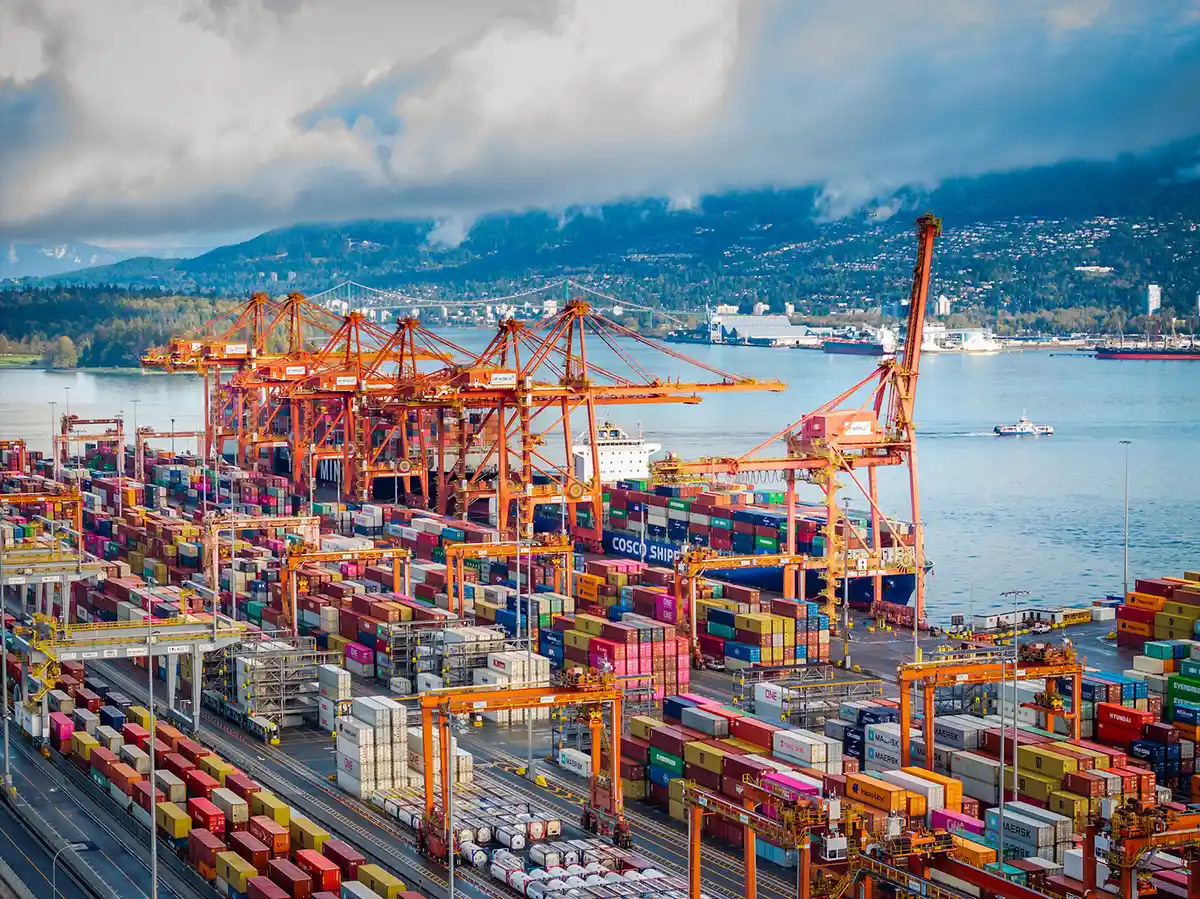
Canada’s trade numbers just delivered a genuine surprise, and for once, a pleasant one. The country’s merchandise trade surplus widened to C$3.86 billion in the latest reporting month, blowing past economist forecasts of roughly C$3.0 billion and marking the largest trade surplus Canada has recorded in more than four years. Total goods exports climbed 0.4% to an all-time record of C$77.79 billion, their fifth consecutive monthly gain, while imports edged up 0.2% to a record C$73.63 billion of their own. On paper, this looks like an unambiguous win for an economy that has spent much of the past two years fending off recession chatter, tariff threats, and sluggish growth. And in many respects, it is a win. But the full picture is more layered than the headline number suggests, and understanding why matters for anyone trying to gauge whether this momentum can last.
This is not a one-off blip. The latest surplus follows a revised C$3.70 billion in the prior month, a range of C$2.7 billion to C$3.41 billion the month before that, and a positive balance in March as well. Four consecutive months of expanding or sustained surpluses is a trend, not noise, and it shows up clearly in the quarterly data. Second-quarter exports surged 13.1%, the strongest quarterly increase since the third quarter of 2020, while imports grew a comparatively modest 4.2%. Strip out price effects and look at volumes alone, and the story holds: export volumes jumped 5.4% against a 1.4% rise in import volumes. That is not simply a currency illusion or an inventory quirk. Canadian producers are genuinely shipping more goods abroad, and by a wide margin.
The sectors driving this expansion tell a story of a resource economy diversifying its base even as it leans harder into the sectors it has always been good at. Metal and non-metallic mineral products led the charge, up 16.5% to C$15.02 billion. Within that category, precious metals stood out dramatically: gold exports surged 27.9%, propelled by increased shipments to the United Kingdom and a wave of foreign buying of Canadian-held gold. In a world where geopolitical tension and macroeconomic uncertainty have pushed investors back toward safe-haven assets, Canada’s position as a major gold producer has become a genuine economic cushion. Copper ores and concentrates also hit record highs, riding robust demand from Japan, China, Finland, and South Korea, a reminder that Canada’s mineral wealth is deeply entangled with the global electrification and manufacturing cycle. Meanwhile, motor vehicles and parts exports rose for a fifth straight month, powered by expanded domestic auto manufacturing, a modest but welcome sign that Canada’s industrial base still has some gas in the tank.
The Energy Wrinkle
Not every sector is pulling its weight, and the exception is a significant one. Energy exports, historically the backbone of Canada’s trade surplus, fell 10% to C$18.37 billion, largely because crude oil prices softened amid temporary geopolitical relief in global oil markets. This is worth sitting with for a moment. For years, Canada’s trade balance has lived or died by the price of a barrel of oil. That the country posted its best surplus in four years despite a sharp pullback in energy exports is arguably the most encouraging detail in this entire report. It suggests, however tentatively, that Canada’s export engine is becoming less hostage to a single commodity. Gold and copper picked up real slack that oil left behind. Whether that diversification proves durable or is simply a function of a temporary lull in oil prices is a question worth watching closely over the coming quarters.
On the import side, the story is dominated by one category: computers and peripherals. Import growth was almost entirely a function of this sector, driven by heightened demand for processing units destined for data centers. Strip that category out, and total monthly imports would actually have fallen 1.3%. This is the trade-data equivalent of the artificial intelligence buildout showing up in the numbers. Canadian firms and data infrastructure operators are importing serious hardware to keep pace with computing demand, and it is large enough to move a national trade statistic on its own. Elsewhere, imports of industrial machinery and equipment fell 3.3%, and unwrought metals and minerals dropped 3.4%, both signs of some caution in capital spending outside the AI-adjacent sectors.
Washington and the World
Geographically, the numbers carry a message about where Canada’s trade relationships are heading. Exports to the United States rose a modest 0.3%, extending a five-month streak, but imports from the U.S. jumped 3.0% to a record high. The net effect was a narrowing of Canada’s surplus with its largest trading partner, down to C$9.98 billion from C$11.12 billion. At the same time, trade with the rest of the world moved in Canada’s favor: exports to non-U.S. destinations rose 0.7% while imports from them fell 3.7%, shrinking the monthly deficit with those countries to C$6.13 billion from C$7.42 billion. Put simply, Canada is buying more from the U.S. and less from everywhere else, while selling a bit more to both. That is precisely the kind of gradual diversification policymakers in Ottawa have said they want, given the recurring threat of broad-based U.S. tariffs and the friction that has periodically flared at the border. It is not a dramatic pivot away from American trade, nor should anyone expect one given the sheer scale and proximity of the U.S. market, but it is a directional shift worth noting.
The Currency Caveat
Here is where the celebratory tone needs a dose of realism. A meaningful share of this month’s surplus growth is a valuation effect rather than a volume effect. The Canadian dollar depreciated 1.7% against the U.S. dollar during the period, its sharpest monthly decline since October 2022. Because international trade is priced overwhelmingly in U.S. dollars, a weaker loonie mechanically inflates the Canadian-dollar value of every export and import transaction when it gets converted back home. Measured in U.S. dollars, the currency in which the underlying trade actually occurred, exports fell 2.0% and imports fell 2.1%. In other words, the headline record-high figures owe a real debt to currency math, not just underlying commercial strength.
This does not mean the good news is fake. The volume data, export volumes up 5.4% against import volumes up 1.4%, confirms that actual physical trade activity expanded, independent of price or currency effects. But it does mean commentators and policymakers alike should resist the temptation to treat the nominal Canadian-dollar surplus figure as the full story. A softer loonie is doing some of the heavy lifting here, and currencies are famously fickle. Should the Canadian dollar stabilize or strengthen in coming months, some of this nominal surplus growth could evaporate even if the underlying trade volumes hold steady.
What It Means for Growth
The macroeconomic payoff of this trade performance has already shown up where it counts most: GDP. Net trade delivered a substantial boost to Canada’s second-quarter real GDP, with the economy tracking annualized quarterly growth near 3.4%. That is a striking rebound from the first quarter, when net trade was a drag on output rather than a support. For a country that has spent recent years worried about anemic productivity growth and an overreliance on population growth to keep the economy expanding, a genuine export-led GDP boost is exactly the kind of contribution policymakers have been hoping to see.
The deeper takeaway from this report is one of resilience under pressure. Canadian exporters have kept adapting their supply chains and customer bases despite the persistent overhang of cross-border trade friction and the recurring threat of new American tariffs. Gold’s safe-haven appeal has offset a chunk of the pain from falling energy revenue. Copper demand from Asia has picked up where oil left off. None of this erases the real vulnerabilities in Canada’s trade position, its continued dependence on a single major partner, its exposure to commodity price swings, and now, its sensitivity to currency movements. But taken together, the numbers describe an economy that is finding new ways to compete even as old certainties, cheap energy exports chief among them, become less reliable. That combination of adaptability and exposure is likely to define Canadian trade policy debates for the rest of the year.