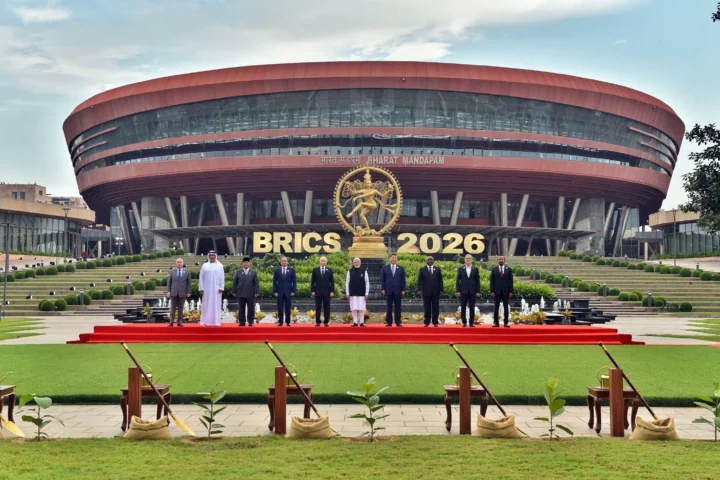

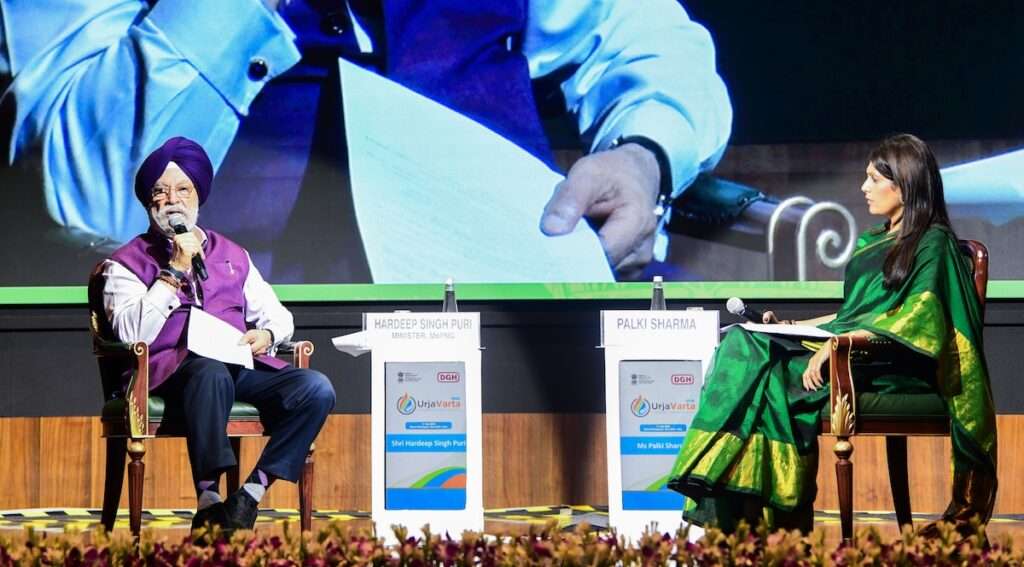
Held at the iconic Bharat Mandapam in New Delhi, Urja Varta 2025 was more than just another industry conference. It was a declaration of intent—India’s firm statement that it is ready to shape, not just follow, the global energy narrative. With over 700 top officials, energy executives, and experts under one roof, the event charted a future where India transitions from being a voracious energy consumer to an innovation-driven energy leader.
The commitments unveiled at Urja Varta are not incremental; they are transformational. India is setting out to spend an estimated ₹30–35 lakh crore ($360–420 billion) on energy infrastructure over the next decade. For context, this is one of the largest planned energy investments in the developing world, dwarfing many similar national programs. With ₹4 lakh crore already invested in the past ten years, the trajectory is unmistakable.
India’s energy story has long been defined by its appetite—its import dependence, its ballooning energy demand, and its vulnerability to global price shocks. But that narrative is changing. What we are witnessing today is the reimagining of India’s energy future, built on four pillars: reforms, security, exploration, and sustainability.
Reforms and Modernization: Laying the Foundation
India’s upstream energy reforms are perhaps the most consequential in decades. At Urja Varta 2025, policymakers unveiled the revised Petroleum & Natural Gas (PNG) Rules 2025, a new Draft Model Revenue Sharing Contract, and amendments to the Oilfields Regulation and Development Act (ORDA)—all aimed at simplifying regulations, ensuring transparency, and attracting foreign capital.
Scott Miller, Director, Business Development, Asia Pacific, Halliburton, highlighted how AI is transforming the energy sector at #UrjaVarta2025.
— Indian Oil Corp Ltd (@IndianOilcl) July 19, 2025
Urja Varta, a Government of India initiative is actively promoting the driving of innovation and sustainability in energy sector.… pic.twitter.com/QDhjpewAnJ
Equally significant is India’s decision to open nearly 1 million sq. km of previously off-limits “No-Go” areas for exploration. For decades, bureaucratic red tape and environmental restrictions had locked away some of India’s most promising hydrocarbon reserves. Now, this opening could unlock billions of barrels of oil and vast quantities of natural gas, providing much-needed domestic supply security.
David Hume, Professional Geoscientist & Business Development Advisor, Senior Project Manager, University of Houston,
— Indian Oil Corp Ltd (@IndianOilcl) July 18, 2025
shared his views at Urja Varta, stating:
"India has massive geological potential. The opportunity here is incredible."
Urja Varta is a Government of India… pic.twitter.com/LoNAfL22Hc
States have been brought into the fold as active partners, marking a shift from a centrally dictated energy regime to cooperative federalism. The message from New Delhi is clear: India is open for business, and it is willing to share both risks and rewards.
Energy Security Through Diversification
Energy security has been a persistent concern for India, which imports more than 85% of its crude oil. But India’s approach is evolving from reactive to proactive. Over the past five years, New Delhi has diversified its crude imports from 27 to 40 countries, effectively reducing overdependence on any single supplier. This diversification has given India a stabilizing role in global energy markets, enabling it to navigate geopolitical shocks—from Middle Eastern conflicts to Russian sanctions—without major domestic disruptions.
The country’s “structured, predictable, and responsible” energy demand profile has also helped cement its reputation as a dependable partner for global energy producers. India already accounts for 16% of global oil demand growth in the past five years, and by 2045, it is projected to contribute nearly 25% of incremental global energy demand. That scale of demand makes India not just a consumer but an influential voice in shaping global energy policy.
The Exploration Gamble: Betting on the Andaman Basin
One of the most talked-about developments at Urja Varta was India’s renewed focus on frontier exploration basins, particularly the Andaman Basin. Experts are comparing its potential to the game-changing discoveries in Guyana, which turned that small South American nation into an energy powerhouse almost overnight.
The government has backed this ambition with data-driven strategies:
- Seismic Surveys & Subsurface Intelligence: Extensive 2D and 3D seismic programs are being rolled out, with the data fed into a cloud-based National Data Repository for easy industry access.
- Resource Assessment Studies: India has adopted globally benchmarked methodologies to reassess its hydrocarbon potential, providing investors with better visibility.
- Open Acreage Licensing Policy (OALP) Round X: The largest licensing round yet was announced, setting new benchmarks for transparency and global participation.
India’s upstream narrative is no longer about incremental production from mature fields; it’s about discovering the next big hydrocarbon frontier.
The Green Hydrogen Bet: Leading the Clean Energy Pivot
India’s long-term energy leadership will not come from hydrocarbons alone. The country has placed a bold bet on green hydrogen, which many see as the “fuel of the future.”
The government has already announced incentive programs to scale up green hydrogen production, targeting industries like steel, fertilizers, and heavy transport—sectors notoriously hard to decarbonize. At Urja Varta 2025, green hydrogen was positioned not just as a domestic solution but as a potential export opportunity, placing India alongside nations like Saudi Arabia and Australia in the emerging hydrogen economy.
India’s digital transformation of energy was another focal point. The integration of AI, machine learning, and cloud technologies into Exploration & Production (E&P) operations promises to make India’s upstream sector leaner and more competitive. Startups, too, are part of this narrative, with over 15 innovative E&P solutions and 50 technical research posters showcased at the event.
The Big Picture: India as a Global Energy Leader
What makes this moment remarkable is the synchronization of ambition and execution. Many developing nations talk about energy transition, but few have the scale, political will, and market discipline to execute it. India appears to be doing all three simultaneously.
- For Investors: The massive investment roadmap and regulatory overhauls create one of the most attractive energy markets in the world.
- For Consumers: The push for domestic exploration, combined with diversified imports, promises greater energy price stability.
- For the World: India’s contribution to global energy demand ensures that its policy choices will shape market dynamics, trade flows, and even climate diplomacy.
If India succeeds in unlocking the Andaman Basin, scaling green hydrogen, and maintaining its reputation as a reliable global energy partner, it could reshape global energy flows in ways few predicted a decade ago.
Challenges Ahead
Of course, this optimism comes with caveats.
- Balancing Growth and Sustainability: India will have to ensure its hydrocarbon expansion does not derail its climate commitments.
- Infrastructure Bottlenecks: Massive investments require equally robust execution capacity at both state and local levels.
- Global Volatility: As a major importer, India remains vulnerable to global oil price fluctuations despite its diversification strategy.
But the country seems acutely aware of these challenges and is proactively working to address them—something Urja Varta made abundantly clear.
A Story of Opportunity and Optimism
India’s energy transformation is not just about securing its own future; it is about shaping the future of global energy. In a world searching for reliable, diversified, and cleaner energy sources, India offers all three.
Urja Varta 2025 captured the spirit of this transformation. It showcased cooperative federalism, bold policy reforms, frontier exploration ambitions, and a green-tech pivot that together make India’s energy future not just secure, but truly glowing.
The world would be wise to take note—India is no longer just an energy consumer; it is emerging as a responsible energy leader for the 21st century.
References and Further Reading
UrjaVarta: Shaping the Future of India’s Energy Sector. Official event home page.
UrjaVarta 2025 – Agenda. Official session and agenda details.
India unveils robust upstream energy strategy at Urja Varta 2025. Summary of ministerial speeches and key reforms.
Urja Varta 2025 to boost energy sector, focus on green hydrogen: Hardeep Singh Puri. News coverage of event initiatives.
Conclave Brief – UrjaVarta 2025. Thematic focus of the conference.
India’s Energy Strategy Structured and Leading the World – Petroleum Minister at Urja Varta 2025.
Govt unveils Draft Petroleum & Natural Gas Rules 2025 to revamp upstream sector.
Events – Directorate General of Hydrocarbons (DGH). Official event listing and archive.
India Charts Bold Upstream Energy Strategy at Urja Varta 2025. Analysis of India’s upstream and future energy outlook.
UrjaVarta 2025 returns with renewed energy and bold leadership (Instagram coverage).
Technical Abstract Submission – UrjaVarta 2025. Overview of research, innovations, and poster sessions.
India is envisaging an investment of Rs. 30-35 lakh crore in energy infrastructure over next 10 years: Hardeep Singh Puri.
India Charts Bold Upstream Energy Strategy at Urja Varta 2025 (Press Information Bureau).
UrjaVarta 2025 में हो रही है चर्चा उन energy solutions की जो भारत की ग्रोथ को भी energise करें…
Urja Varta 2025: ONGC Expands Offshore Exploration Through Joint Bidding With Private Companies.