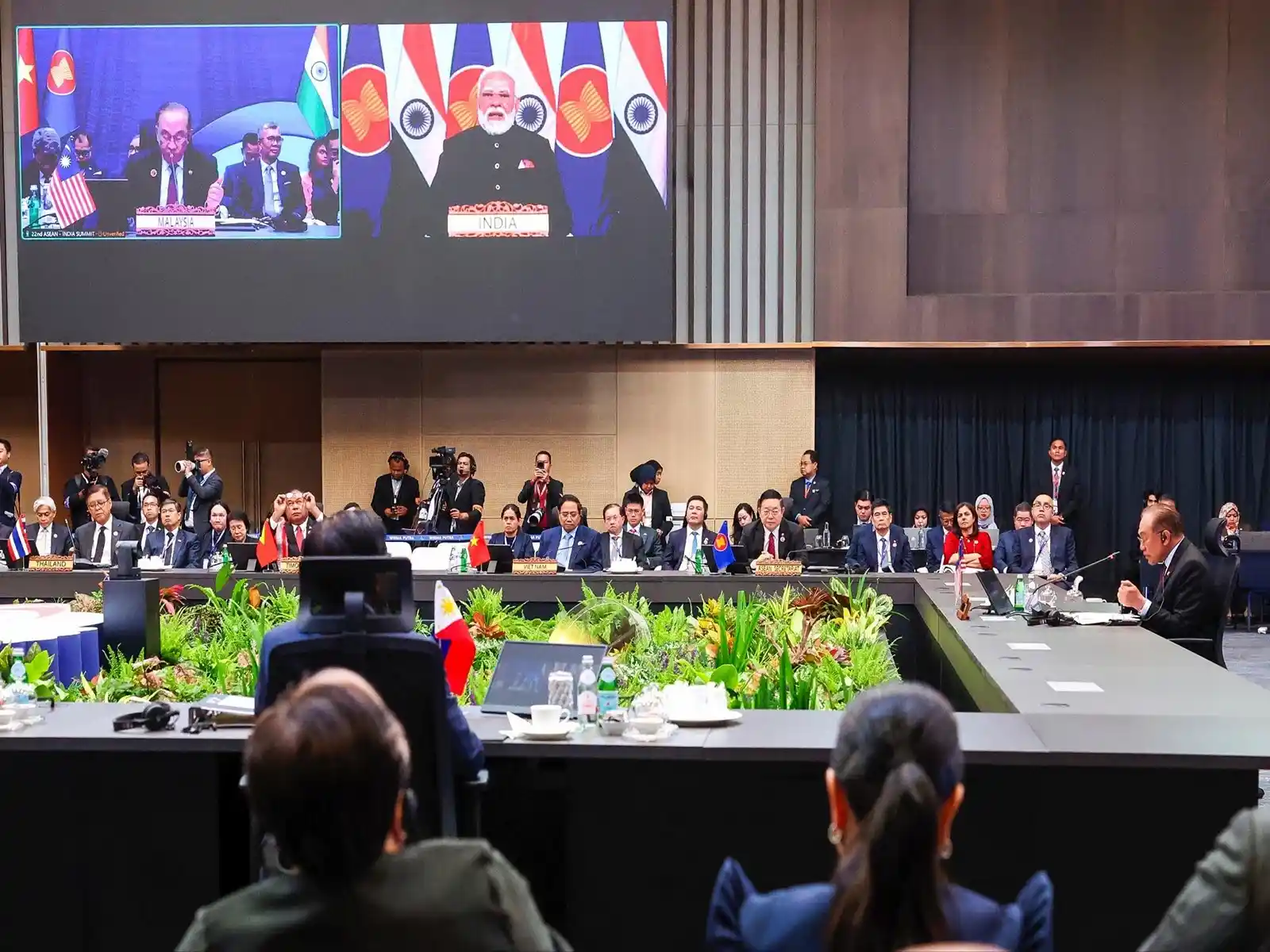
The ASEAN-India Summit in Kuala Lumpur stands as an essential axis in a rapidly changing global order, threading together the interests, challenges, and aspirations of Southeast Asia and its partners amid mounting economic uncertainty and geopolitical flux. With heads of government from across the ASEAN bloc and partner states converging, the summit’s multidimensional agenda—ranging from sustainable tourism to joint maritime exercises—signals a broader intent to secure resilient growth and stability for nearly two billion people.
Southeast Asia’s Driving Role
ASEAN’s 11-member coalition now includes Timor-Leste, mirroring not only evolving regional integration but also the growing necessity for expanded collaboration on security and development. The summit underscores the region’s priority: balancing great power engagement with local agency. With the US and China negotiating trade frameworks—and Australia, Japan, and India quietly increasing their engagement—the bloc’s leadership in digital transformation, health, and supply chain resilience has come into sharp focus.
One-fourth of humanity resides within ASEAN and India alone, and this demographic density positions the region as both a test bed for development models and a bulwark for global stability. The 2026 “Year of ASEAN-India Maritime Cooperation,” jointly announced at this summit, will reinforce partnerships across disaster preparedness, naval drills, and blue economy initiatives—critical to the uninterrupted flow of energy and goods through vital sea lanes like the Malacca Strait.
ASEAN continues to define its success through pragmatic regionalism. The summit’s adoption of the ASEAN Community Vision 2045, the ASEAN-India Action Plan for 2026–2030, and the Joint Leaders’ Statement on sustainable tourism reflects the group’s ability to innovate beyond mere rhetoric. Policies promoting “Reduce, Reuse, Recycle” models in tourism, investment in renewable energy, and closer educational exchanges—all foregrounded in the event—extend far beyond headline economic metrics.
These deliverables stem from ASEAN’s unique consensus-driven model, which, unlike more centralized approaches, absorbs and adapts multiple perspectives. Quietly but significantly, India’s participation exemplifies its support for ASEAN’s central role in shaping the Indo-Pacific’s future, bolstering strategic and economic ties without seeking dominance.
The summit’s timing—coinciding with renewed China-US talks and key side meetings with Japan, Australia, and the EU—creates a layered diplomatic tapestry. ASEAN’s balancing act is more than symbolic; it offers smaller economies meaningful agency without polarizing the region. While US-ASEAN and China-ASEAN tracks have garnered attention, the deepening ties with India serve as a vital complement, focusing on shared goals like anti-terrorism, infrastructure, and clean energy without overshadowing national priorities.
ASEAN’s resilience finds further strength in its inclusivity. The expansion to include Timor-Leste, continued support for Quick Impact Projects, and proposals for regional defense and maritime heritage meetings embody the region’s adaptive approach to both competition and cooperation.
Though not the centerpiece, India’s steady involvement in disaster response, technology, and maritime security enables ASEAN to elevate its own agenda. Training for thousands of professionals in renewable energy, the proposal for a Southeast Asia Centre at Nalanda University, and strengthened cooperation on rare earths and semiconductors lend practical heft to shared ambitions.
The summit thus sets the stage for Southeast Asia’s partners—India most notably among them—to contribute meaningfully to a more multipolar, inclusive, and sustainable dynamic. In steering away from unilateralism, the gathering in Kuala Lumpur delivers a quiet, unflashy message: the region’s future will be shaped by a network of engaged, mutually respectful actors whose collaborative successes matter more than any single protagonist.