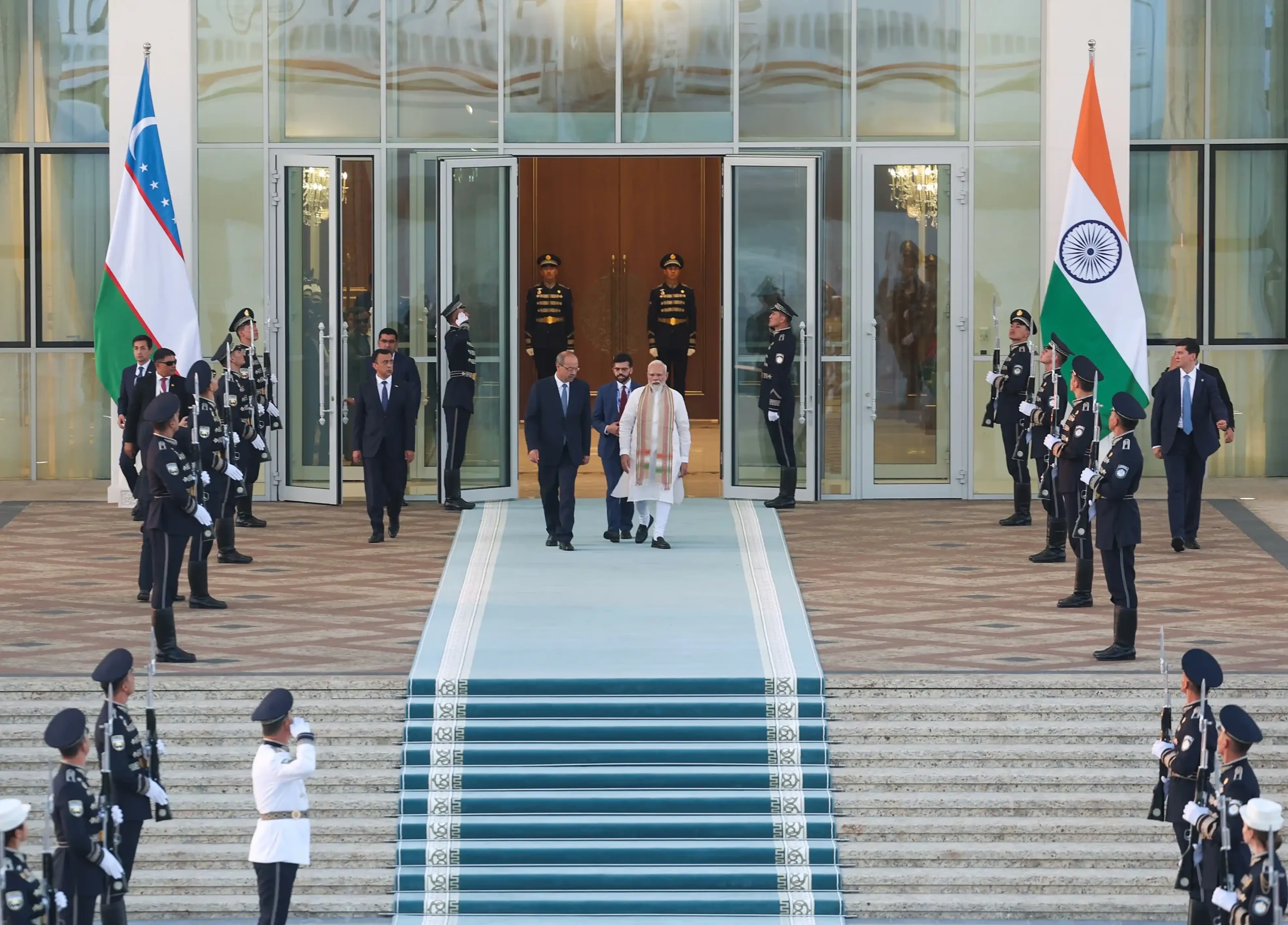
The MoUs India and Uzbekistan signed this weekend will not dominate American news cycles. They should. At a moment when supply chains, energy security and the political map of Eurasia are being remade together, Indian Prime Minister Narendra Modi’s August 29–30 visit to Tashkent produced more than ceremony. India and Uzbekistan elevated their relationship from a strategic partnership to a Comprehensive Strategic Partnership, signed eleven agreements, and paired them with institutional and commercial steps.
It is tempting to dismiss a package covering archives, Ayurveda, tourism and a Sanskrit chair as pageantry. That misses the point. The architecture links the hard power of uranium and minerals, the practical power of trade routes and digital payments, and the durable power of skills, culture and institutions. For Washington, the story is not that New Delhi is choosing a bloc. India is building strategic options across a region too often treated as a blank space between Russia, China and Afghanistan.
More Than a Label
“Comprehensive Strategic Partnership” can sound like diplomatic inflation. Here, its significance lies in the machinery behind the phrase. The two leaders created a foreign-ministers-led mechanism to coordinate and oversee implementation. They also agreed to a working group on non-tariff and investment barriers, time-bound exploration of a preferential-trade agreement, and a business summit. These are the unglamorous devices that determine whether memoranda become factories, contracts and jobs.
The economic arithmetic is demanding. Bilateral trade was $1.3 billion in 2025, despite 33.3 percent annual growth; the new ambition is more than $5 billion by 2030. That requires predictable transport, compatible standards, credible finance and business ties beyond delegations. Electrical goods, engineering products, automobiles and pharmaceuticals are promising sectors where Indian scale and Uzbek industrialization can reinforce one another.
The change, then, is from familiarity to implementation. An economic and financial dialogue, investor-grievance mechanisms, regulatory discussions and possible mutual-recognition arrangements acknowledge the real obstacles. A trade target without these details is a slogan; with them, it becomes a testable development strategy. The United States should recognize the distinction, especially when it urges partners to build resilient, diversified networks.
Minerals and Resilience
The most strategically resonant commitments concern geology, mining, nuclear energy and critical minerals. India and Uzbekistan intend to pursue joint exploration, mining, processing, value-added production and recycling, while encouraging Indian firms to develop Uzbek deposits. The two sides also advanced a long-term framework for Uzbek uranium supplies to India for civil nuclear cooperation.
This is consequential because minerals and processed materials sit beneath electric vehicles, grids, electronics, defense production and clean-energy technologies. Securing deposits matters, but processing capacity, contractual reliability, environmental standards and recycling matter as much. The joint statement’s emphasis on integrated value chains is therefore more mature than a race to lock up raw materials.
Uranium adds a second layer. Uzbekistan produced 7,000 tonnes in 2025, and its government says identified reserves reached 139,000 tonnes. For India, which sees nuclear power as part of its energy transition, a durable arrangement diversifies a critical input. For Uzbekistan, selling more than ore and partnering on industrial capability supports its push to capture more value at home. Agreements cannot erase commercial, safety or market risks; they can reduce the vulnerability of relying on too few suppliers.
The Connectivity Test
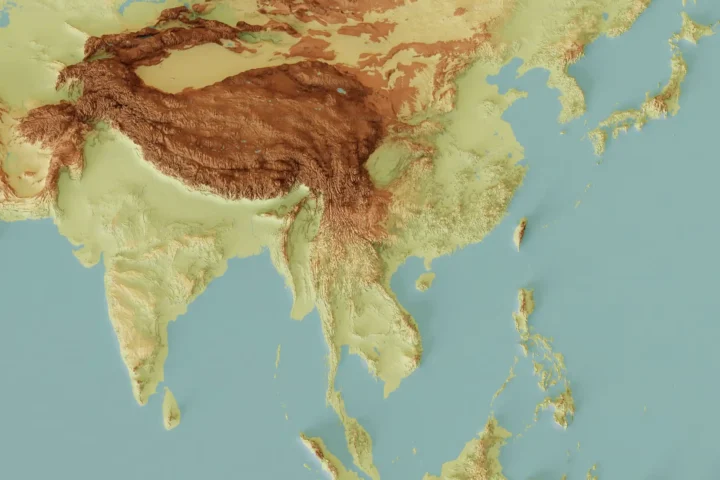
Geography is the venture’s central constraint. Uzbekistan is doubly landlocked, and India has no direct overland route to Central Asia. That explains the focus on multimodal corridors, freight restoration, logistics costs, road modernization and digitalized trade procedures. The question is whether a container can move dependably, affordably and transparently between them.
Here the India–Iran–Uzbekistan dialogue around Chabahar and the International North-South Transport Corridor deserves attention. In 2025, the three countries agreed to create a connectivity mechanism, improve use of strategic ports and facilitate Uzbekistan’s access to Chabahar for trade with India. This route will not make geography disappear, nor can it be insulated from sanctions risk, instability or infrastructure bottlenecks. But it would give landlocked Central Asia another Indian Ocean outlet and give India a practical western corridor not dependent on Pakistan.
That is why logistics is geopolitics in work clothes. Multiple viable routes lower freight costs, reduce coercive leverage from any transit state and make smaller firms more willing to trade. American policymakers interested in a connected, sovereign Central Asia should see commercially viable corridors as complementary to—not a substitute for—security cooperation.
Digital Links, Human Ties
One modest announcement has outsized potential: India’s NPCI International Payments and Uzbekistan’s national processing center agreed to allow Indian UPI applications to scan Uzbekistan’s UZQR codes for merchant payments. This will not transform trade overnight. It can make tourism and small transactions easier, while demonstrating interoperable digital public infrastructure rather than a closed financial ecosystem.
Tashkent’s first IT Park, established in 2019 on the Indian model with Indian support, is to be followed by deeper links among parks, companies, startups and universities. Cooperation on trustworthy AI, cybersecurity and peaceful space applications can connect engineers, entrepreneurs and regulators without requiring Uzbekistan to import a finished Indian model.
The softer MoUs belong in this same strategic frame. Higher education and research, diplomat training, a 2026–30 cultural program, traditional medicine and restoration of the Buddhist sites at Fayaz Tepa and Kara Tepa turn a transaction into a relationship. More than 2,700 Uzbek nationals have participated in India’s ITEC capacity-building program and over 400 Uzbek students have received ICCR scholarships. Such networks quietly determine which professional connections endure when governments change.
A Stake in Central Asia
Security gives the package urgency. India and Uzbekistan condemned cross-border terrorism and committed to stronger intelligence, law-enforcement, counter-extremism, cyber and anti-drug cooperation. They cited the April 2026 Dustlik military exercise and pledged continued defense-industrial exploration. Both countries have an immediate interest in an Afghanistan that is stable and free from terrorism, war and drugs, a priority shared across the India–Central Asia dialogue.
Central Asia is not about to become another theater of military alignment. India can combine security ties with markets, education, health, energy and cultural legitimacy. Uzbekistan, bordering every other Central Asian republic, can connect initiatives otherwise left as bilateral fragments.
The United States has reason to pay attention, not panic. A more connected Uzbekistan with diversified investment, stronger anti-terror capacity and wider digital ties serves interests Washington professes: sovereignty, resilience and opportunity. U.S. policy should welcome transparent initiatives, help finance viable connectivity and avoid forcing regional states to choose between useful partners.
The benchmark will arrive after the photographers leave. Do the coordination mechanism and trade-barrier group meet regularly? Does UPI work at the counter? Do firms move from memoranda to mineral-processing plants, pharmaceutical ventures and exports? Does the Chabahar route carry cargo at a price businesses can bear? Can the Aral Sea’s ecological rehabilitation benefit from India’s promised $1 million grant? Implementation is strategy.
India and Uzbekistan have signed a blueprint for a more plural Eurasia: a rising South Asian power and Central Asia’s hub cooperating without surrendering autonomy. The MoUs matter because together they identify what a serious partnership requires—resources, routes, rules, technology, security and human ties. Americans who overlook Tashkent may discover too late that Eurasia’s next order was assembled in the quieter corridors that make power usable.