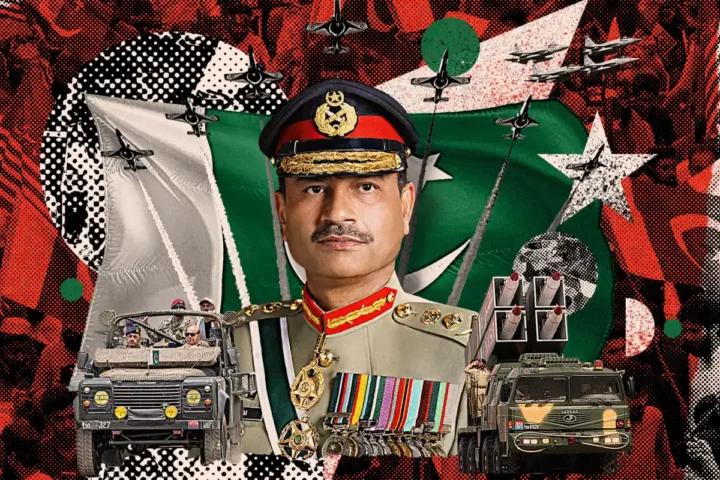
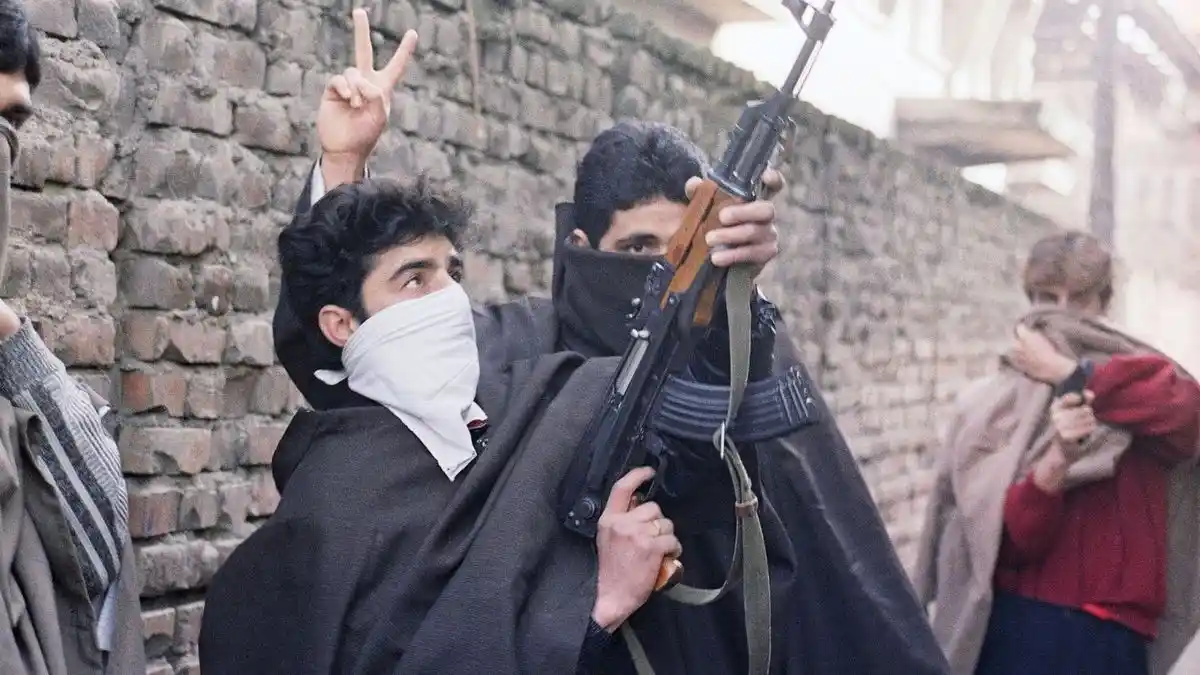
For decades, Pakistan’s role as a haven for armed militant groups has been treated largely as South Asia’s problem — a festering wound in the India-Pakistan relationship, a complication in the Afghanistan files, a talking point in diplomatic communiqués that go nowhere. The assumption, implicit in how Western capitals have long approached the issue, is that whatever happens in the badlands of Khyber Pakhtunkhwa or the madrassas of Lahore is essentially a regional matter, best left to the region to sort out.
A new report from the U.S. Congressional Research Service, released on March 25, 2026, should disabuse anyone of that comfortable fiction.
The CRS, the nonpartisan research arm of the United States Congress, has catalogued approximately 15 armed militant organizations operating from Pakistani soil. Twelve of them are designated Foreign Terrorist Organizations under U.S. law. They range from Al-Qaeda core — founded in Pakistan in 1988 and still maintaining alliances with other groups there — to the Islamic State-Khorasan Province, with an estimated 4,000 to 6,000 fighters operating across the Afghanistan-Pakistan border region. They include groups focused on destabilizing India and Kashmir, dismantling the Pakistani state itself, targeting Iran’s ethnic Baloch regions, and waging sectarian violence against Shia Muslims. Taken together, they constitute not a single ideological project but an entire ecosystem of militant infrastructure — one that has been nurtured, tolerated, or inadequately confronted for decades.
This is not a Pakistan problem. This is a problem for the world.
Consider the geography of ambition that animates these organizations. Al-Qaeda in the Indian Subcontinent, designated a Foreign Terrorist Organization in 2016, operates from Afghanistan with several hundred members and a track record of attacks in Pakistan itself. The Islamic State-Khorasan Province — whose fighters are largely former members of the Pakistani Taliban and the Islamic Movement of Uzbekistan — has claimed responsibility for mass-casualty attacks across the region and has demonstrated aspirations far beyond it. The Haqqani Network, whose founding leader retreated to Pakistan after 2001 and whose scion became Afghanistan’s acting interior minister in 2021, has undertaken numerous kidnappings and attacks across borders. These are not parochial organizations. They are international enterprises with international consequences.
Pakistan’s terrorism fatalities tell their own devastating story. After five consecutive years of declining deaths, the number of terrorism-related fatalities in Pakistan has climbed every year since 2019, reaching 4,001 in 2025 — the highest toll in over a decade. That figure is not merely a statistic. It represents the reality that the infrastructure Pakistan has long permitted to exist in service of certain foreign policy objectives has metastasized into a threat that now consumes Pakistani civilians, soldiers, and institutions. The Tehrik-i-Taliban Pakistan, the deadliest group operating within Pakistan’s borders, is estimated to have between 2,500 and 5,000 fighters with ties to Al-Qaeda, operating from eastern Afghanistan and actively seeking to bring down the Pakistani government. The Balochistan Liberation Army, designated a Foreign Terrorist Organization only in 2025, has specifically targeted Chinese nationals and Chinese-funded infrastructure.
Here is the central paradox the CRS report illuminates: Pakistan is simultaneously a country ravaged by terrorism and a country that has permitted the conditions enabling terrorism to endure. The two facts are not unrelated. For years, Islamabad calculated that tolerating certain militant groups — particularly those oriented toward India and Afghanistan — served its strategic interests. It believed it could control the ecosystem. It cannot. The same networks, the same financing channels, the same ideological infrastructure that sustains groups like Lashkar-e-Taiba and Jaish-e-Mohammed also sustains the groups now killing Pakistani security forces and their families by the thousands.
Lashkar-e-Taiba, formed in the late 1980s and responsible for the 2008 Mumbai attacks that killed over 160 people, including six American citizens, continues to operate through front organizations across Pakistan, the Gulf, the Middle East, and Europe. Its financing networks are transnational. Jaish-e-Mohammed, banned in Pakistan since 2002, has survived through investments in legal businesses — real estate, commodity trading — that give it economic resilience against crackdowns. Its founder remains, by most credible accounts, free on Pakistani soil. These are not dormant relics. They are functioning organizations with global footprints.
The United States has known this for a long time. The State Department’s Country Reports on Terrorism have used careful, diplomatic language to say so for years — noting “some steps” by Pakistan to curtail certain groups while carefully documenting the persistence of safe havens. What changes with the CRS report is the accumulation of evidence and the bluntness of its framing. Twelve of the fifteen groups it profiles are U.S.-designated terrorist organizations. The report notes that Pakistan’s National Action Plan, its military offensives, and its hundreds of thousands of intelligence-based operations “have failed to defeat the numerous U.S.- and United Nations-designated terrorist groups that continue to operate on Pakistani soil.”
Washington’s relationship with Islamabad has long been defined by what analysts euphemistically call “complexity” — a recognition that Pakistan is useful against some threats while being complicit in others. That calculus has never been comfortable, but in an era of great-power competition, when China’s deepening economic footprint in Pakistan through the China-Pakistan Economic Corridor creates new stakeholders in regional stability, and when Afghanistan’s Taliban government provides the TTP with de facto sanctuary, the strategic environment has changed. The old logic of tolerating Pakistani ambiguity in exchange for selective cooperation no longer holds.
What is required now is genuine accountability — not punitive, but structural. The United States and its allies should condition engagement with Pakistan on measurable, verifiable progress against all designated terrorist organizations, not merely those that threaten Western interests most directly. The Financial Action Task Force’s removal of Pakistan from its grey list in 2022 was welcome, but financial monitoring must be matched by operational enforcement. Front organizations that raise funds in Europe and the Gulf for groups designated as terrorist organizations should face the full weight of international sanctions regimes.
Pakistan’s civilian and military leadership should also be pressed to reckon honestly with what decades of strategic tolerance have produced: a country that is, by many accounts, currently the most terrorism-affected in the world. The Pakistani people — who have borne the overwhelming cost of this policy in blood — deserve leadership that prioritizes their security over inherited strategic doctrines.
The CRS report will circulate through congressional offices and foreign policy circles and will generate the usual cycle of statements, denials, and promises. Pakistan will likely respond, as it has before, by pointing to its own losses and accusing its neighbors of destabilization. Those losses are real and should not be minimized. But loss is not absolution. The question is not whether Pakistan has suffered from terrorism — it has, terribly — but whether it is doing everything within its power to dismantle the infrastructure enabling it.
The evidence suggests it is not. And the consequences of that failure no longer stop at South Asia’s borders. They travel with financing networks to the Gulf and Europe. They travel with fighters across the porous terrain of Afghanistan. They travel with ideology into the global digital commons.
Pakistan’s terror tolerance is not someone else’s problem. It never really was.