When Amazon CEO Andy Jassy walked out of his meeting with Prime Minister Narendra Modi in New Delhi last week, he didn’t just announce another foreign direct investment figure. He unveiled a $13 billion additional commitment to India’s AI and cloud infrastructure by 2030—part of a sweeping $48 billion five-year plan that positions India as one of Amazon’s largest global AI infrastructure hubs.
This isn’t just about data centers in Mumbai and Hyderabad. It’s a loud, capital-intensive endorsement of what global tech leaders now see clearly: India is no longer just the world’s back office. It is fast becoming the world’s AI and innovation engine room.
The Numbers Tell a Story of Acceleration
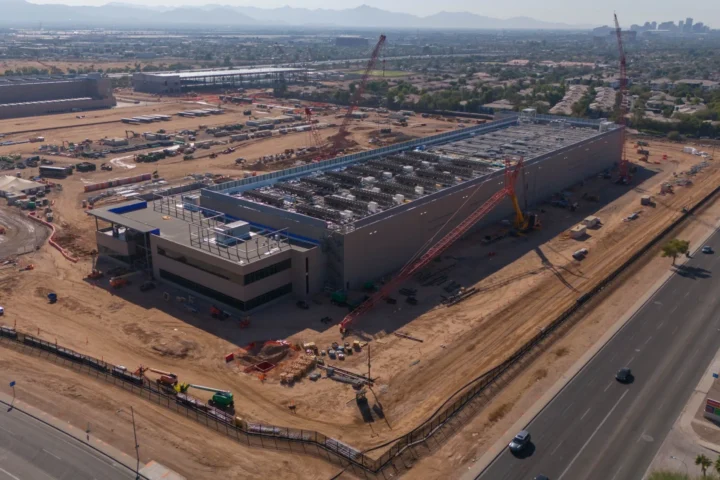
Amazon’s fresh $13 billion infusion builds on its 2025 $35 billion India commitment, taking total planned investment through 2030 to $48 billion, with over $21 billion specifically earmarked for AI and cloud infrastructure. AWS will expand data center capacity in Mumbai and Hyderabad, giving Indian startups, enterprises, and government bodies access to custom AI chips like Trainium, managed AI services such as Amazon Bedrock, and secure cloud technologies to “innovate faster, scale further, and serve customers globally.”
This move is not isolated. Microsoft has committed $17.5 billion to India’s cloud and AI infrastructure through 2029, calling it its largest investment in Asia. Google (Alphabet) announced $15 billion over five years to build its first AI hub in Visakhapatnam. Combined, these hyperscalers are pouring nearly $80 billion into India’s AI stack over the next half-decade.
The result? AI funding in India surged 58% year-over-year in 2025, with deep tech now representing 15% of India’s overall venture capital and private equity activity—up from just 4% in 2016. About 75% of Indian AI startups are building at the application layer, with 60% reaching revenue by seed stage, far outpacing global peers.
Why India? The Conducive Storm
India’s ascent as a tech and AI hub is not accidental. It is the product of a rare convergence of policy, talent, infrastructure, and market dynamics that global investors can no longer ignore.
1. Policy Tailwinds: From Digital India to AI Sovereignty
The Government of India has made AI a national priority. The IndiaAI Mission, launched in March 2024 with a $1.25 billion five-year budget, is building a sovereign AI ecosystem across seven pillars: compute capacity, foundation models, datasets, application development, skilling, startup financing, and safe AI.
Complementing this is the $12 billion Research, Development and Innovation (RDI) Fund, operationalized in November 2025, which incentivizes private R&D in sunrise sectors including AI, quantum, biotech, and semiconductors. The fund is designed to fix India’s historic R&D financing gap by offering patient, long-term capital to deep-tech ventures.
On the infrastructure side, the draft National Data Centre Policy proposes up to 20 years of tax holidays for data center developers who meet capacity, power efficiency, and employment targets. States are being encouraged to allocate land near IT hubs, and the government is coordinating with power ministries to ensure renewable energy access for data centers—a critical enabler for AI workloads.
2. Talent at Scale: The World’s Largest AI Workforce in the Making
India graduates over 1.5 million engineers annually and produces more STEM PhDs than any other country. This talent pool is not just large—it is increasingly AI-literate. The IndiaAI Mission includes skilling initiatives to train 4 million government-school students in AI tools by 2030, while Amazon has committed to bringing AI education to 4 million students and AI tools to 15 million small businesses.
Indian developers are also moving up the value chain. From outsourcing code to building foundation models, India is home to BharatGen, an indigenous multilingual large language model supporting 22 Indian languages, and 25 Technology Innovation Hubs in AI, robotics, IoT, and quantum technologies.
3. Infrastructure Momentum: From Power to Data Highways
India’s data center market is projected to reach $50 billion by 2030, with hyperscalers and domestic players like Reliance planning multi-gigawatt campuses. AWS alone is targeting 2–3 gigawatts of data center capacity in India, with a $7 billion commitment to Hyderabad.
Power availability, once a bottleneck, is being addressed through renewable energy corridors and proposals for small modular nuclear reactors near data center parks. Digital public infrastructure—Aadhaar, UPI, ONDC, and the upcoming Bharat Vistar AI platform for agriculture—provides a ready-made stack for AI applications to plug into and scale.
4. Market Pull: The World’s Most Scalable AI Sandbox
With 1.4 billion people, 700 million smartphone users, and a digital economy growing at 15% annually, India offers AI companies what no other market can: the ability to train, test, and scale products at population-level speed.
Enterprise AI contracts in India have jumped from $39,000 to $530,000 in just two years, and 30% of Indian startups are now AI-led. From healthcare to agriculture to fintech, India’s real-world problems are becoming the training data for the world’s next generation of AI solutions.
The Bigger Picture: India as the AI Applications Hub
SenseAI Ventures’ State of AI Report 2026 notes that while global AI investment hit $800 billion in 2025, India is emerging as the key hub for AI applications—not just infrastructure. About 79% of global AI capital is concentrated in mega-rounds over $100 million, and Indian startups are capturing a disproportionate share by reaching revenue early and scaling with lean teams.
This is the shift that Amazon’s $13 billion signals: India is no longer just a cost arbitrage destination. It is where AI finds its use cases, its scale, and its monetization pathways. As Fortune India put it, “India is the battleground where ‘trainee’ AI finds scale and can be monetised.”
What This Means for India’s Tech Trajectory
Amazon’s investment, alongside Microsoft’s and Google’s, is not just capex—it’s a vote of confidence in India’s ability to host the next wave of AI innovation. With over $88 billion in cumulative Amazon investment since 2010, and targets to support 3.8 million jobs, enable $80 billion in e-commerce exports, and bring AI tools to 15 million small businesses by 2030, the stakes are national.
For India, the challenge now is execution: ensuring that policy incentives translate into research output, that talent is upskilled at the pace of demand, and that infrastructure keeps up with the gigawatt-scale ambitions of hyperscalers.
But the direction is clear. In 2026, India is not just participating in the AI revolution. It is hosting it.