The return of El Niño is no longer a distant possibility. Climate forecasts now indicate a strong likelihood that one of the planet’s most powerful climate patterns will emerge by late 2026, bringing profound consequences not only for weather on land but also for the oceans that regulate life across the globe.
Most public attention focuses on El Niño’s impact on droughts, floods, storms and agricultural production. Those concerns are justified. Yet an equally urgent threat receives far less attention: the surge in marine heat waves that often accompanies a strong El Niño event.
At a time when global ocean temperatures are already hovering near record highs, this developing climate pattern could push marine ecosystems beyond critical thresholds.
El Niño is the warm phase of the El Niño-Southern Oscillation (ENSO), a naturally occurring climate cycle centered in the tropical Pacific Ocean. During an El Niño event, a vast stretch of ocean extending thousands of miles westward from South America becomes significantly warmer than average. The temperature increase may appear modest—often only one or two degrees Celsius—but in a region that plays a central role in regulating the global climate system, those few degrees can reshape atmospheric circulation around the world.
The consequences are felt far beyond the Pacific. Rainfall patterns shift. Some regions experience severe drought while others face destructive flooding. Storm tracks move. Agricultural yields fluctuate. Even hurricane activity can be altered.
But while headlines often focus on these terrestrial impacts, the ocean itself bears some of the most immediate and severe consequences.
One of the most damaging effects of El Niño is its tendency to intensify marine heat waves—extended periods during which ocean temperatures remain far above normal. These events are the oceanic equivalent of heat waves on land, but their effects can be even more persistent and widespread.
Marine heat waves vary in scale. Some are relatively localized, affecting coastal bays or estuaries for weeks. Others span entire ocean basins and last for months or years. The infamous Pacific “Warm Blob” of the last decade demonstrated how enormous these events can become, covering millions of square kilometers and dramatically altering marine ecosystems.
To the casual observer, warmer ocean water may not seem alarming. For beachgoers and surfers, it may even sound appealing. Yet for marine organisms adapted to narrow temperature ranges, even small increases can create enormous stress.
Fish, shellfish, corals and marine mammals have evolved to survive within specific environmental conditions. When temperatures rise beyond those limits, biological systems begin to fail. Fish often require more energy to survive in warmer waters, increasing metabolic demands while reducing food availability. Some species migrate in search of cooler habitats; others simply perish.
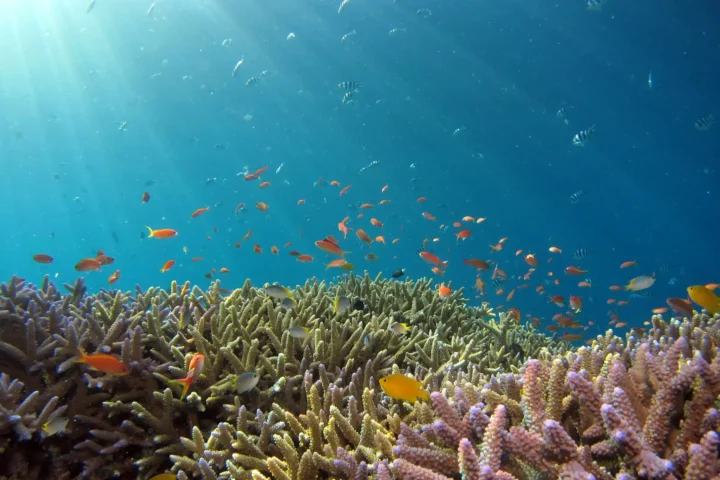
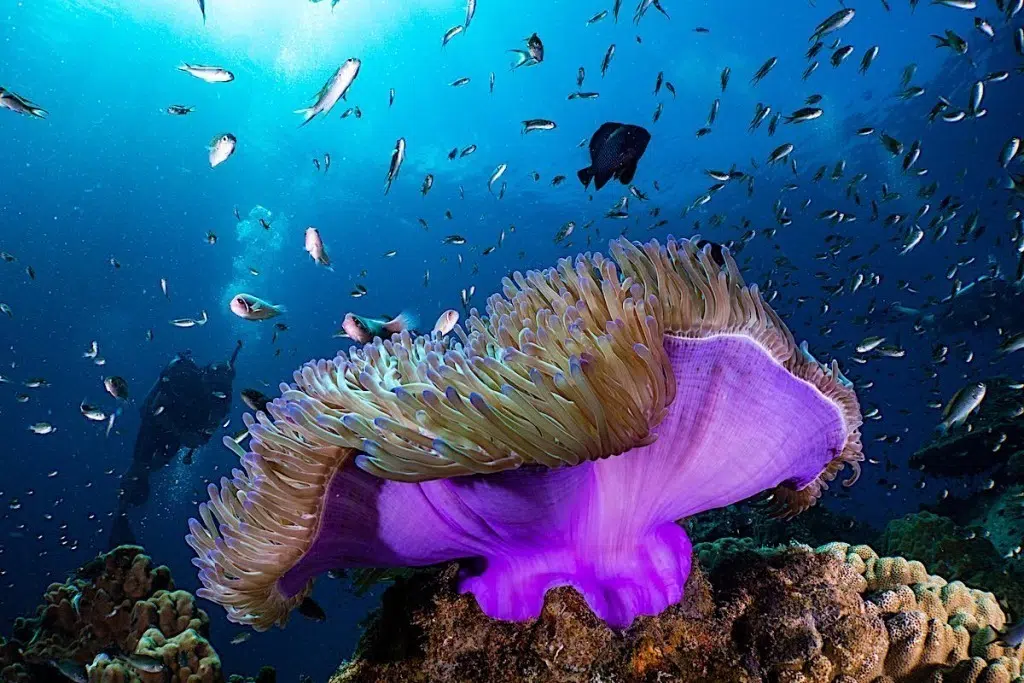
The ecological consequences can be devastating. Coral bleaching events become more frequent and severe. Harmful algal blooms proliferate. Kelp forests and seagrass meadows decline. Fisheries that support coastal communities and national economies suffer major losses.
The economic costs are substantial. Billions of dollars in fisheries revenue, tourism income and ecosystem services can disappear during prolonged marine heat waves. Yet these losses often remain underappreciated because they occur beneath the ocean’s surface, largely out of public view.
This is where the return of El Niño becomes particularly concerning.
The climate system is entering this event from an already elevated baseline. Oceans have absorbed the vast majority of excess heat generated by human-driven climate change, and many regions are beginning from unusually warm conditions. In effect, El Niño is arriving at a time when the oceans are already under significant thermal stress.
That combination raises the risk of marine heat waves reaching unprecedented intensity.
Certain regions appear especially vulnerable. Along the Pacific coast of North America, El Niño typically weakens the winds that help cool coastal waters. These winds normally drive evaporation and bring colder, nutrient-rich water to the surface through a process known as upwelling. When that mechanism slows, surface temperatures rise and marine heat waves become more likely.
California’s coastal waters are already unusually warm. A strong El Niño could extend and intensify those conditions, placing additional pressure on fisheries, marine mammals and coastal ecosystems.
The risks extend well beyond the Americas. In the Indian Ocean and the Bay of Bengal, interactions between El Niño and broader atmospheric circulation patterns frequently create conditions favorable for extreme ocean warming. Regions that support hundreds of millions of people through fishing and coastal livelihoods could face heightened ecological stress.
Even more troubling is the growing evidence that the most severe warming is not always visible from the surface.
Recent research has highlighted the emergence of “bottom marine heat waves,” episodes of extreme warming that occur near the seafloor. These events can persist long after surface waters appear to have cooled and can inflict severe damage on species that inhabit deeper coastal environments.
Because they occur out of sight, bottom marine heat waves often escape public attention. Yet their impacts can be profound, contributing to collapses in commercially valuable fisheries and disrupting marine food webs for years.
The good news is that scientific forecasting has improved dramatically. Researchers can now predict many marine heat waves several months in advance, and forecast accuracy tends to improve during El Niño years. This provides governments, fisheries managers, conservation organizations and coastal industries with valuable lead time.
The challenge is whether that warning will be heeded.
Forecasts already suggest that large portions of the Pacific, Indian and Southern Oceans could experience unusually high marine temperatures as El Niño strengthens. Some projections indicate that damaging heat may affect nearly half of the global ocean by the end of 2026.
These predictions are not certainties. Ocean and atmospheric conditions can evolve in unexpected ways. But uncertainty should not be mistaken for reassurance.
El Niño has always been one of nature’s most influential climate forces. Today, however, it is interacting with oceans that are warmer than at any point in modern human history. That combination creates risks that extend far beyond weather forecasts and seasonal headlines.
The world has become accustomed to tracking heat waves on land. It is time to pay equal attention to the heat building beneath the waves.
If a strong El Niño develops as expected, the greatest warning signs may not appear in the sky above us, but in the oceans that sustain us.