American education has developed a peculiar habit: every time a new technology arrives, we treat skepticism as a failure of imagination.
This is how we got laptops in every classroom. It is how we got tablets for elementary-school students. It is how we got educational apps, adaptive-learning platforms, gamified homework, online testing, and instructional YouTube. Each arrived with roughly the same promise: that technology would finally allow schools to transcend the limitations of human beings.
Teachers would be amplified. Learning would become personalized. Achievement gaps would narrow. Children would be more engaged.
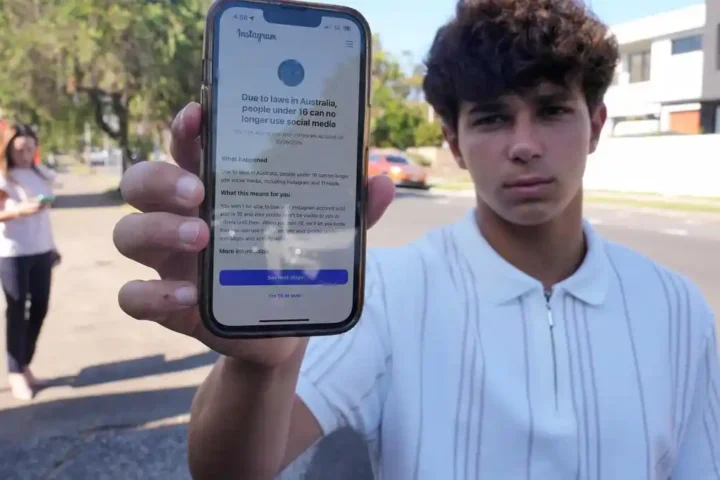
The results have been underwhelming enough that a strange reversal is now underway. Across the United States, schools are banning smartphones. More than two dozen states have adopted restrictions. New York has prohibited phones in public schools from kindergarten through high school.
The underlying premise is straightforward. Attention matters. Children learn better when they are not constantly interrupted by devices competing for their focus. This should not be a controversial observation. Nobody ever thought algebra would improve if students brought a television into class.
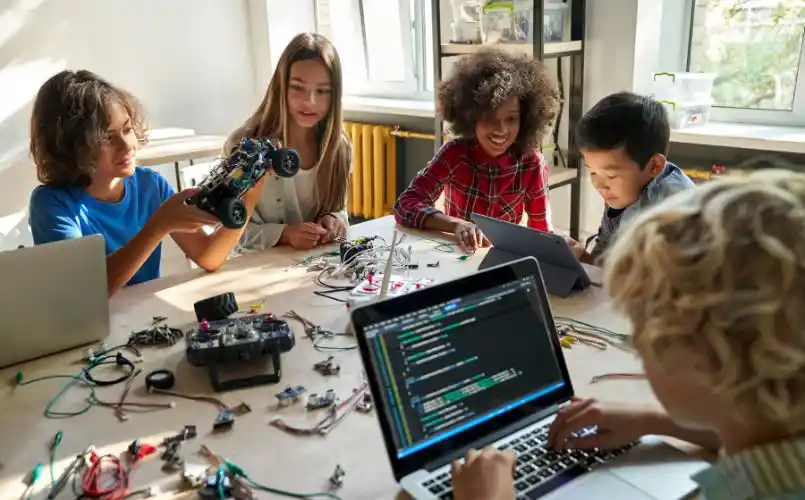
Yet even as schools retreat from one educational technology experiment, they are plunging headlong into another. Artificial intelligence is rapidly entering American classrooms. Reading bots now listen to kindergartners. Chatbots help students prepare for standardized tests. School systems are building A.I. directly into curricula, assessments, and instruction.
The remarkable thing is not merely the speed of adoption. It is the confidence.
One might think that after twenty years of mixed results from educational technology—and after the pandemic forced a national experiment in screen-mediated learning—educators and policymakers would approach the next wave cautiously. Instead, many speak as though the debate has already been settled.
The question, we are told, is not whether A.I. belongs in schools. The question is how to implement it.
That assumption deserves more scrutiny than it has received.
The strongest argument for classroom A.I. is easy to understand. Education remains a labor-intensive enterprise. Teachers are stretched thin. Students have different needs and different learning speeds. A machine that could provide individualized tutoring at scale would be one of the great educational breakthroughs in human history.
The problem is that educational technology has spent decades promising exactly this.
Personalized learning was supposed to arrive with computers. Then with tablets. Then with software platforms. Then with adaptive instruction. Now with large language models.
The dream remains largely unchanged. Only the hardware gets updated.
This doesn’t mean A.I. won’t succeed where previous technologies disappointed. It may. But it is striking how often discussions about A.I. proceed as though this history never happened—as though schools are encountering the idea of technological transformation for the first time.
Recent experience should make us especially cautious.
Only a few years ago, Americans were consumed by concerns about excessive screen time, social isolation, and the limits of remote learning. Parents worried that education conducted through devices felt thinner than education conducted through human relationships. Policymakers lamented the loss of classroom interaction. Experts emphasized that learning is not simply the transfer of information but a social process involving attention, trust, imitation, and belonging.
These insights were hardly revolutionary. They were reminders of things educators had long known.
Yet now, with astonishing speed, many institutions appear ready to subordinate those lessons to a new set of technological ambitions.
Part of the explanation is understandable desperation. American educational outcomes have stagnated for years. Policymakers are eager for solutions. Teachers are overwhelmed. School systems face pressure to do more with less.
But desperation can make institutions unusually vulnerable to grand promises.
Another factor is cultural rather than educational. We increasingly live inside stories about the future.
Artificial intelligence is discussed less as a technology than as an inevitability. Every week brings fresh predictions about industries that will be transformed, professions that will disappear, and institutions that will be reinvented. The cumulative effect is powerful. What begins as speculation gradually acquires the status of destiny.
If A.I. is going to transform education, schools reason, then they must adapt immediately.
But this logic contains a subtle trap. The belief that change is inevitable often becomes a mechanism through which change is accelerated. We convince ourselves that a future is coming, and then we rush to build it before deciding whether it is desirable.
Parents appear increasingly uneasy about this process. Their concerns are not primarily ideological. They are practical. What evidence supports these tools? What data are being collected? Who has access to that data? How much screen time is too much? What educational goals are actually being served?
Most importantly: Why is the burden of proof being placed on skeptics rather than proponents?
After all, the children currently using these systems are not participants in a laboratory study. They are the study.
The speed of A.I.’s arrival in schools has obscured a basic fact. Large language models entered public life less than four years ago. We know surprisingly little about their long-term effects on learning, cognition, attention, motivation, or child development. We know even less about what happens when students encounter them from the earliest stages of education.
That uncertainty does not require panic. It does require humility.
The most striking feature of the current debate is not that schools are experimenting with A.I. Experimentation is inevitable. It is that so many leaders speak as though the experiment’s outcome is already known.
Perhaps A.I. will become one of the most powerful educational tools ever invented. Perhaps it will become another chapter in the long history of technological overpromising. More likely, the truth will lie somewhere in between.
But before redesigning childhood around the technology, we might pause long enough to remember the lesson we seemed to learn only yesterday: not every problem created by screens is solved by a newer screen.