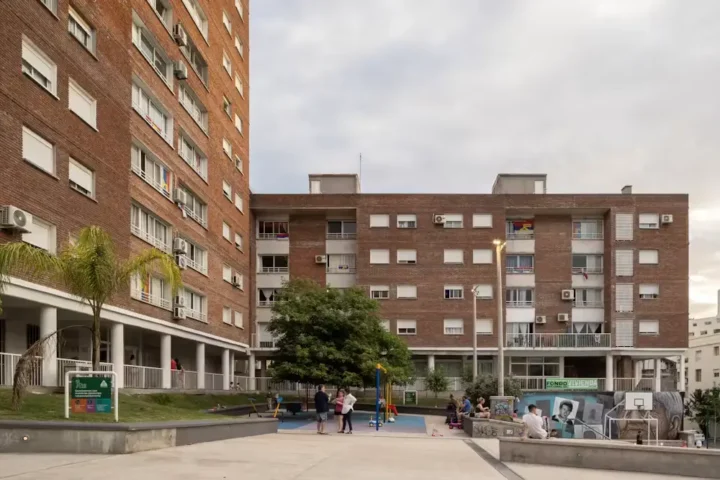
In my earlier piece, The Third Way Home: What Uruguay Teaches Us About Housing, I explored how Uruguay built one of the world’s most durable cooperative housing systems by putting land, ownership, and decision-making into the hands of residents rather than treating housing as either a market commodity or a state handout. In this second part, my research turns to India, where the housing challenge is far larger and more complex, but where a similarly compelling set of alternatives has emerged: cooperative societies, women-led federations, community-driven slum upgrading, and incremental self-build systems that together point to an Indian model of housing rooted in participation, security, and collective agency.
India is not often described as a housing innovator, at least not in the neat, model-driven way Uruguay is. Its urban landscape is too vast, too unequal, and too fragmented for a single story. Yet that is precisely why India matters. If Uruguay demonstrates how a small country can build a coherent cooperative housing system over decades, India shows how the same underlying principles can survive, adapt, and scale across a continental democracy marked by informality, migration, poverty, and rapid urban growth.
The result is not one housing model but a family of them. Some are legal and formal, like cooperative group housing societies in Delhi. Some are state-backed but community-led, like Odisha’s Jaga Mission. Some are women-powered and federated, like Kerala’s Kudumbashree housing initiatives. Others are quieter still, embedded in the everyday reality of millions of families who build their homes incrementally over time. Together, they form an Indian answer to a global question: how can housing become affordable, secure, and humane without being reduced to either pure market logic or bureaucratic state supply?
The scale of the problem
India’s relevance begins with scale. The country’s urban housing challenge is among the largest in the world, and it cannot be separated from the broader global crisis of shelter. UN-Habitat has warned that billions of people worldwide lack access to adequate housing, secure land, and basic services, while more than a billion live in slums or informal settlements. India is a major part of that picture. Census 2011 recorded about 65.5 million people living in slums, a figure that represented roughly 22 to 23 percent of the country’s urban population at the time.
But the problem is not only scarcity. India also suffers from a deep mismatch between where homes are built, who can afford them, and what people actually need. Large numbers of urban units sit vacant or are priced far beyond the reach of low- and middle-income households, while millions continue to live in overcrowded settlements with insecure tenure and poor services. That means the housing crisis is also a crisis of distribution, governance, and design. India’s most useful housing experiments are those that acknowledge this reality instead of pretending that more supply alone will solve it.
Cooperative housing as institution
India’s cooperative housing tradition is older than many realize. The country’s cooperative movement stretches back to the early twentieth century, and housing cooperatives emerged soon after. The first cooperative housing society was formed in Bangalore in 1909, followed by the Bombay Co-operative Housing Association in 1913. Over time, cooperative housing became embedded in India’s institutional landscape, especially in major cities and among salaried middle-class groups seeking stable, collectively governed housing outside the speculative market.
The basic logic is straightforward but powerful. Members pool savings, acquire land, supervise construction, and govern the society democratically. The cooperative owns the property, while members hold shares and occupancy rights. In theory, this lowers costs, limits speculation, and creates a form of ownership that is secure without being fully commodified. It is not identical to Uruguay’s mutual-aid cooperatives, but it belongs to the same family of ideas: housing as a collectively managed social good rather than a pure asset class.
Today, cooperative housing societies exist across India, registered under different state frameworks and supported by broader cooperative legislation. Their scale and quality vary widely, and many operate better for the middle class than for the urban poor. Even so, the form matters. It preserves a legal and cultural space in which housing can be collectively organized, which is the first condition for any serious alternative to the market-dominated model.
Delhi’s cooperative group housing
Delhi offers the clearest example of how cooperative housing can be structured at metropolitan scale. The Delhi Co-operative Group Housing Society Act and its associated rules provide a formal framework for registration, membership, governance, finance, and dispute resolution. These are not symbolic provisions; they are the architecture that makes cooperative housing function as a real urban institution.
Several features stand out. A society must have a minimum number of promoter members, formal share capital, and approved bye-laws. Land is often allotted through the Delhi Development Authority, which has historically reserved plots for cooperative housing societies on a seniority basis. Allocation within societies is typically done through transparent procedures, not auctions. Societies must also maintain building funds, repair funds, and detailed records, all of which help stabilize ownership and reduce the drift toward speculation.
Delhi’s model is important because it shows that cooperative housing does not need to be a romantic alternative on the margins. It can be embedded in the machinery of a large city, linked to public land allocation, formal regulation, and collective ownership. That makes it a genuine policy tool, not just a community ideal.
Jaga Mission and the politics of upgrading
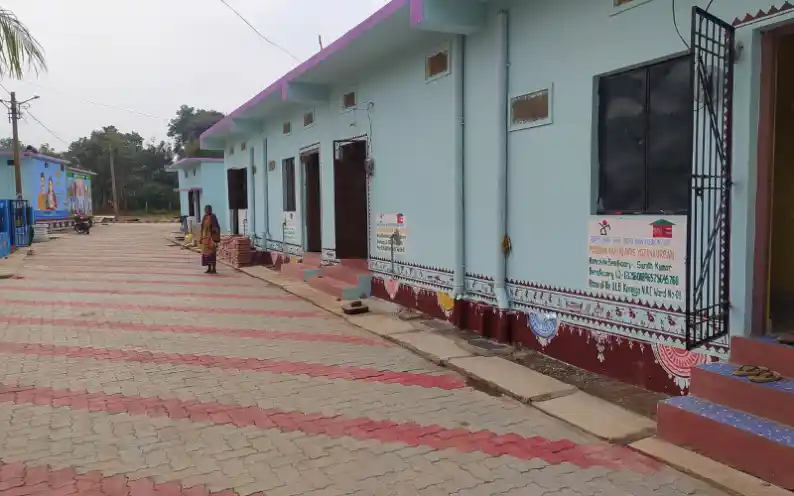
If Delhi shows the formal side of India’s housing alternatives, Odisha’s Jaga Mission shows the informal side. This is one of the most ambitious slum upgrading and land titling programmes in the world, and it offers one of the strongest examples of community-led housing policy anywhere in the Global South.
Jaga Mission was built on the recognition that slum dwellers are not temporary occupants to be removed, but urban citizens whose neighborhoods deserve recognition, services, and infrastructure. The programme grants land rights to slum residents, upgrades settlements in situ, and involves resident associations directly in planning and implementation. Instead of demolition and relocation, it embraces regularization and improvement.
The scale is striking. The programme has been implemented across thousands of slums in more than a hundred cities in Odisha. It has provided land rights to hundreds of thousands of families and delivered major infrastructure improvements, including paved streets, drainage, sanitation, street lighting, and community facilities. The broader significance is not just physical. Once residents have formal rights, they can invest in their homes, access finance, and demand better services. The settlement becomes a neighborhood, not an exception.
This is one of India’s most compelling housing innovations because it refuses the old binary between legality and informality. It says that the city is already built by its residents, and policy should recognize that fact rather than erase it.
PMAY and assisted self-build
At the national level, India’s flagship housing mission, Pradhan Mantri Awas Yojana – Urban, combines scale with a degree of flexibility. Its major insight is that not all housing needs to be delivered as a finished product. Some households already have land or tenure and need support to build incrementally. Others require partnership-based development. Others still may need rental support or interest subsidies.
That is why PMAY-U is important not just as a numbers story but as a design story. Its beneficiary-led construction vertical, in particular, reflects a practical recognition of how low-income housing actually happens in India. Families build in phases, often over years. They combine savings, labor, informal credit, and whatever formal assistance they can access. A good housing policy meets that reality instead of trying to replace it.
The scale of PMAY-U is large, with more than a crore houses sanctioned and many completed, but the deeper point is philosophical. The state is not merely handing down finished units. In its better versions, it is helping households turn existing tenure into durable homes. That is a crucial distinction. It brings public resources into a process that remains rooted in household agency.
Kudumbashree and women’s housing power
Kerala’s Kudumbashree is among the most extraordinary institutions in India’s social policy landscape. It began as a poverty alleviation and women’s empowerment mission, but it has become much more: a vast network of women’s neighborhood groups, area societies, and community development societies that can act as implementers, contractors, negotiators, and political actors.
In housing, Kudumbashree demonstrates how collective organization can shape not only access to shelter but the entire process of producing it. Through state housing missions and PMAY-linked initiatives, women’s groups have helped build homes, manage delivery, and ensure that property titles often sit in women’s names. This matters enormously in a country where ownership has long been shaped by male control and where women’s asset ownership remains a major social and economic issue.
Kudumbashree also shows that housing can be linked to livelihood. Women’s construction units have taken on building work directly, turning housing programmes into employment opportunities. That is a subtle but powerful shift. It means the housing system is not only transferring assets; it is building local capacity, skills, and collective confidence. In this respect, Kerala has taken the logic of mutual aid and pushed it into the realm of state-supported women’s enterprise.
Incremental housing as reality
The quietest but perhaps most important Indian housing model is incremental housing. For most low-income households, a home is not bought ready-made. It is assembled over time, room by room, floor by floor, as income allows. Families begin with a basic structure and improve it gradually. This is not a failure of the system; it is the system.
This is why organizations such as the Mahila Housing Trust matter so much. They work with women in informal settlements to improve housing quality, secure services, and access finance. Their work reflects a basic truth: people already know how to build, but they often lack the legal tenure, technical support, and financial tools to do it safely. When public policy respects that reality, housing improvements become faster, cheaper, and more durable.
Incremental housing may not look heroic, but it is deeply democratic. It gives households control over timing, design, and investment. It also allows them to adapt to changing family needs. In a country as unequal and fast-changing as India, that flexibility is not a side benefit. It is the main advantage.
What India adds to the conversation
India adds something essential to the global housing debate. Uruguay shows that housing cooperatives can be durable, dignified, and institutionally sophisticated. India shows that the same underlying principle can survive in a very different context: one of extreme scale, informal urbanization, and enormous social diversity.
The Indian contribution is not a single model but a set of lessons. First, housing policy works better when it treats residents as participants rather than recipients. Second, collective institutions—cooperatives, women’s federations, slum associations—can do real governing work if they are given legal standing. Third, secure tenure matters as much as construction. Fourth, incremental and assisted self-build may be the most realistic route to adequacy for millions of families. Fifth, women’s ownership is not an add-on; it is central to durable housing justice.
This is why India belongs in the same conversation as Uruguay, not as a footnote but as a second major chapter. If the first article argued that Uruguay proves another housing world is possible, the Indian case shows that such a world does not have to look the same everywhere. It can take the form of cooperative societies in Delhi, land titling in Odisha, women’s collectives in Kerala, or incremental self-build in informal settlements. Different structures, same principle: housing becomes more just when people have a stake in shaping it.
Closing thought
The real lesson of India is not that one model can be exported intact. It is that the best housing systems are plural, adaptive, and rooted in social organization. That is what connects the Indian experience to Uruguay’s and to the broader idea behind this series. The future of affordable housing is unlikely to be found in a single master plan. It is more likely to emerge from institutions that make room for collective ownership, local participation, and human dignity.
In that sense, India is not just another case study. It is a reminder that the “third way home” is not a theory waiting to be proven. It is already being built, one cooperative, one settlement, and one household at a time.