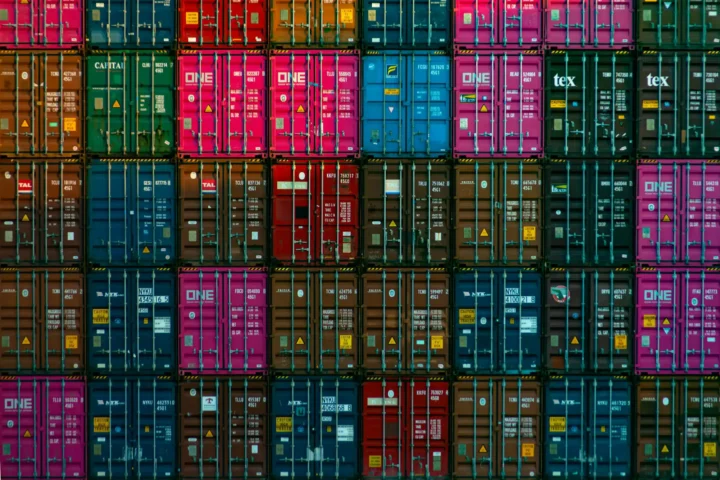

For four decades, “the China story” was the only story worth telling about Asian growth. A command economy poured concrete, wired factories, and moved hundreds of millions of people from farms to assembly lines, building the most formidable manufacturing machine the world has ever seen. China’s economy today is still roughly 4.5 times the size of India’s in nominal dollar terms, and it produces something on the order of 28% to 30% of global manufacturing output. Any honest assessment starts there: in absolute scale, there is no contest.
But investors, and increasingly policymakers, do not allocate capital based on where an economy has been. They allocate based on where the risk-adjusted trajectory is heading. And on that score, the evidence is mounting that India — not China — now offers the more durable growth engine for the next quarter-century.
This is not a claim that India will overtake China’s GDP anytime soon. It won’t, not for a very long time. It is a narrower and more useful claim: that the composition, financing, and demographic underpinnings of India’s growth make it structurally sounder, and that sound structure compounds. China built the world’s most efficient capital-intensive factory of the last forty years. India is quietly assembling a different kind of machine — one built on consumers, workers, and code — for the next forty.
Start with the headline numbers. The IMF and World Bank now place India’s real GDP growth in a 6.4% to 6.7% band, comfortably the fastest pace among the world’s major economies. China’s medium-term trajectory, by contrast, has downshifted into a 4.2% to 4.8% range, weighed down by a real-estate sector still working through the aftermath of Evergrande and Country Garden, and by a labor force that is no longer growing.
That two-percentage-point gap sounds modest until it is compounded. An economy growing at 6.5% doubles in just over eleven years. One growing at 4.5% takes closer to sixteen. Over a generation, that arithmetic reshapes the global economic map regardless of the starting-line gap in absolute size.
The pattern holds in nominal dollar terms as well, which matters more to global investors than inflation-adjusted local-currency figures. Over the 2014–2026 cycle, India posted the highest nominal USD compound annual growth rate among major G20 economies, at 6.1%, edging out China’s 5.9% and the United States’ 5.3%. That is a striking result: India delivered it while absorbing global shocks — a pandemic, a war in Europe, successive rate-hiking cycles in the West — that hit smaller, more trade-exposed economies far harder than they hit India’s domestically anchored one. India’s contribution to incremental world GDP growth now sits close to 16%, trailing only China and the United States, and most forecasts have India’s nominal GDP crossing the $5 trillion threshold before the end of the decade.
None of this erases China’s scale advantage. It does mean the gap is closing at the margin, year after year, and that the marginal dollar of global growth is increasingly being generated in New Delhi, Bengaluru, and Pune rather than in Shenzhen or Chengdu.
Demography Is Destiny, and the Clocks Are Running in Opposite Directions
If there is one variable that swamps almost every other input into long-run growth forecasting, it is the shape of the population pyramid. Here the divergence between India and China is not subtle.
China’s population peaked in 2022 and has been declining since. Its overall labor force has actually been contracting since 2015. With a total fertility rate of roughly 1.2 — well below the 2.1 needed to keep a population stable — China is aging faster than any large economy in modern history, and its median age has climbed to roughly 38.4 years. That combination produces a rapidly rising dependency ratio and an ever-larger bill for state-funded elder care, pensions, and healthcare, resources that must be diverted from productive investment.
India’s median age, by comparison, is roughly 28.4 years. United Nations Population Division projections show India’s working-age cohort — those between 15 and 64 — continuing to expand through 2060, adding more than 100 million workers to the labor force over the coming decades even as China’s shrinks. This is what economists call the “demographic dividend,” and India is only in the early-to-middle innings of cashing it in.
The dividend shows up directly in cost competitiveness. Manufacturing labor in India runs roughly $1.50 to $2.00 an hour, versus $6.50 to $8.00 an hour in China — a three-to-four-fold gap that is increasingly difficult for multinational manufacturers to ignore, particularly as they look to diversify supply chains away from single-country concentration risk.
A shrinking workforce does not doom an economy to stagnation — productivity gains can offset demographic decline for a time. But it does raise the degree of difficulty considerably, and it is precisely the kind of headwind that low-cost automation and AI-driven productivity gains have not yet been shown to fully offset anywhere in the world.
Consumption vs. Concrete: Two Different Growth Models
Perhaps the most important structural distinction between the two economies is not how fast they grow, but what is doing the growing.
China’s boom was built overwhelmingly on fixed-asset investment — infrastructure and real estate — which at its peak exceeded 40% of GDP. That model delivered spectacular short-run growth rates, but it also produced the debt overhang and property-sector distress that have weighed on Chinese growth for the better part of a decade. When an economy over-invests in physical capital relative to the returns that capital can generate, the eventual reckoning — deleveraging, defaults, stalled construction — is not a matter of if but when. China is living through that reckoning now.
India’s growth engine looks fundamentally different. Private final consumption expenditure generates more than 58% of India’s GDP, compared with roughly 38% in China. That is an enormous structural difference. An economy in which the household sector, rather than the state-directed investment machine, is the primary driver of output tends to be more resilient to global trade shocks, more balanced, and less prone to the kind of debt-fueled overbuilding that produced China’s property crisis. Growth financed by hundreds of millions of consumers gradually spending more as their incomes rise is, by its nature, harder to over-leverage than growth financed by state-directed lending into steel and cement.
This is not to say India’s capital formation is trivial — it is substantial and growing — but it is increasingly tilted toward higher-return digital infrastructure and targeted logistics connectivity rather than speculative real estate.
The India Stack: A Different Model for the Digital Economy
One of the least appreciated advantages India holds is what has come to be known as the “India Stack” — a set of open, interoperable digital public goods that function as national infrastructure in the same way that roads or the electrical grid once did.
Start with digital identity: India has built near-universal biometric identity coverage across a population of more than 1.3 billion. Layer on top of that the Unified Payments Interface, or UPI, which now processes more than 13 billion transactions a month and accounts for roughly 46% of global real-time digital payment volume — a genuinely staggering figure for a system that barely existed a decade ago. The Jan Dhan-Aadhaar-Mobile trinity has onboarded more than 500 million citizens into the formal banking system, sharply reducing transaction costs and cutting leakages in direct benefit transfers to the poor.
The contrast with China’s digital economy is instructive. China built an extraordinarily sophisticated but largely proprietary set of “walled gardens” — Alibaba, Tencent, and the ecosystems built around them. India instead built open-architecture public infrastructure that any bank, fintech, or merchant can plug into without paying rent to a dominant platform. The practical effect has been to dramatically lower customer-acquisition costs for startups and small businesses, fostering a more competitive, more distributed digital economy rather than one concentrated in the hands of a small number of super-platforms.
This is infrastructure that generates compounding returns in the way that physical infrastructure typically does not: it gets cheaper and more useful as more people use it, and it does so without requiring the enormous capital outlays that characterize China’s build-out model.
China+1 and the Reordering of Global Manufacturing
Geopolitics has done for India’s manufacturing sector what decades of policy alone could not: it has forced global multinationals to seriously diversify away from single-country concentration in China. The “China+1” strategy — maintaining Chinese capacity while building parallel capacity elsewhere — has become boardroom orthodoxy across electronics, pharmaceuticals, and industrials.
India’s Production-Linked Incentive scheme, targeting electronics, pharmaceuticals, solar photovoltaics, and automotive components, has been a direct beneficiary. Smartphone exports out of India have surged past $15 billion, driven by expanded production from Apple, Foxconn, and Samsung. In pharmaceuticals, India’s historical dependence on Chinese active pharmaceutical ingredients is declining as domestic manufacturing capacity scales up — a shift with real strategic significance given how exposed global drug supply chains proved to be during the pandemic.
India is not going to replace China as the world’s factory floor in the near term; China’s supply-chain depth, industrial clustering, and logistics sophistication remain unmatched, and Beijing’s willingness to direct enormous subsidies into strategic sectors like EVs and batteries gives it a durable edge in those categories. But India does not need to replace China outright to matter. It needs only to capture an increasing share of the incremental capacity that global manufacturers are actively trying to build outside of China — and by that more realistic measure, it is succeeding.
Institutions Matter, Especially Over Long Horizons
The final piece of the case is the least glamorous but arguably the most important for long-horizon investors: institutional predictability.
India operates under a common-law legal framework with functioning contract enforcement and an independent judiciary — imperfect, often slow, but fundamentally predictable in a way that matters enormously to capital allocators making decade-long bets. Monetary policy runs under the Reserve Bank of India’s inflation-targeting mandate, a framework that has delivered a reasonable degree of macroeconomic stability through a turbulent global decade.
China’s record on regulatory predictability has been considerably rockier. The abrupt regulatory crackdowns on the technology and private-education sectors in 2021, which erased hundreds of billions of dollars in market value virtually overnight, remain a vivid reminder that in a system where policy can pivot sharply and without warning, even the most compelling growth numbers carry a discount for political risk. Democracies are messier and slower to move. They are also, for precisely that reason, harder to upend on short notice.
A Balanced Verdict
None of this should be read as a prediction that China is in decline, or that India’s rise is preordained. China retains an $18.5 trillion-plus economy, deep and mature industrial supply chains, and state capacity to direct resources into strategic sectors that India, as a decentralized democracy, simply cannot replicate today.
But the question worth asking is not which economy is bigger today. It is which economy is better positioned, structurally, for the next several decades — and on that question, the weight of demographic, consumption, digital, and institutional evidence increasingly points toward India. China built the twentieth century’s most efficient factory. India is building something better suited to what comes after it.