There are two versions of Pakistan visible today.
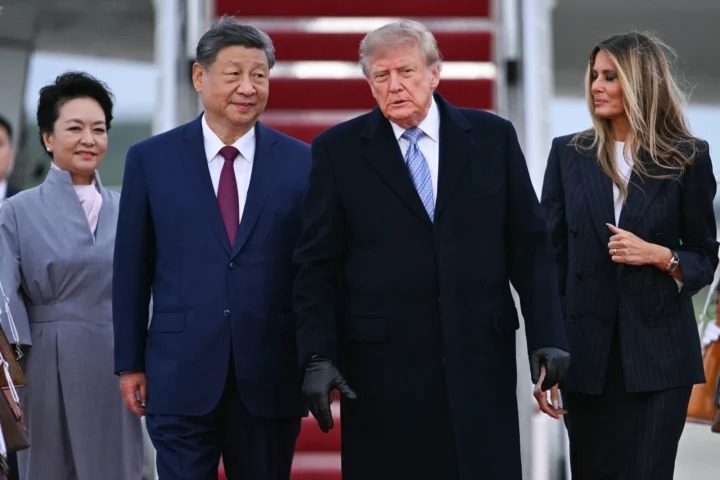
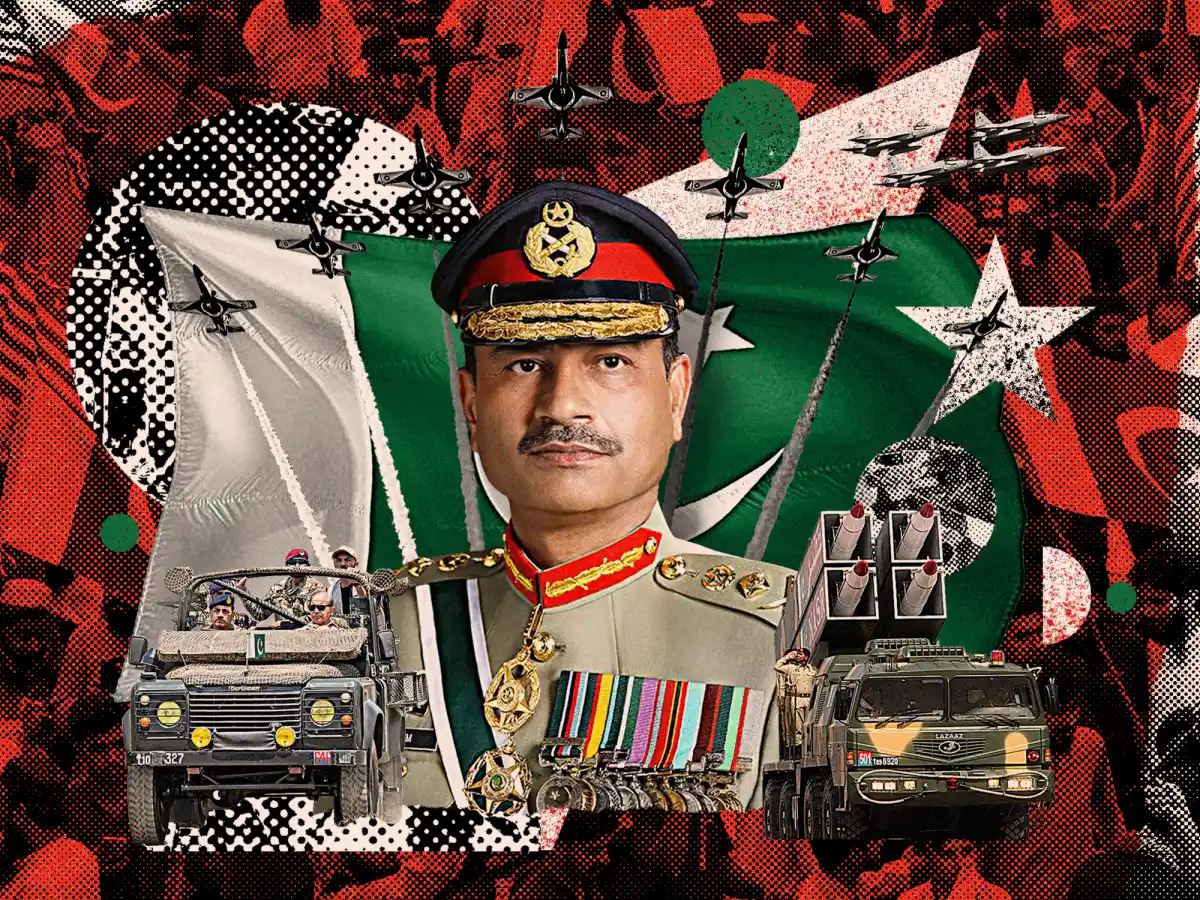
The first is the Pakistan presented abroad. Its army chief, General Asim Munir, is received in foreign capitals, photographed with political and business elites and increasingly projected as the indispensable interlocutor in a difficult neighbourhood. The message is unmistakable: whatever Pakistan’s constitutional arrangements may say, those wishing to do serious business with Islamabad know where power resides.
Then there is the Pakistan to which Munir returns.
It is economically constrained, politically embittered and increasingly dependent upon coercion to maintain an appearance of stability. Terrorism continues to test the State in Khyber Pakhtunkhwa and Balochistan. Relations with Iran contain considerably more friction than diplomatic statements suggest. Imran Khan remains imprisoned but politically potent. And perhaps most importantly for an army chief, decisions at the top of the military hierarchy risk creating their own constituency of disappointed generals.
The paradox of Munir’s present position is therefore striking. He may be more powerful than almost any Pakistani army chief in recent memory, yet the system over which he presides is becoming progressively harder to manage.
And that should concern India.
The Iran contradiction
Pakistan has attempted to present itself as a useful diplomatic bridge in the turbulence surrounding Iran. Geography certainly gives Islamabad relevance. But underneath the diplomacy lies a relationship burdened by money, energy and competing strategic compulsions.
The most obvious problem is the Iran-Pakistan gas pipeline.
Signed in 2009 and originally expected to be completed years ago, the project has become another monument to Pakistan’s inability to reconcile geopolitical commitments with economic necessity. Islamabad points to American sanctions as the principal reason for its failure to complete its part of the pipeline. That explanation is not entirely without merit, but neither does it explain everything.
Pakistan has a long history of delayed infrastructure projects, contractual disputes and financing problems. Tehran, meanwhile, has little reason to indefinitely absorb the consequences. The possibility of arbitration therefore hangs over Islamabad at precisely the moment when its finances leave it least capable of absorbing another large external liability.
The contradiction extends to trade.
Pakistan has been trying to expand transit connectivity with Iran, including through new routes and greater utilisation of Gwadar. This makes considerable economic sense. A country desperately seeking transit revenue, regional commerce and better utilisation of expensive infrastructure cannot easily afford to turn away business.
But Washington’s pressure on countries conducting business with Tehran creates the opposite incentive.
Pakistan therefore finds itself performing a familiar diplomatic manoeuvre: assuring Iran of economic engagement while simultaneously ensuring that engagement does not provoke the United States.
There is also the trade that rarely appears prominently in official statistics.
Iranian fuel has for years flowed informally across the Pakistan border, particularly into Balochistan. For communities along the frontier it is an economic ecosystem; for smugglers it is a lucrative business; and for elements of the State responsible for policing the border, it creates obvious opportunities for rent-seeking.
Islamabad can promise enforcement. Eliminating the trade is another matter altogether.
Munir may consequently be welcomed as a mediator in international capitals, but Pakistan’s Iran problem is fundamentally less diplomatic than structural. Islamabad needs Tehran economically, cannot afford to alienate Washington strategically, and lacks the institutional capacity to completely control what happens along its own border.
No amount of diplomatic choreography removes that triangle.
The economy remains the great constraint
Military power can rearrange Pakistan’s politics. It cannot repeal arithmetic.
For all the discussion of economic stabilisation, Pakistan remains heavily dependent upon external financing, remittances and repeated assistance from international institutions and friendly governments. The IMF continues to demand reforms precisely because the underlying weaknesses that repeatedly produce Pakistani crises have not disappeared.
Circular debt in the energy sector remains enormous. The tax base remains inadequate. Exports remain insufficiently diversified. Foreign direct investment remains weak relative to Pakistan’s requirements. State-owned enterprises continue to consume resources. Governance problems make implementation substantially harder than announcing reform.
This produces an unusual political economy.
The Pakistani State is powerful enough to imprison political opponents but often too weak to collect taxes from influential constituencies. It can regulate television channels more effectively than electricity losses. It can mobilise enormous security resources but struggles to undertake the mundane institutional reforms required for sustained economic growth.
That imbalance matters because authoritarian systems depend upon performance as much as coercion.
If citizens believe that political restrictions are accompanied by economic stability, the bargain can survive. When political restrictions coexist with inflation, unemployment, taxation, expensive energy and deteriorating public services, coercion must progressively do more of the work.
That is a considerably less stable equilibrium.
When the police begin questioning the security architecture
Perhaps the more revealing developments, however, are occurring away from Islamabad.
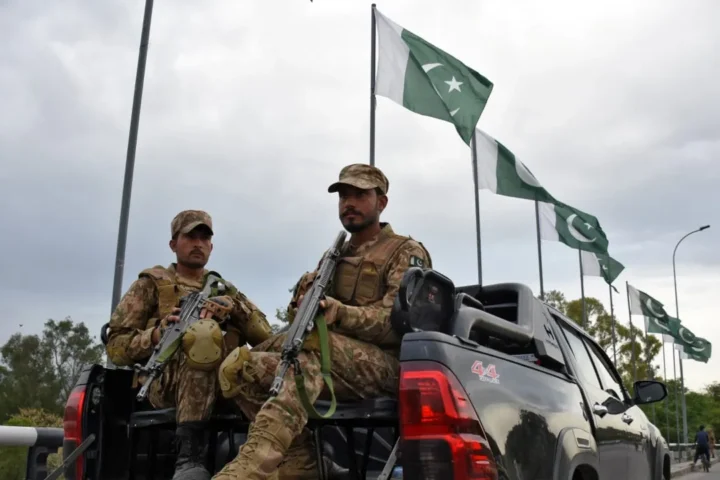
Pakistan’s police forces have absorbed an extraordinary share of the violence generated by the resurgence of militancy, particularly in Khyber Pakhtunkhwa. Police stations, checkpoints and individual officers have repeatedly become targets.
What makes recent unrest significant is not merely that policemen are frustrated. It is the nature of their complaint.
Sections of the police and local peace structures have increasingly questioned whether the security architecture imposed from above is actually protecting those expected to enforce it below. Protests in districts such as Bannu and Lakki Marwat reflect a deeper erosion of confidence between different arms of the Pakistani State.
That is dangerous territory.
Pakistan has survived civilian protests before. The military establishment knows how to manage politicians, activists and journalists. But resentment within institutions responsible for maintaining everyday State authority is different.
A policeman who believes he is being sent to confront militants without adequate support is not making an ideological argument. He is questioning whether the State will protect the people who protect it.
The expanding militancy in the northwest therefore presents Munir with something larger than another counterterrorism campaign. Pakistan risks developing a gap between the military’s national security strategy and the willingness of local institutions to implement it.
Armies can occupy terrain. They cannot indefinitely substitute for civilian administration.
Imran Khan remains the unresolved problem
Then there is Imran Khan.
Pakistan’s establishment has succeeded tactically. Khan remains in prison. PTI leaders face prosecutions and convictions. Party organisation has been disrupted. The events of 9 May 2023 provided the military with the justification for an extensive crackdown.
Yet the fundamental political problem remains unresolved.
The 2024 election demonstrated that removing a politician from the ballot does not necessarily remove him from politics. PTI-backed independents performed strongly despite the restrictions surrounding the party. The institutional machinery subsequently prevented that electoral strength from translating straightforwardly into control of government, but the underlying constituency did not disappear.
This leaves Munir with an unenviable calculation.
Releasing Khan restores a political rival with an extraordinary ability to mobilise supporters. Keeping him imprisoned perpetuates the symbol around which opposition to the establishment can organise. A serious deterioration in Khan’s health—or anything worse—could create consequences substantially more difficult to contain.
The present strategy is therefore one of political freezing rather than political resolution.
It works until something breaks the ice.
The more sensitive question lies inside the army
For all these difficulties, however, the greatest danger to an army chief traditionally does not come from civilians.
It comes from Rawalpindi.
The promotion of Lt Gen Aamer Raza to four-star rank to command the newly established National Strategic Command inevitably had consequences for officers senior to him. Military hierarchies are particularly sensitive to supersession because promotion is not merely professional advancement; it determines command, influence and ultimately proximity to power.
Every exceptional promotion therefore produces two lists: the officer elevated and the officers who were not.
This becomes particularly important if Munir remains army chief beyond November 2027.
An extended tenure stabilises authority at the top while narrowing opportunity immediately beneath it. Senior generals approaching the end of their careers must then calculate whether accommodation, retirement or another institutional arrangement offers their best future.
Pakistan has dealt with such problems before by restructuring commands, extending tenures and creating new positions. More such arrangements are possible.
But every institutional modification designed around the longevity of one commander carries a price. Eventually the institution begins adapting itself to the individual rather than the individual operating within the institution.
For an army that considers itself Pakistan’s most durable institution, that is no small matter.
The strongman’s paradox
This is why photographs of Munir abroad can be misleading.
International recognition unquestionably strengthens him. Washington sees a man capable of delivering on security matters. Gulf capitals value military relationships with Pakistan. Beijing requires an establishment capable of protecting Chinese interests and investments. Tehran needs communication with the Pakistani security apparatus. Western institutions understand that civilian officeholders do not possess the final word on Pakistan’s strategic decisions.
Munir has successfully converted that reality into personal diplomatic capital.
But foreign legitimacy cannot indefinitely compensate for domestic weakness.
The stronger Munir becomes personally, the more Pakistan’s successes and failures become associated with him. Economic distress is no longer simply the government’s problem. Internal security failures cannot easily be blamed upon civilian incompetence when the military exercises such enormous influence over national security. Political repression becomes inseparable from the army chief who presides over the system.
Absolute influence brings something dangerously close to absolute ownership of consequences.
Pakistan’s generals have encountered this problem repeatedly.
Ayub Khan appeared indispensable until he wasn’t. Zia-ul-Haq constructed an extraordinarily powerful military order but left Pakistan transformed by forces that outlived him. Pervez Musharraf was courted internationally after 9/11, only to discover how quickly external usefulness and domestic authority can diverge.
Munir is operating within that tradition, even if his circumstances are different.
That conclusion deserves qualification.
A confident Pakistani military leadership has reasons to avoid an uncontrolled confrontation with India. A leadership facing pressure on several fronts may sometimes have stronger incentives to manufacture external cohesion.
India has repeatedly served that purpose in Pakistani domestic politics.
A confrontation with New Delhi can alter the domestic conversation almost overnight. Political divisions become questions of national security. Criticism of the military becomes more difficult. International capitals that were discussing democracy or economic reform suddenly begin calling Islamabad about escalation management.
That does not mean every Pakistani crisis will produce military adventurism. The most dangerous phase for a strongman is not necessarily when he is weak. It can be when he is enormously powerful, has eliminated many of the institutional constraints around him, but begins discovering that power itself cannot solve the problems accumulating underneath.
Asim Munir today commands extraordinary authority. He has international access, institutional control and few obvious civilian challengers capable of immediately dislodging him.
Yet Iran presents an uncomfortable strategic balancing act. The IMF constrains economic autonomy. Militancy is exhausting the security apparatus. Policemen are increasingly questioning the system they serve. Imran Khan remains politically alive despite imprisonment. And promotion and succession decisions are reshaping expectations within the army itself.
None of these problems individually threatens the Pakistani system.
Their convergence is what matters.
Munir may therefore appear to be reaching the summit of power just as the ground beneath that summit becomes less secure.
A Pakistani establishment preoccupied with survival can be cautious. But a Pakistani establishment that concludes an external crisis would restore domestic unity can become considerably more dangerous.