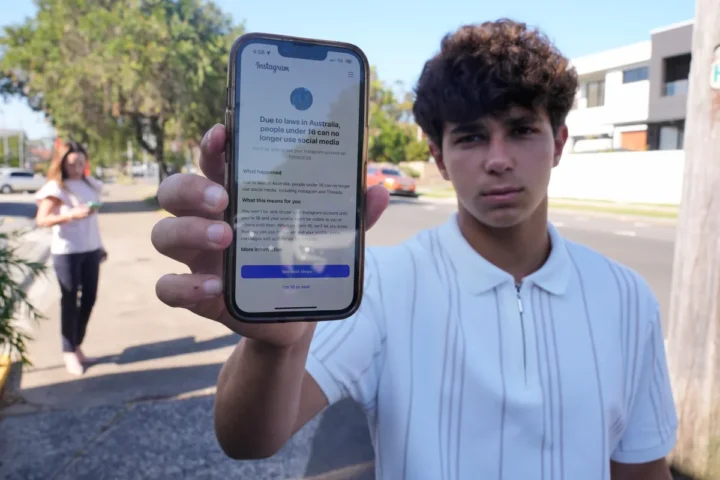
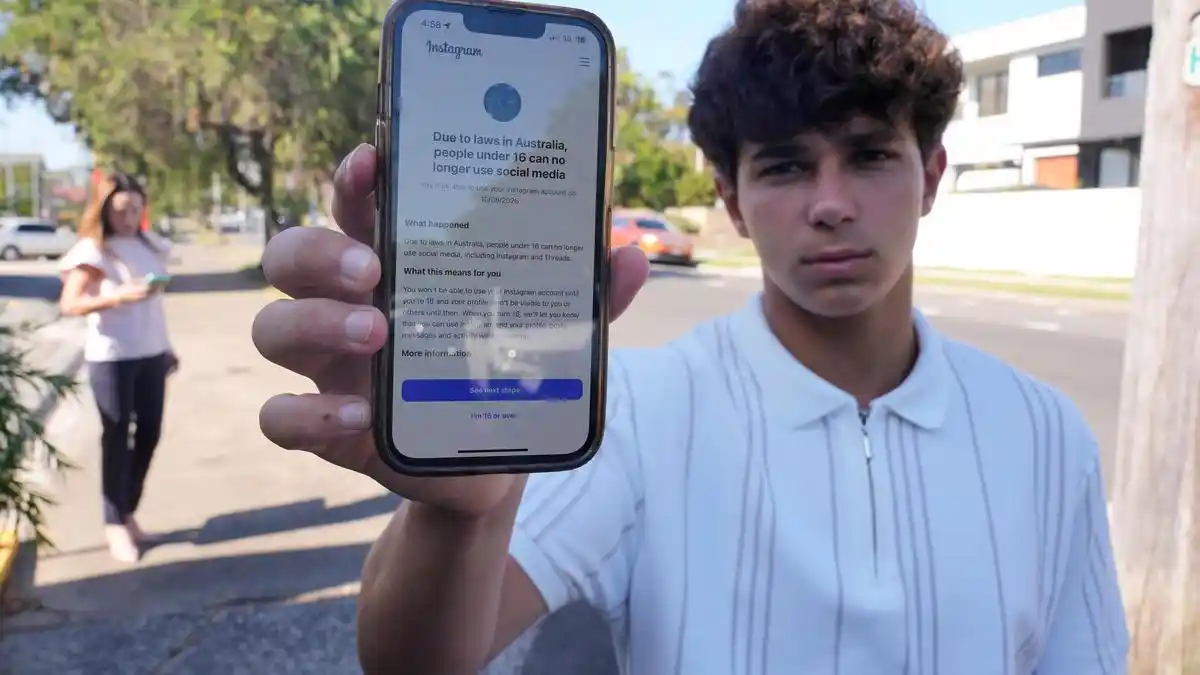
When Australia enacted the Online Safety Amendment in December 2025—prohibiting adolescents under 16 from holding accounts on platforms from TikTok to Instagram—the world watched with a mixture of envy and ambition. Confronted by soaring rates of teenage anxiety, sleep deprivation, and cyberbullying, Prime Minister Anthony Albanese’s government promised a decisive, hard-line fix: sever the digital cord entirely. Lawmakers in Europe, the United States, and Latin America quickly took notes, eager to import what looked like a rare silver bullet for the modern youth crisis.
Yet as the dust settles, Australia’s world-first experiment is delivering a sobering lesson in the limits of technocratic prohibition. The narrative presented to parents—that turning off the digital spigot would magically restore adolescent mental health—is colliding with a messier reality. The early impacts of the ban are not only profoundly mixed; they are fundamentally hard to measure, structurally easy to bypass, and risk distracting us from the actual architecture of digital harm.
The first myth to unravel is the idea that a legislative deadline equals real-world compliance. Despite staggering maximum fines for non-compliant platforms—reaching up to A$54.6 million—the technical reality of age verification has proven laughably porous. Within weeks of the law taking effect, Australian teenagers demonstrated that standard age-assurance mechanisms—whether third-party biometric scans, facial age estimation, or uploaded IDs—are trivial to circumvent. Teens quickly mapped out workarounds, from using virtual private networks (VPNs) to exploiting facial-recognition flaws. Studies monitoring the ban’s rollout revealed that over 85 percent of adolescents were still accessing their preferred platforms within months of the ban going live. The legislation did not eliminate teenage social media use; it merely pushed it into a legal gray zone, transforming everyday digital life into an exercise in covert defiance.
The second, more dangerous myth is the assumption that eliminating logged-in accounts directly translates to a surge in youth well-being. Proponents framed the law as a clear-cut intervention for mental health, but the epidemiological reality is frustratingly complex. Early observational metrics tracking adolescent sleep, anxiety levels, and self-harm show virtually no statistically significant shift attributable to the law.
Why? Because social media is not a singular toxic compound like lead paint or tobacco; it is an ecosystem. For every teenager exposed to predatory algorithms, body-dysmorphia rabbit holes, or online harassment, there is another who relies on those same platforms for community, identity validation, or support networks unavailable in their physical surroundings—particularly LGBTQ+ youth and teens in isolated, rural areas. By treating social media purely as a poison to be confiscated rather than an environment to be regulated, blunt bans inadvertently sever vital protective connections alongside harmful ones.
Furthermore, measuring the true impact of such bans presents a profound methodological headache. Researchers evaluating the Australian rollout face endless confounding variables. If a teenager’s mood improves over a six-month period, is it because they spent less time on Snapchat? Or is it because of changing school dynamics, shifting parental boundaries, or broader socio-economic factors? Disentangling cause and effect in a complex, hyper-connected world is nearly impossible, making sweeping declarations of success or failure little more than political theater.
Perhaps the most insidious fallout of the Australian model is political displacement. By focusing almost exclusively on access—demanding tech companies act as digital bouncers at the door—governments let platforms off the hook for how their products are actually built. The true engine of digital harm is not the existence of a logged-in account, but the predatory design choices underneath: infinite scroll, hyper-aggressive recommendation algorithms optimized for rage and outrage, push notifications designed to fragment attention, and systemic failures in content moderation. A ban targets the user, not the mechanism.
If global leaders copy Australia’s blueprint without scrutiny, they risk pursuing an expensive illusion. Rather than attempting to lock millions of digital natives out of the modern town square—a strategy that inevitably fails in practice—policymakers must focus on structural reform: mandating privacy by design, banning algorithmic feeds for minors, enforcing strict limits on data harvesting, and holding platforms liable for harmful design rather than user age.
Australia’s attempt to protect its youth comes from a place of genuine concern, but political intent is not empirical reality. As the rest of the world considers following suit, we ought to look closely at the data coming out of the Pacific: banning teens from social media doesn’t solve the crisis—it just blinds us to the real work of fixing the internet.