When a head of government spends six days moving through three countries, it is tempting to file the trip under ceremony: handshakes, banquets, a joint statement or two, and a return home to domestic politics as usual. That would be the wrong way to read the Indian Prime Minister’s July 6–11 tour of Indonesia, Australia and New Zealand. This was not a goodwill circuit. It was a piece of deliberate architecture — an attempt to bolt three mid-sized maritime democracies onto India’s own rise, at precisely the moment the Indo-Pacific’s economic and security order is being renegotiated in real time.
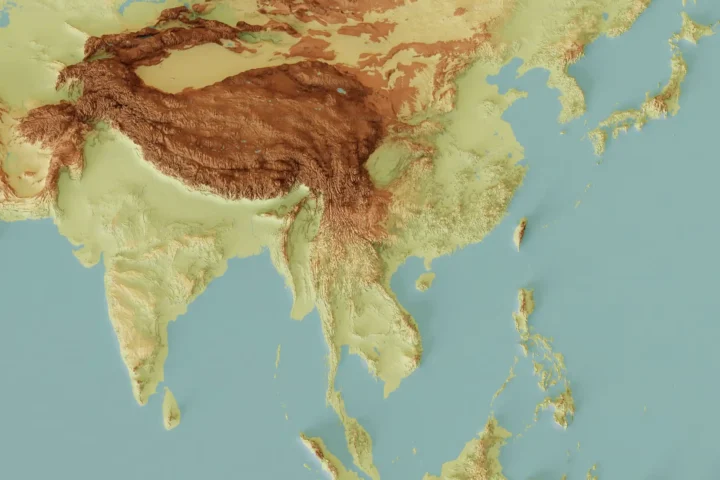
The three stops were not chosen at random, and they were not chosen for their photogenic qualities. Indonesia is the anchor of ASEAN and a state whose economic trajectory will help determine whether Southeast Asia bends toward Beijing or toward a more plural set of partners. Australia is a resident American ally, a Quad member, and increasingly a country that talks about India in the same register it once reserved for its oldest alliances. New Zealand is small by GDP but has just handed India one of the fastest-negotiated free trade agreements in its recent diplomatic history. Put these three together on one itinerary and a pattern emerges that is bigger than any single bilateral relationship: India is trying to become the connective tissue of a Indo-Pacific order that no longer wants to choose between Washington and Beijing, but does want options.
Context matters here. The tour did not happen in isolation. It followed a string of visits to littoral and maritime states — Mauritius, Seychelles, Japan, the Gulf — that have quietly extended India’s diplomatic reach along the arc of the Indian Ocean and beyond. And it came just weeks after Quad foreign ministers met in New Delhi and rolled out new initiatives on maritime surveillance, critical minerals, ports and energy security, all explicitly framed around keeping the Indo-Pacific “free and open.” Read against that backdrop, the three-nation swing looks less like a standalone event and more like the implementation phase of a vision the Indian Prime Minister first sketched out at the Shangri-La Dialogue back in 2018. The rhetoric of an open, rules-based Indo-Pacific is now being translated into ports, minerals agreements and trade corridors in the eastern Indian Ocean and the Pacific approaches. That is a meaningful shift — from vision statement to operating system.
Trade as strategy, not just commerce
The most immediately measurable dimension of this trip is trade, and the numbers are large enough to matter geopolitically, not just commercially. India’s trade with Indonesia sits around $29 billion a year, built substantially on coal and palm oil, and it makes Jakarta one of New Delhi’s most important Asian partners. With Australia, two-way trade in goods and services is now above $54 billion, a figure that would have seemed unlikely fifteen years ago when the relationship was defined mostly by uranium politics and cricket. And then there is New Zealand — smaller in absolute terms at roughly NZD 3.95 billion in annual trade, but structurally significant because of what just happened on paper: a free trade agreement signed in April 2026 that eliminates tariffs on all Indian exports to New Zealand and strips tariffs from about 95 percent of New Zealand’s exports to India, backed by a pledged NZ$20 billion in investment over two decades.
The Prime Minister landing in Wellington within months of that signature is the real story. Trade agreements are frequently signed and then left to gather dust while businesses figure out, slowly, whether they are worth using. A head-of-government visit compresses that timeline. It tells Indian exporters in textiles, pharmaceuticals and engineering goods that duty-free access to a small, wealthy, rules-based market is not a technicality to be discovered later — it is a priority to be acted on now. And it tells New Zealand’s business community that India is not merely another line on a diversification spreadsheet, drawn up to reduce dependence on a narrower set of partners, but an active, cultivated relationship.
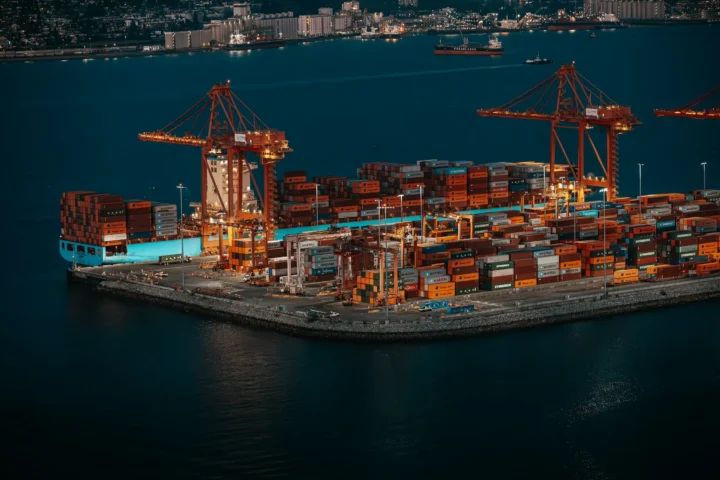
If trade is the visible layer, supply-chain geometry is the deeper one, and it is where this trip does its most interesting work. Indonesia is a critical node in global flows of coal and palm oil, commodities that sit close to the core of India’s energy and food security. Australia supplies coking coal and, increasingly, is viewed by its own foreign policy establishment as a partner of what it has called “first order importance” in critical minerals and energy. Neither relationship is new. What is new is the attempt to braid them together with the Quad’s freshly announced Critical Minerals Initiative Framework and its Indo-Pacific Energy Security initiative — frameworks meant to coordinate investment in mining, processing and resilient fuel supply chains across a region that has spent the last few years discovering, sometimes painfully, how exposed it is to single-source dependencies.
Conversations in Jakarta and Canberra during this trip can plug directly into that agenda: joint projects in lithium, rare earths, undersea cables, the unglamorous infrastructure of resilience that rarely makes headlines but that determines whether a country can withstand a shock without capitulating to it. New Zealand adds a smaller but distinctive layer — cooperation on forestry, horticulture, traditional medicines and agri-tech that feeds into India’s rural economy and, notably, opens a door for Māori businesses into Indian value chains. None of these threads is individually dramatic. Together, they sketch the outline of a more diversified Indo-Pacific economic network with India positioned not at the edge of the map but near its center.
Security is the subtext in every room
It would be naïve to read this trip purely as an economic exercise. Security is embedded in nearly every conversation on the itinerary, even where it isn’t the headline. Indonesia sits astride sea lanes that connect the Indian and Pacific Oceans — a geographic fact that has shaped Australian and European strategic thinking about the region for decades. Australia is a Quad member investing in new capabilities through arrangements like AUKUS, and its defense cooperation with India, from joint naval exercises to maritime domain awareness sharing, has expanded sharply over the past ten years.
The Quad’s own May 2026 announcements — an Indo-Pacific Maritime Surveillance Collaboration and an expanded Partnership for Maritime Domain Awareness — are designed to build something close to a shared operating picture of regional waters. Talks in Jakarta and Canberra during this tour give India and its partners a chance to move those frameworks from concept to coordination: tracking illegal fishing, responding to grey-zone coercion, protecting sea-borne commerce in the eastern Indian Ocean and the approaches to the South Pacific. New Zealand, historically the most cautious of the three on hard security matters, has nonetheless begun describing India as a strategic partner whose growing weight matters for regional order. Even modest steps — cooperation on maritime security, cyber, emerging technology — widen the circle of states willing to defend freedom of navigation and a rules-based maritime order without necessarily calling it an alliance.
Three very different partners, one converging logic
It’s worth pausing on each country in turn, because the logic driving India’s engagement is not identical in each case.
Indonesia may be the most consequential stop of the three. It is a G20 democracy with the world’s largest Muslim population, on some projections destined to be among the five largest economies on the planet by 2030. Its trajectory matters enormously to Australia and increasingly to India, not least because India’s role as a major buyer of Indonesian coal and palm oil is both a source of leverage and a source of exposure to commodity shocks and regulatory shifts in Jakarta. Politically, Indonesia’s voice in ASEAN, the East Asia Summit and the ASEAN Defence Ministers’ Meeting Plus gives it a platform India has long used to argue for a stable, inclusive regional order. That the visit paired hard bilateral talks with cultural diplomacy — joint work on conserving the Prambanan temple complex, for instance — is a reminder that India’s Act East policy is trying to build substance rather than slogans.
Australia’s evolution is, in some ways, the most dramatic of the three. A relationship once defined narrowly by resource exports has been recast by Canberra as one of its “front rank” international partnerships, and the underlying numbers back up the rhetoric: India is now among Australia’s largest trading partners, and defense cooperation is an explicit policy priority. This visit pushes forward negotiations on a Comprehensive Economic Cooperation Agreement that would build on the existing interim trade pact, while widening cooperation on critical minerals, cybersecurity and emerging technology — all of it against the backdrop of Australian officials openly worrying about “acute economic stress” from vulnerable chokepoints such as the Strait of Hormuz.
New Zealand, for all its modest size, may carry outsized leverage precisely because its policy shifts ripple further than its GDP would suggest. An FTA negotiated in under a year — fast by any standard, let alone India’s — grants duty-free access for thousands of Indian export products and opens a majority of Indian tariff lines to New Zealand goods, alongside ambitious service-sector and mobility provisions, including thousands of temporary work visas and expanded post-study rights for Indians. Wellington has been explicit that this is part of a deliberate, multi-pronged strategy to deepen ties with India across politics, defense, culture and multilateral forums. A prime ministerial visit — the first in roughly four decades — supplies the political cover that turns treaty language into actual business decisions and joint ventures.
The diaspora dimension, and why it isn’t just sentiment
None of this happens in a vacuum of goodwill. India’s diaspora across these three countries — roughly 140,000 in Indonesia, close to a million in Australia, and around 300,000 in New Zealand — functions as a genuine economic and political asset, not merely a nostalgic talking point. Diaspora events in Jakarta, Melbourne and across New Zealand fit a now-familiar Indian foreign policy pattern: treating overseas communities as economic connectors and soft-power amplifiers, and increasingly as a political constituency whose visibility abroad reinforces a narrative of Indian confidence at home. For India’s own domestic audience, images of a Prime Minister welcomed warmly across three democracies double as evidence of a country stepping into a larger global role. For the host countries, meanwhile, domestic debates about diversifying trade partners and managing China’s regional weight will now, inevitably, have to make more room for India in their long-term calculations.
Why the sum matters more than the parts
No single deliverable from this trip will dominate headlines for long. There was no dramatic security pact, no single blockbuster trade figure. But that is precisely the point, and precisely why the trip deserves more attention than it is likely to get. Its significance lies in the cumulative effect: a hard-won trade agreement with New Zealand, deepening critical minerals and trade cooperation with Australia, and energy and commodity ties with Indonesia, woven together into something closer to a resilient, diversified Indo-Pacific economic system with India near its middle rather than its margins. At the same time, the visit threads India more tightly into a web of maritime security and technology partnerships that are reshaping regional order without requiring the formal machinery of a traditional alliance.
That is arguably the more interesting story about power in this era. Major states used to measure influence in summit communiqués and joint military exercises. Increasingly, they measure it in something less visible but more durable: the capacity to knit together disparate economies and mid-sized states into networks robust enough to absorb shocks, hedge against coercion, and preserve room for independent decision-making. Six days, three countries, no single dramatic announcement — and yet this is exactly what that kind of knitting looks like in practice. It would be a mistake to call it insignificant simply because it wasn’t loud.