
For years, Silicon Valley’s preferred answer to political controversy has been that technology is merely infrastructure. Algorithms rank, platforms host, maps map. Politics happens somewhere else.
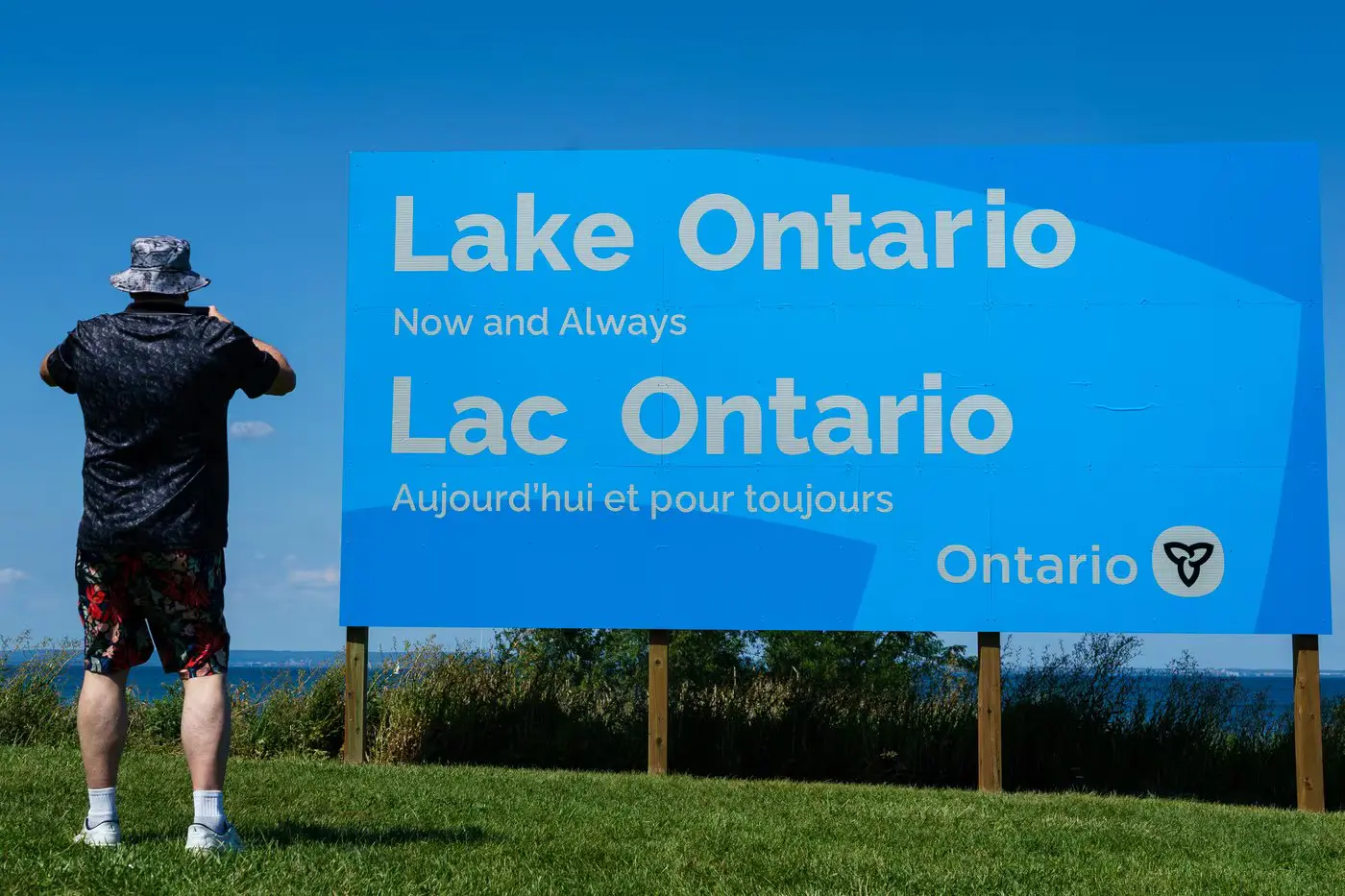
Lake Ontario has just demolished that fiction.
On August 27, President Donald Trump signed an executive order directing the federal government to rename Lake Ontario “Lake America.” The order instructed the Interior Department and the U.S. Board on Geographic Names to alter the Geographic Names Information System, or GNIS, and require federal agencies to adopt the new terminology.
The administration wrapped the decision in economic nationalism. Its executive order argued that the United States is the Great Lakes’ principal protector, noting that the U.S. Coast Guard supplies nine of the system’s 11 icebreakers and claiming nearly $4 billion in American Great Lakes environmental investment over the past decade. Trump presented the renaming as recognition of Lake Ontario’s importance to American commerce, defence and industry.
But Lake Ontario is not an exclusively American lake. Roughly 52 per cent of its surface area lies in Canada, with the remainder bordering New York. Its name is more than four centuries old and derives from an Indigenous word variously translated as “lake of shining waters” or “the lake is beautiful, the lake is big.” It predates both the United States and Canada.
Washington can determine what its own agencies call the lake. It cannot determine what Canada calls it, much less settle the name internationally.
That distinction should have made the controversy relatively contained.
Then Silicon Valley entered the water.
Google moved first. Within days of Trump’s order, Google Maps began displaying “Lake America” to users in the United States. Canadians continued to see “Lake Ontario,” while users elsewhere were shown both names. Google explained that this was consistent with its longstanding policy of reflecting official government sources such as GNIS.
Apple soon followed. By September 1, Apple Maps was also displaying “Lake America” to American users while retaining Lake Ontario in Canada.
Apple’s decision was particularly revealing because this was not simply a database update occurring somewhere deep inside a mapping bureaucracy. Interior Secretary Doug Burgum publicly said Trump had contacted Apple directly about the issue. Days later, the label changed.
Trump promptly celebrated, declaring that the change by Google and Apple made the renaming “complete, ratified, and binding.”
It did no such thing. But his boast captured something important about modern political power: a geographic name can acquire practical legitimacy not merely when governments decree it, but when the technological systems through which hundreds of millions of people encounter reality begin displaying it.
That is why the most interesting company in this story is neither Apple nor Google.
It is MapQuest.
The 30-year-old mapping pioneer responded to Trump’s order with remarkable simplicity: “We’re not changing it.”
MapQuest continued calling Lake Ontario by its traditional name, just as it had declined to adopt Trump’s earlier “Gulf of America” renaming of the Gulf of Mexico. It then leaned into the controversy, offering users a playful tool allowing them to rename the lake whatever they wanted.
What followed was an extraordinary demonstration of consumer politics.
MapQuest, a brand many Americans associate with the era of printing driving directions before leaving home, suddenly became the No. 1 free app on Apple’s U.S. App Store. By September 2, its general manager, Doug Berger, said the service had accumulated more than 1.5 million installs since the controversy began. Earlier Sensor Tower data had already shown global and U.S. weekly downloads rising more than tenfold.
Its usage reportedly surged to around 50 times normal levels.
A company largely displaced by Google Maps and Apple Maps had turned refusal into perhaps the most successful marketing campaign it could never have purchased.
The irony is exquisite. Trump wanted to put “America” on the map. He inadvertently put MapQuest back on it.
But underneath the humour sits a serious problem for Big Tech.
Google can plausibly argue that it is simply applying a neutral rule: when official geographical databases change, Google Maps changes. In ordinary circumstances, that is an eminently sensible policy. Mapping companies cannot independently adjudicate every territorial dispute, municipal boundary or geographic designation on Earth.
Yet neutrality becomes harder to claim when the underlying government decision is itself deliberately political.
Trump’s Lake Ontario order arrived amid an escalating confrontation with Canada. The United States imposed 50 per cent tariffs on $20 billion of Canadian goods after trade negotiations collapsed; Canada retaliated against roughly $20 billion of American products. Trump explicitly linked the lake controversy to his complaints about Canadian trade behaviour.
In that context, changing a map is no longer quite analogous to correcting the spelling of a highway.
Digital maps are representations of sovereignty.
Google already understands this. Its maps frequently display different names or borders depending on where users are located precisely because geographic terminology can encode political claims. Lake Ontario now demonstrates the strange endpoint of that logic: two people can open essentially the same mapping product and inhabit subtly different geopolitical realities.
An American sees Lake America.
A Canadian sees Lake Ontario.
Someone elsewhere may see both.
The map has ceased to be merely a map. It has become a geographically personalised diplomatic statement.
The politics become still more awkward because Americans themselves appear distinctly unconvinced by the exercise. A Reuters/Ipsos survey conducted August 28-30 found 63 per cent opposed to Trump’s Lake Ontario order. An Economist/YouGov poll put opposition at 68 per cent — including 43 per cent of people who voted for Trump in 2024. The Reuters/Ipsos polling also found only 14 per cent supporting the renaming.
In other words, Apple and Google did not merely align themselves with a controversial government decision. They adopted terminology opposed by a substantial majority of the American public they serve.
MapQuest discovered the commercial opportunity hidden inside that gap.
Congress has noticed the larger fight. Democratic Representatives Tim Kennedy and Joe Morelle of New York and Debbie Dingell of Michigan introduced the Hands Off Our Great Lakes Act, seeking to block the Lake Ontario renaming and restrict similar changes in future. Republicans, meanwhile, have their own legislative support for Trump’s designation: Republican Representative Jimmy Patronis introduced a “Lake America Act” on August 31.
With Republicans controlling Congress, Democratic attempts to reverse Trump’s order face formidable odds. But the dispute is unlikely to disappear, particularly if Democrats regain the House in November. Senior Democrats are already discussing an investigative strategy built around hearings, subpoenas and document requests directed at private companies connected to Trump administration decisions.
That prospect matters well beyond cartography.
Technology companies spent much of the first Trump presidency presenting themselves as counterweights to Washington. In Trump’s second term, the relationship has become more transactional and, increasingly, more deferential. Apple and Google’s rapid response to the Lake Ontario order therefore invites an uncomfortable question: where does administrative compliance end and political accommodation begin?
MapQuest has complicated the companies’ defence because it demonstrated that compliance was not compulsory. Private mapping companies were not legally required to adopt Trump’s preferred terminology. Federal agencies were.
Apple and Google chose their policies.
MapQuest chose another.
And consumers noticed.
This may be the lasting significance of the Lake Ontario episode. Technology companies once imagined that political neutrality meant avoiding taking sides. But platforms have become too important to maintain that luxury. A search result ranks information. An algorithm determines visibility. A content policy defines acceptable speech. And a map decides what places are called.
Every supposedly technical choice distributes power.
Trump understands that instinctively. That is precisely why securing Apple’s and Google’s cooperation mattered enough for the president to personally contact one of them and then publicly celebrate their compliance.
The administration was not merely renaming a lake.
It was testing who gets to name reality.
Google chose procedure. Apple chose accommodation. MapQuest chose resistance — and discovered that, in an intensely political marketplace, resistance itself can be a product.
Silicon Valley should remember the lesson.
In the next four years, the politically difficult requests from Washington are unlikely to concern only lakes. And when they arrive, “we were just following the database” may no longer be enough.
Because once technology companies become the interfaces through which citizens see the world, choosing what appears on the screen is itself an exercise of power.
There is no neutral map anymore.