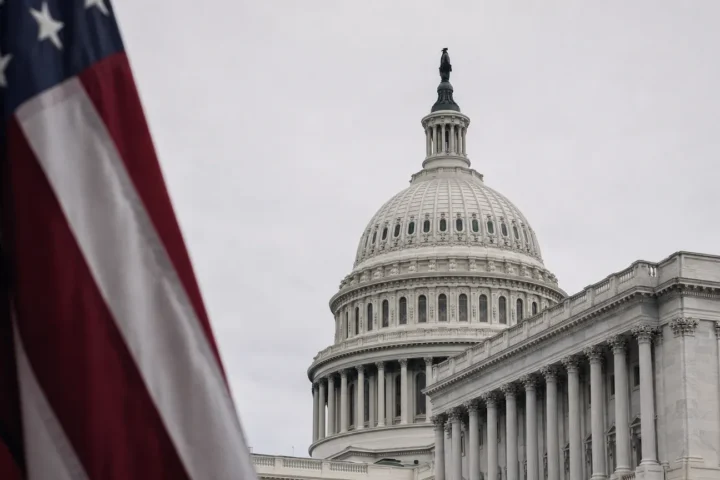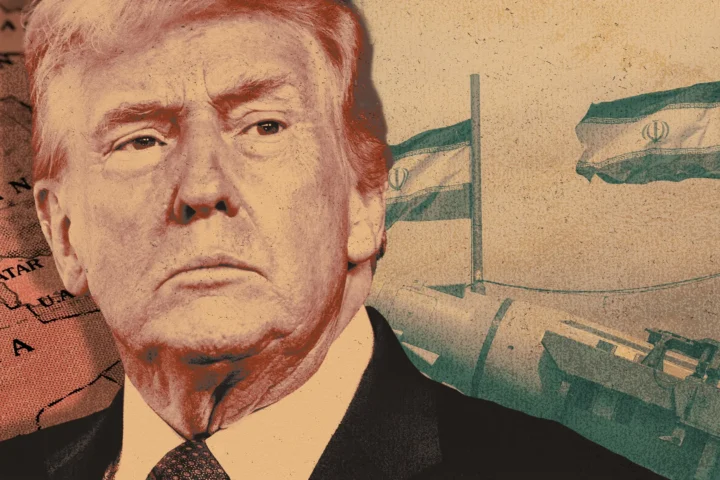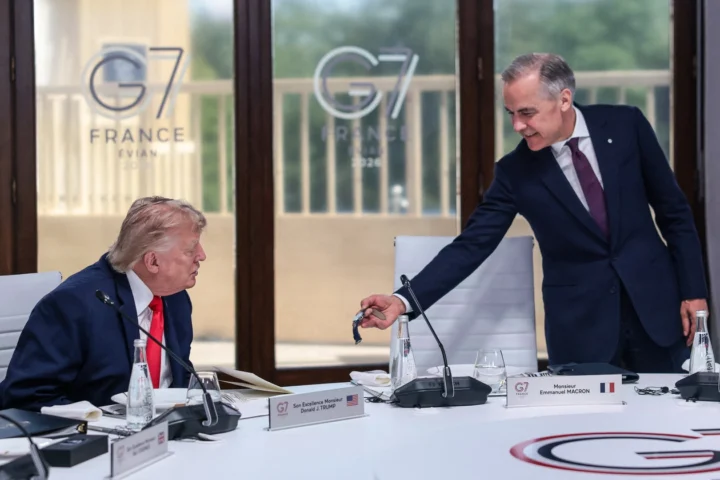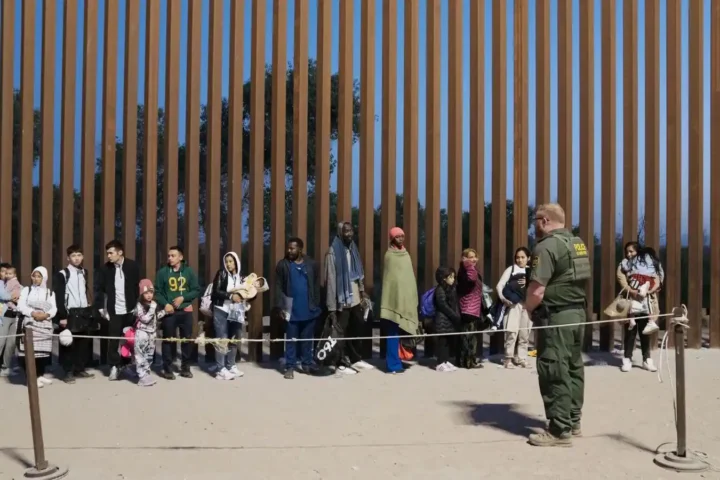
Democrats flipped Senate seats in Kansas, Iowa, Texas, Ohio, Maine and both Carolinas. James Talarico beat Ken Paxton in Texas. Susan Collins lost in Maine. Republicans walked into Election Day holding the Senate 53 to 47 and the House 219 to 214. In January they will be the minority in both.
The president’s name was on no ballot, and he was quick to point that out on Truth Social. But voters plainly treated the election as a verdict on him, and the verdict was harsh.
The customary next line writes itself: Mr. Trump is now a lame duck. Second-term presidents who lose Congress are supposed to trade legislation for ceremony, vetoes and farewell tours. That script assumes a president who needs Congress and worries about his party. Mr. Trump does neither, and he is about to rewrite what a lame duck can be.
The question for the new Congress, and for the country, is what that rewrite will cost.
“Lame duck” describes a political condition, not a constitutional one. Its bite comes from dependency. Presidents need Congress to pass laws and fund priorities, and they need their party to fear them. Strip those away and influence drains.
Mr. Trump has spent his second term demonstrating how little of the job requires Congress. He has governed by executive order and emergency declaration. He imposed sweeping “reciprocal” tariffs. He pulled the United States out of 66 international organizations. He ordered the capture of Nicolás Maduro in January and launched a war with Iran on Feb. 28 alongside Israel.
He also has a precedent to learn from. After Democrats took the House in 2018, his plans for a border wall, an infrastructure package and an immigration overhaul went nowhere. The lesson he drew was not to bargain harder. It was to route around the legislature altogether.
Expect more of that. His remaining domestic priorities, from artificial intelligence and immigration to deregulation and energy, are likely to run through the Oval Office rather than the Capitol. CNN reports that his team has spent months studying how far executive authority can stretch on immigration and federal spending.
The usual brakes are also gone. He is 80 and constitutionally barred from another term. He will never face voters again. A president with nothing left to lose at the ballot box behaves differently from one still tending a coalition.
What he can still lose is his legacy, and that is now what drives him.
Lame ducks tend to look abroad, where presidential power is broadest and Congress is weakest. After losing Congress in 2006, George W. Bush ordered the troop surge in Iraq. After losing the Senate in 2014, Barack Obama struck the Iran nuclear deal, reopened relations with Cuba and joined the Paris climate accord.
Mr. Trump has told us what he wants carved on his monument. At his second inauguration he said his proudest legacy would be “that of a peacemaker and unifier.” He openly covets a Nobel Peace Prize. Yet the defining foreign venture of his second term is a war. The Iran conflict, and the gas prices that came with it, hung over this campaign. Vice President JD Vance blamed it outright for the losses.
That leaves the president two roads to a closing act worth remembering. One is a grand bargain: an agreement with Tehran, a settlement in Ukraine, perhaps renewed overtures to North Korea. He is expected at three major international summits in the coming weeks. The other is escalation. He has publicly threatened to resume the Iran campaign now that the votes are counted, and the Pentagon is reportedly drawing up plans.
The danger is that legacy-hunting blurs the line between the two. A president hungry for a dramatic finale may treat bombs and deals as interchangeable instruments of spectacle. And Congress has already learned how little it can do about either. When both chambers voted under the War Powers Resolution in June to end hostilities with Iran, the White House called the vote unconstitutional and carried on.
None of this makes the new Congress powerless. It means Congress must reach for the tools that actually bite.
The first is money. The stopgap bill funding the government expires on Dec. 11, and Democrats will soon hold the purse. They can attach riders barring funds for military operations in Iran; some, like Senator Chris Murphy, want firm limits written into the annual defense bill. A Democratic Senate can slow or block nominations. House committees gain subpoena power, though a Justice Department run by Trump appointees is unlikely to enforce contempt citations.
The second check is time. Executive orders are written in pencil: what a president does alone, the next one can undo. Many of Mr. Trump’s orders are likely to be reversed if a Democrat wins in 2028, and foreign governments know it. They are increasingly pricing in his exit. In April, Viktor Orbán lost in Hungary despite Mr. Trump’s backing. Last month Brazilians reelected Luiz Inácio Lula da Silva over Flávio Bolsonaro, even after Washington hit Brazilian goods with 50 percent tariffs.
The third is his own party. CNN reports that aides are eyeing the exits and that Republicans now speak openly of his grip loosening. A succession fight is coming, and would-be heirs may find distance from an unpopular war more useful than proximity to a departing president.
So what does a redefined lame duck look like? Not a weaker president, but a more unilateral one whose achievements are less durable. Mr. Trump may finish with more raw activity in his final two years than any recent predecessor, and with less of it protected by law.
His defenders will say this is exactly what voters asked for in 2024: a president who acts rather than waits on a gridlocked Capitol. They will point out that divided government has produced real bargains before. And Mr. Trump himself told Politico he does not want to spend two years “just sitting there” vetoing bills.
Democrats should take him at his word. Investigations will be necessary, but they are not a governing strategy. The stronger move is to put durable choices on his desk: congressional review of any Iran agreement, clearer limits on emergency tariff powers, a war-powers framework with teeth. Make him choose between a legacy secured by law and one that expires with his term.
Lame ducks are supposed to limp toward the exit. This one intends to run. Congress’s job now is to decide how much of what he builds on the way out survives his departure.