American voters delivered their verdict, and it wasn’t close. Republicans entered Election Day holding the Senate 54-44 and the House 219-214. They leave it in the minority in both chambers, with Democrats on track for their largest House majority in nearly two decades.
The map tells the story better than the totals. Democrats flipped seven Senate seats, in Kansas, Iowa, Texas, Ohio, Maine, North Carolina and South Carolina. James Talarico won in Texas, Sherrod Brown returned in Ohio, Roy Cooper took North Carolina, and Troy Jackson unseated Susan Collins in Maine. Republicans, by several counts, failed to flip a single seat anywhere.
Seven seats changed hands, and the Senate with them
U.S. Senate seats before and after the Nov. 3 election. Each square is one seat; tap a flipped seat to see who won it. Republicans did not flip a Democratic-held seat.
- Iowa · Josh Turek
- Kansas · Adam Hamilton
- Maine · Troy Jackson
- North Carolina · Roy Cooper
- Ohio · Sherrod Brown
- South Carolina · Annie Andrews
- Texas · James Talarico
Sources: NBC News; CNBC; Northeastern Global News. Counts as of Nov. 4, 2026, with Alaska and Mississippi uncalled. Democratic totals include independents who caucus with Democrats; the after-election count is calculated from the seven flips.
View data
| Democrats | Republicans | Uncalled | |
|---|---|---|---|
| Before Nov. 3 | 47 | 53 | 0 |
| After (as of Nov. 4) | 54 | 44 | 2 |
| Flipped seat | Winner (D) |
|---|---|
| Iowa | Josh Turek |
| Kansas | Adam Hamilton |
| Maine | Troy Jackson |
| North Carolina | Roy Cooper |
| Ohio | Sherrod Brown |
| South Carolina | Annie Andrews |
| Texas | James Talarico |
The damage ran down the ballot: roughly two dozen or more House districts, five governorships and as many as a dozen state legislative chambers. Pennsylvania Democrats won the state Senate for the first time in more than three decades. Some races are still being counted, so final margins will move. The direction will not.
Florida Gov. Ron DeSantis called it close to an extinction-level event for his party. That is hyperbole, but only a little. Several of the casualties were Mr. Trump's hand-picked candidates, including Ken Paxton in Texas, Michael Whatley in North Carolina and Mike Collins in Georgia.
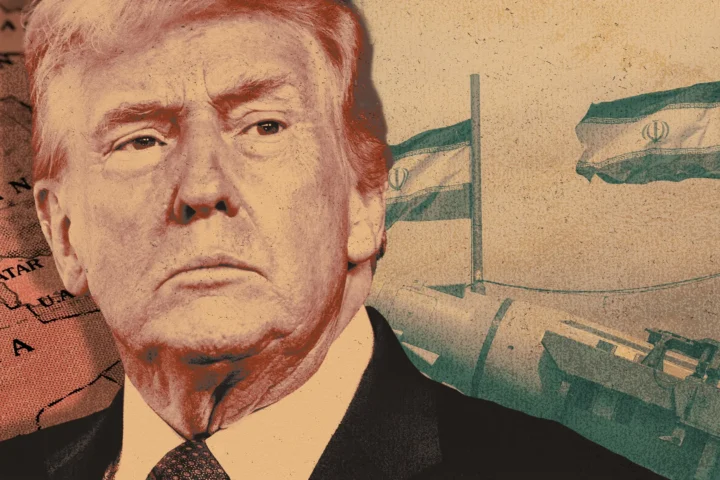
The more useful question is why. Vice President JD Vance answered it bluntly on Wednesday: "The reason we lost is the war." He is mostly right, though the war is only half of it. The other half is the cost of living, made worse by a trade policy that voters never warmed to. Together they turned a normal midterm headwind into a gale, and they will shape what this result means at home and abroad.
The War That Swallowed the Agenda
The Iran war began on Feb. 28 with U.S. and Israeli strikes that killed Supreme Leader Ali Khamenei. It was sold as swift. It has instead run more than eight months, through a Pakistan-brokered ceasefire in April, a memorandum of understanding signed in June, and a collapse on July 8 when Iran resumed attacks on commercial ships in the Strait of Hormuz.
The war showed up at the pump
Average U.S. retail price of regular gasoline, dollars per gallon, weekly. 2026 compared with the same weeks of 2025.
- 1Feb. 28: U.S. and Israeli strikes on Iran begin
- 2April 7: Two-week ceasefire announced
- 3June 17: Memorandum to end the war signed
- 4July 8: Ceasefire collapses after attacks on ships
Sources: U.S. Energy Information Administration via FRED, compiled by Plain Economy; latest week Oct. 12, 2026. Event dates: Congressional Research Service; Wikipedia.
View data
| Week of (2026) | 2026 | Same week 2025 |
|---|---|---|
| Jan. 5 | $2.80 | $3.05 |
| Jan. 12 | $2.78 | $3.04 |
| Jan. 19 | $2.81 | $3.11 |
| Jan. 26 | $2.85 | $3.10 |
| Feb. 2 | $2.87 | $3.08 |
| Feb. 9 | $2.90 | $3.13 |
| Feb. 16 | $2.92 | $3.15 |
| Feb. 23 | $2.94 | $3.12 |
| March 2 | $3.02 | $3.08 |
| March 9 | $3.50 | $3.07 |
| March 16 | $3.72 | $3.06 |
| March 23 | $3.96 | $3.12 |
| March 30 | $3.99 | $3.16 |
| April 6 | $4.12 | $3.24 |
| April 13 | $4.12 | $3.17 |
| April 20 | $4.04 | $3.14 |
| April 27 | $4.12 | $3.13 |
| May 4 | $4.45 | $3.15 |
| May 11 | $4.50 | $3.12 |
| May 18 | $4.49 | $3.17 |
| May 25 | $4.47 | $3.16 |
| June 1 | $4.30 | $3.13 |
| June 8 | $4.15 | $3.11 |
| June 15 | $4.05 | $3.14 |
| June 22 | $3.91 | $3.21 |
| June 29 | $3.83 | $3.16 |
| July 6 | $3.78 | $3.12 |
| July 13 | $3.85 | $3.13 |
| July 20 | $4.00 | $3.12 |
| July 27 | $4.10 | $3.12 |
| Aug. 3 | $4.08 | $3.14 |
| Aug. 10 | $4.01 | $3.12 |
| Aug. 17 | $4.05 | $3.12 |
| Aug. 24 | $4.08 | $3.15 |
| Aug. 31 | $4.07 | $3.18 |
| Sept. 7 | $4.16 | $3.19 |
| Sept. 14 | $4.32 | $3.17 |
| Sept. 21 | $4.48 | $3.17 |
| Sept. 28 | $4.46 | $3.12 |
| Oct. 5 | $4.35 | $3.12 |
| Oct. 12 | $4.33 | $3.06 |
Since then, Tehran has tried to run the strait like a tollbooth, through a body it calls the Persian Gulf Strait Authority. The U.S. reimposed a naval blockade. In the week ending Oct. 5, at least a dozen ships were attacked, the most since the war began. The Pentagon put the war's cost at $47.1 billion as of October, and the administration's initial funding request in March was $200 billion.
Voters noticed. By September, more than 60% of registered voters called the decision to go to war the wrong one, and 71% said the administration had no clear strategy to end it. A July AP-NORC poll found about two-thirds of adults saying the war wasn't worth fighting. Fox News polling found the war had overtaken immigration and crime, Mr. Trump's strongest issues in 2024, as a voter concern.
A war that never had majority support
Share of Americans saying U.S. military action against Iran was the right or the wrong decision, by poll, 2026. The remainder were unsure or gave no answer.
Election Day: about 6 in 10 voters told AP VoteCast that using military force against Iran was the wrong decision.
Sources: Pew Research Center (March 16–22, U.S. adults); Economist/YouGov (April and July 10–13, U.S. adults); Fox News (June and Sept. 11–14, registered voters); AP VoteCast via Outlook India. Question wording differs slightly by pollster.
View data
| Poll | Right | Wrong |
|---|---|---|
| Pew Research (March, U.S. adults) | 38% | 59% |
| Economist/YouGov (April, U.S. adults) | 30% | 51% |
| Fox News (June, Registered voters) | 41% | 58% |
| Economist/YouGov (July, U.S. adults) | 27% | 57% |
| Fox News (Sept., Registered voters) | 37% | 60% |
The president promised no new strikes before the midterms and hinted that more could follow after. Gulf allies were warned of possible strikes as early as Nov. 4. On Wednesday, Treasury announced fresh Iran sanctions, and Mr. Trump said the war had been worth it despite the losses.
Here is what changes in January. War powers resolutions have already passed both chambers, with four Republican senators (Rand Paul, Susan Collins, Lisa Murkowski and Thom Tillis) joining Democrats. A veto has blunted them. A Democratic Congress holds a stronger weapon: the purse.
Senate Democratic leader Chuck Schumer said on Wednesday, "We are going to end the war." Democrats are threatening to hold the defense authorization and appropriations bills hostage while fighting continues. The first test comes sooner than January. Government funding runs out on Dec. 11, and Senate Democrats already blocked the defense authorization bill in July largely over Iran.
There is a real risk in this. Cutting off funds mid-conflict could signal to Tehran that it can outlast Washington. Iran's Revolutionary Guard even published an open letter in September urging Americans to vote against the president. A Congress that ends the war on terms Iran dictates, with the strait still contested, would be a strategic loss of its own. The better outcome is a Congress that forces the administration to define an end state it can actually reach.
Tariffs: The Courts Struck First, Voters Second
If the war was the accelerant, tariffs were the kindling. About two-thirds of voters told an Election Day survey that the tariffs had hurt the economy. That is a remarkable number for a policy the White House treated as a signature achievement.
The legal ground had already shifted. On Feb. 20, the Supreme Court ruled 6-3 in Learning Resources v. Trump that the International Emergency Economic Powers Act does not authorize tariffs. Chief Justice John Roberts wrote for the majority. Roughly $166 billion in duties became refundable, and about $122 billion had been certified for payment by September, one of the largest refunds in American fiscal history.
The biggest tariff refund in U.S. history
Duties collected under the International Emergency Economic Powers Act that became refundable after the Supreme Court struck down the tariffs, and the share certified for payment by Sept. 11, 2026.
Sources: HL Hunt Research Desk, drawing on U.S. Customs and Border Protection court filings; Supreme Court, Learning Resources, Inc. v. Trump (Feb. 20, 2026). Pending amount calculated as the difference.
View data
| Amount | |
|---|---|
| Refundable IEEPA duties | $166B |
| Certified by Sept. 11, 2026 | $122B |
| Pending (calculated) | $44B |
The administration did not retreat. It imposed a 10% global surcharge under Section 122 of the Trade Act, which lapsed after its 150-day limit on July 24. The Court of International Trade had ruled in May that this tariff too exceeded presidential authority, though only for three plaintiffs. On the same day Section 122 expired, new Section 301 "forced labor" tariffs of 10% or 12.5% took effect on 60 economies, plus a separate 25% duty on Brazil.
The net effect was close to zero. Global Trade Alert estimated the trade-weighted U.S. tariff rate moved from 11.0% to 11.2% in the swap. China, Vietnam and Thailand face 12.5%. India faces an extra 10%.
Same tariff wall, new legal bricks
Trade-weighted average U.S. applied tariff by legal authority, in percentage points, before and after the temporary Section 122 surcharge expired on July 24, 2026.
Source: Global Trade Alert (Johannes Fritz, July 24, 2026), 2024 import weights, excluding HTSUS Chapter 98. "All other duties" (MFN, Section 232 and others) is calculated as the remainder.
View data
| Authority | July 21 | July 24 |
|---|---|---|
| All other duties | 6.8 | 6.8 |
| Section 301 | 1.6 | 4.4 |
| Section 122 | 2.6 | 0.0 |
| Total | 11.0% | 11.2% |
Can a Democratic Congress undo this? Not easily. Section 301 and Section 232 rest on authority Congress delegated decades ago, and repeal requires overriding a veto: 290 House votes and 67 in the Senate. Democrats are well short. Sen. Ron Wyden has said repealing the Canada tariffs is a top priority, and Rep. Richard Neal will likely return as chairman of Ways and Means.
The realistic payoff is oversight and leverage, not repeal. Hearings will put Trade Representative Jamieson Greer on the spot, and a tariff-relief vote with border-state Republicans aboard is plausible. Free traders should temper expectations, though. Democrats aren't natural free traders either. President Biden kept every Trump tariff on China and added 100% duties on Chinese electric vehicles.
The Pump, the Fed and the Market's Relief
The economy voters felt was not the economy in the headlines. Third-quarter GDP grew at a 3.4% annual rate, and unemployment sits at 4.2%. But regular gasoline averaged $4.33 a gallon on Oct. 12, up from $3.06 a year earlier. Consumer inflation climbed from 2.4% in January to 3.7% in September, while core inflation held near 2.6%. The difference is energy, and energy is the war.
Fuel, not everything, pushed inflation back up
12-month change in U.S. consumer prices, percent. Headline inflation jumped after the war began; core inflation barely moved.
1 Feb. 28: the Iran war begins. October 2025 is blank because no index was published during the government shutdown.
Source: Bureau of Labor Statistics consumer price index (seasonally adjusted) via FRED; 12-month changes calculated by Plain Economy. The official unadjusted headline can differ by 0.1 point.
View data
| Month | All items | Core |
|---|---|---|
| Jan 2025 | 3.0% | 3.3% |
| Feb 2025 | 2.8% | 3.1% |
| Mar 2025 | 2.4% | 2.8% |
| Apr 2025 | 2.3% | 2.8% |
| May 2025 | 2.4% | 2.8% |
| Jun 2025 | 2.7% | 2.9% |
| Jul 2025 | 2.7% | 3.1% |
| Aug 2025 | 2.9% | 3.1% |
| Sep 2025 | 3.0% | 3.0% |
| Oct 2025 | n/p | n/p |
| Nov 2025 | 2.7% | 2.6% |
| Dec 2025 | 2.7% | 2.6% |
| Jan 2026 | 2.4% | 2.5% |
| Feb 2026 | 2.4% | 2.5% |
| Mar 2026 | 3.3% | 2.6% |
| Apr 2026 | 3.8% | 2.7% |
| May 2026 | 4.2% | 2.8% |
| Jun 2026 | 3.5% | 2.6% |
| Jul 2026 | 3.3% | 2.5% |
| Aug 2026 | 3.4% | 2.4% |
| Sep 2026 | 3.7% | 2.6% |
Mortgage rates have climbed back to about 7.4%. September payrolls rose by only 29,000. A widely watched preliminary October consumer-sentiment index fell to 46.3, below the troughs of 2008-09 and 2022. Mr. Trump declared on Election Day that inflation was solved. Voters, who buy gas weekly, disagreed.
The Federal Reserve now faces an awkward December. It held rates in late October, but economists warn that broadening inflation raises the odds of a hike. A Congress that pressures the White House to wind down the war could do more for the Fed's mandate than any rate decision.
Markets voted quickly. On Wednesday the Dow jumped 1,569 points, or 3%, to 53,356, and the S&P 500 rose 1.6%. Brent crude fell 9.2% to $94.11, below $100 for the first time in nearly a month, as traders priced a lower war premium. The dollar index slipped 0.4%, and gold rose above $4,000.
The winners and losers were telling. First Solar and Enphase rose nearly 10%. Dollar Tree gained 8.7% on hopes of relief for lower-income shoppers. Exxon fell 4.9%, and private-prison operators CoreCivic and GEO Group dropped. Investors were betting on gridlock and a shorter war, and they may get both.
Wall Street's verdict: a smaller war premium
Percent change on Nov. 4, 2026, the day after the election. Oil fell as traders bet a Democratic Congress would constrain the Iran war; solar stocks and discount retailers rallied.
Sources: TheStreet (index closes); AP via Transport Topics and ABC27 (Brent, First Solar, Enphase, Dollar Tree, Exxon Mobil); BabyPips (WTI, U.S. dollar index, gold). Some single-stock moves were reported late in the session rather than at the close.
View data
| Asset | Change, Nov. 4 |
|---|---|
| Enphase Energy | +9.8% |
| First Solar | +9.4% |
| Dollar Tree | +8.7% |
| Gold | +3.3% |
| Dow Jones Industrial Average | +3.03% |
| S&P 500 | +1.58% |
| Russell 2000 | +1.58% |
| Nasdaq Composite | +1.44% |
| U.S. dollar index | −0.4% |
| Exxon Mobil | −4.9% |
| WTI crude | −8.5% |
| Brent crude | −9.2% |
What the World Heard
Foreign capitals read Tuesday's results as a signal that Mr. Trump's room to maneuver abroad has narrowed. That is true at the margins. The president still commands the military, conducts diplomacy and sets most trade policy alone. But Congress controls money, confirmations and subpoenas, and allies and adversaries know it.
Israel. Hours before the polls opened, Mr. Trump told Fox News that roughly $4 billion in annual military aid to Israel would end after this year, though sales would continue. The current 10-year agreement provides $3.8 billion a year and runs to 2028. Israeli officials were reportedly caught off guard by the timing. The announcement came as Michigan Democrat Abdul El-Sayed, who campaigned against unconditional aid, won his Senate race. It also landed on a weakened Prime Minister Benjamin Netanyahu, who lost his parliamentary majority in October. Opposition leader Yair Lapid said the U.S. results ruled out a Netanyahu-led unity government.
Iran. Tehran will be tempted to read the results as proof that time is on its side. Its army warned before the vote that a renewed war could last longer than the last one. If Iran concludes that Congress will force a U.S. exit, its incentive to bargain over Hormuz shrinks. That is the strongest argument for Democrats to use their leverage to shape a settlement, not simply to impose a deadline.
Ukraine and Russia. Kyiv has the most to gain. Mr. Trump has largely halted direct aid, eased some Russia sanctions and allowed Russian diesel imports. The administration approved a $2.1 billion Patriot missile sale last week, though President Volodymyr Zelensky says delivery could take years. A Democratic House will likely probe backchannel dealings with Moscow and press for aid and tougher sanctions. Moscow's reaction was sour: Deputy Foreign Minister Sergei Ryabkov called the Democrats' approach to Russia extremely negative. A state-run daily warned that the president's anger would now fall on Europe.
Europe. Spanish Prime Minister Pedro Sánchez cheered the outcome. European Parliament Vice President Christel Schaldemose said she was cautiously optimistic for Ukraine, climate policy and trade. British Prime Minister Andy Burnham called it a chance to ease cost-of-living pressures and end the Middle East conflict. Europe's hopes may run ahead of reality: tariffs on European goods largely don't depend on Congress.
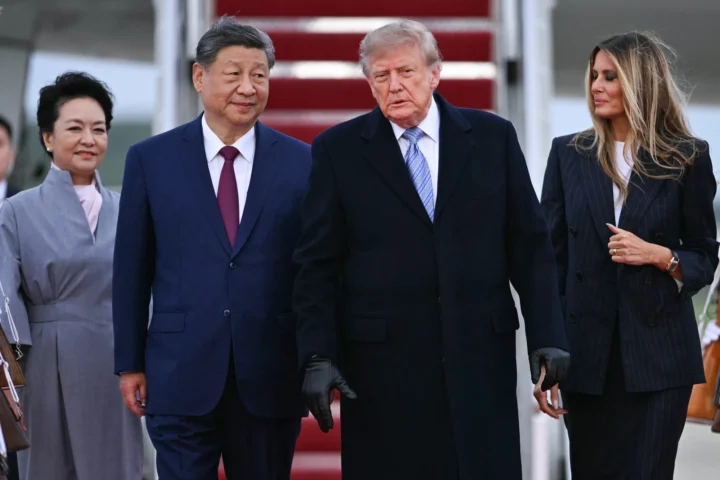
China. Beijing was studiously calm. Its foreign ministry called the vote a domestic affair and repeated its call for a constructive strategic relationship. China is the one major power that benefits from a distracted Washington. It also faces new Section 301 duties and an open U.S. probe into industrial overcapacity that the election won't stop.
The Gulf. Saudi Arabia and the UAE have absorbed Iranian strikes, and shipping off Qatar has been hit. Qatar has carried proposals to Tehran, and Oman has negotiated over the strait even as Mr. Trump threatened to bomb it in August. A Congress pushing toward a settlement aligns with Gulf interests, provided it doesn't hand Iran control of the waterway.
Two Years of Divided Government, and the Case Against Overreading It
For Mr. Trump, the next two years look like 2019 with higher stakes. Before the vote, he said that if Republicans lost, he would veto everything. Democrats, meanwhile, plan to restore expired Affordable Care Act subsidies and reverse nearly $1 trillion in Medicaid cuts from the president's signature tax law. Rep. Robert Garcia, the likely Oversight chairman, says he will investigate the Trump family's business dealings. Judicial confirmations will slow in the Senate.
The Republican Party has its own reckoning. Mr. Trump blamed a mood in the air and candidates who underperformed, while Mr. Vance blamed the war, a split that previews 2028. Rep. Jim Jordan has announced a bid for minority leader. A party that won in 2024 on prices and restraint abroad lost in 2026 on prices and a war abroad. That lesson is not subtle.
Still, there are good reasons not to overread Tuesday. Midterms almost always punish the party in the White House. Barack Obama lost 63 House seats in 2010 and won re-election two years later. The president's core powers over war, diplomacy and trade remain intact, and Democrats lack the votes to override a veto.
The administration's defenders also have arguments worth hearing. They say confronting Iran's nuclear program was necessary, and that U.S. naval escorts kept far more oil moving than Iran wanted. Mr. Vance has argued gas prices would have been much higher without them. They note that Middle East oil exports recently topped pre-war levels. And markets cheered gridlock, not a Democratic program.
Critics answer that the war lacked congressional authorization, a defined goal and an exit, and that tariffs raised prices on the very voters the GOP courted. Both sides will claim the mandate. The honest reading is narrower. Voters didn't endorse a Democratic agenda so much as reject the costs of this one: $4 gasoline, an open-ended war and tariffs they experienced as a tax at the checkout.
The world now watches whether Washington can turn divided government into something useful. A Congress that uses its purse to force a defined end to the war, and its oversight to discipline trade policy, would serve the country well. One that settles for gridlock and subpoenas would confirm what Tehran, Moscow and Beijing already suspect: that American power is increasingly hostage to American division.
References and Further Reading
- Democrats sweep 2026 midterms (CNBC)
- Recap: Democrats win control of the House and Senate (NBC)
- Midterms 2026 live coverage, incl. Vance on the war (Yahoo News)
- Trump faces reckoning after devastating losses (The Hill)
- Trump reacts to Republican losses (CNN)
- What Republicans' huge loss means for Trump (CNBC)
- 2026 Iran war and 2026 Strait of Hormuz crisis (Wikipedia)
- The Strait of Hormuz: Security developments (Congressional Research Service)
- Hormuz attacks intensify as efforts to end war stall (Al Jazeera)
- Iran war live updates, Nov. 1-3 (CBS News)
- War returns to Iran: live updates (Dawn)
- US voter opposition to Iran war hits new highs (Al Jazeera)
- Schumer cites power of the purse on Iran (The Hill via Yahoo)
- Three ways the new Congress could constrain Trump (Carnegie Endowment)
- The $166 billion tariff refund (HL Hunt)
- The Supreme Court ends IEEPA tariffs (Skadden)
- Tariff level barely moves as Section 122 lapses (Global Trade Alert)
- Section 122 replaced by Section 301 forced-labor tariffs (RVIA)
- Democrats gain trade influence but hit veto wall (Reuters via WHTC)
- Midterms: what Trump's defeat means for Europe (Euronews)
- The US economy before the midterms, in five charts (Plain Economy)
- Inflation heats up again before midterms (Washington Times/AP)
- Stock market today, Nov. 4 (TheStreet)
- Oil prices sink below $95 on midterm results (Transport Topics/AP)
- Market recap, Nov. 4 (BabyPips)
- Trump says Israel aid ends by year's end (Fox News)
- World reacts to Democrats' midterm victory (NPR)
- Global leaders react (Axios)
- Seismic shift: World reacts (Al Jazeera)
- Midterm results land in Ukraine (Foreign Policy)
- Democrats take the House: their agenda (ABC News)