The waters connecting the Arabian Sea, the Gulf of Aden and the Red Sea have long constituted one of the most consequential maritime corridors in the global economy. Today, however, that corridor is confronting an unusual convergence of threats. War involving the United States and Iran has intensified competition around the Strait of Hormuz, insecurity around Yemen has placed additional pressure on access to the Red Sea, and commercial vessels attempting to navigate around these dangers are increasingly encountering another threat once thought to have been contained: Somali piracy.
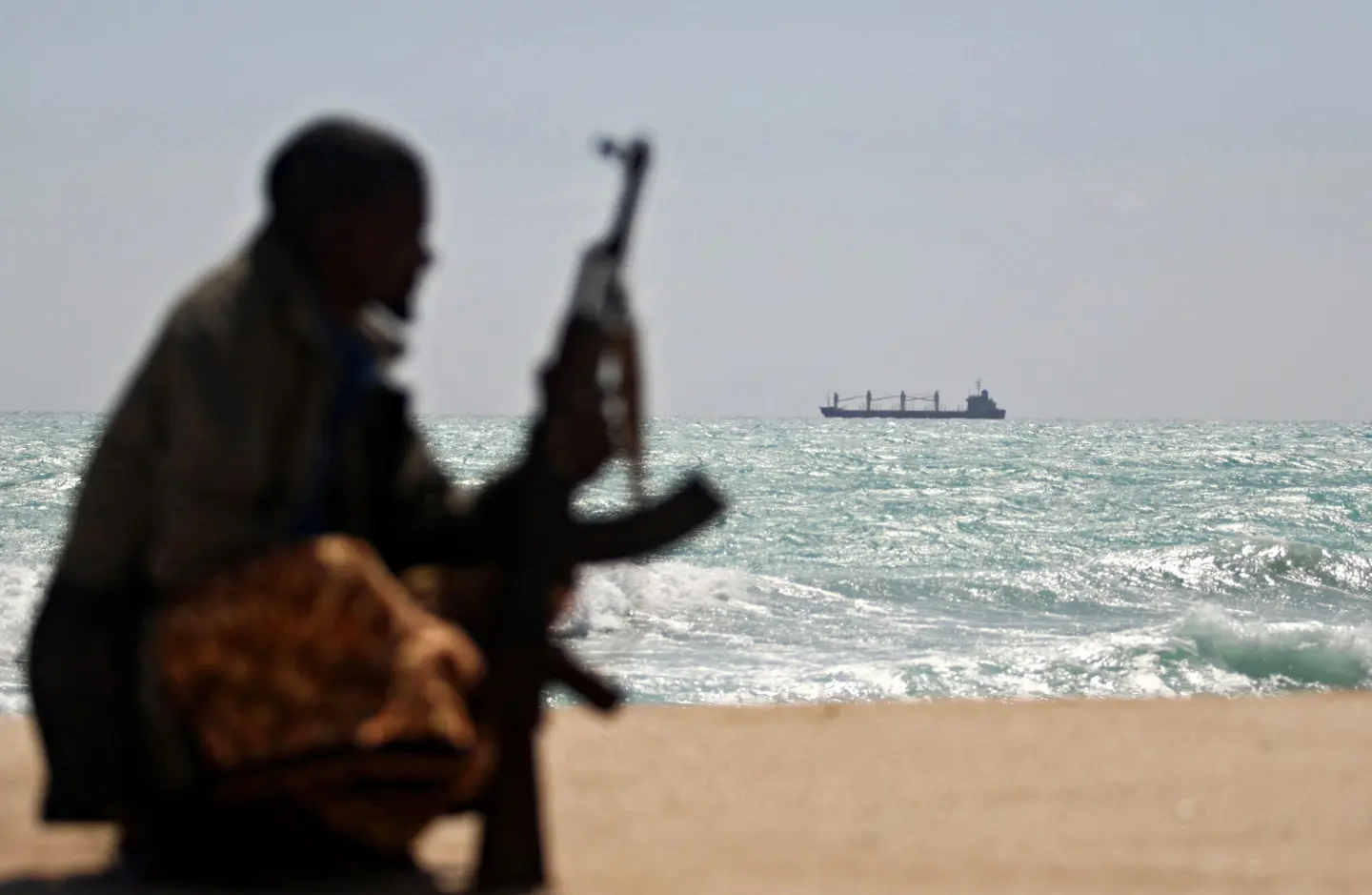
The seizure of two commercial vessels in the Gulf of Aden within four days in August has sharpened concerns that piracy off the Horn of Africa is again becoming an organised security challenge. At least 13 vessels have reportedly been attacked since the beginning of the year, while several ships have been held simultaneously for ransom.
The numbers remain far below the extraordinary levels witnessed during the Somali piracy crisis of 2008-2012. Nevertheless, the significance of the latest attacks lies less in their absolute number than in the strategic environment in which they are occurring.
Pirates are returning to waters in which international naval resources are being stretched by multiple crises, shipping routes are changing in response to war, and commercial vessels are being forced to calculate risk across several maritime chokepoints simultaneously.
The result is an emerging security problem extending well beyond Somalia.
A Corridor Under Pressure
The geography explains much of the danger.
Three maritime spaces — the Strait of Hormuz, Bab al-Mandab and the Gulf of Aden — collectively form a strategic chain connecting the energy-producing states of the Persian Gulf with European, African and Asian markets.
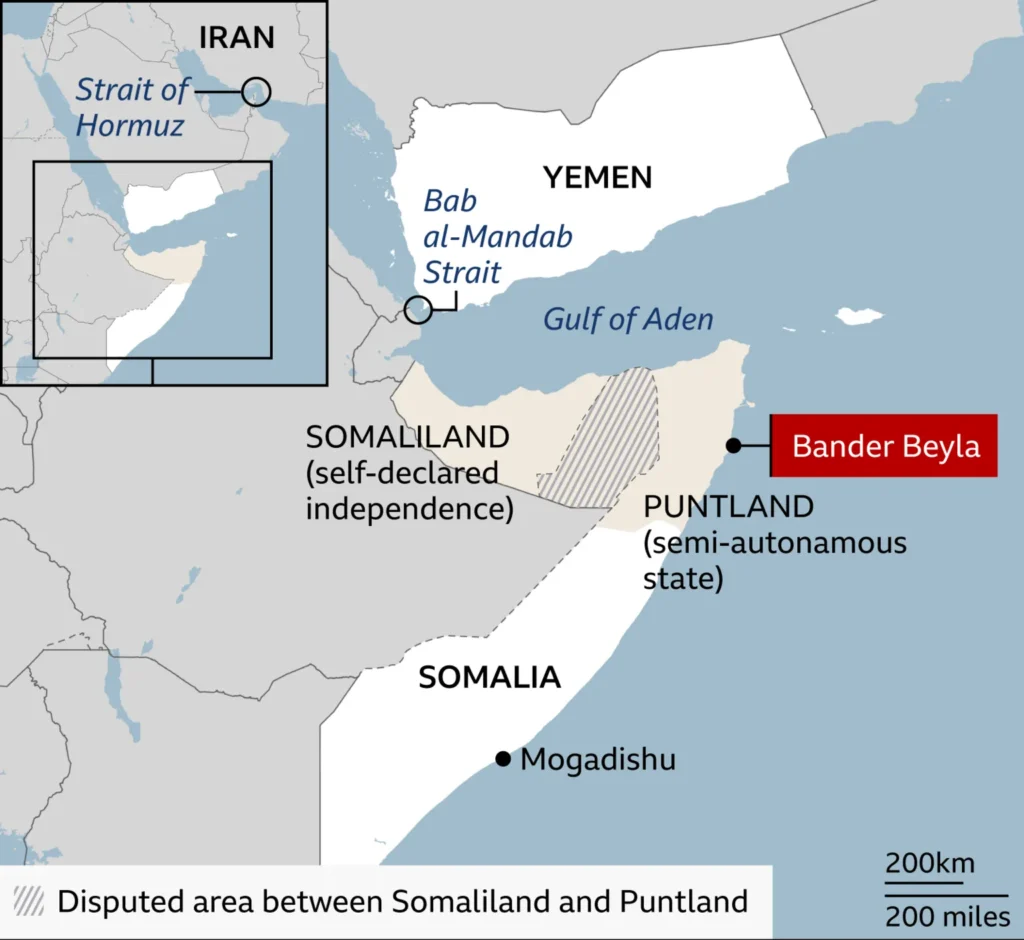
Hormuz remains critical to global energy transportation. Further west, Bab al-Mandab connects the Gulf of Aden with the Red Sea and ultimately the Suez Canal. Any disruption at either point can alter shipping patterns across thousands of kilometres.
The US-Iran conflict has consequently produced effects far beyond the immediate theatre of military operations. Competition over access to Hormuz has increased the risks facing merchant vessels in the Gulf, while Yemen’s Houthis have imposed their own targeted restrictions around Bab al-Mandab amid their dispute with Saudi Arabia.
Shipping companies therefore face not one maritime crisis but several interconnected ones.
The redistribution of naval resources is particularly important.
Vice-Admiral Ignacio Villanueva Serrano, who commands the European Union naval operation protecting shipping around Somalia, has suggested that pirates may believe international forces are concentrating on the crises around Hormuz and Bab al-Mandab.
For criminal organisations, that perception matters almost as much as the actual deployment of warships.
Piracy is fundamentally an opportunistic enterprise. It becomes attractive when attackers believe the expected value of capturing a vessel exceeds the probability and cost of interception.
The present security environment may be shifting that calculation.
Omar Mahmood, a senior Somalia analyst at the International Crisis Group, describes piracy precisely in these terms: as a crime that expands when opportunity presents itself.
That opportunity now appears to consist of two simultaneous developments — reduced attention from international naval forces and changes in commercial shipping patterns.
Ships Are Moving Into Different Risks
Conflict does not necessarily reduce maritime traffic. It frequently redirects it.
Vessels seeking to avoid particularly dangerous waters can be pushed towards alternative routes. In the present crisis, some commercial shipping has moved southwards and closer to the Somali coastline to reduce exposure to conflict further north.
From the perspective of pirate networks operating from Puntland, this produces an unintended consequence. Ships attempting to escape one security threat may move closer to another.
The economics are also becoming more attractive.
Tankers are particularly valuable targets when petroleum prices are elevated. A successful seizure can provide leverage for substantial ransom demands, while the cargo itself may represent considerable commercial value.
Mahmood describes the current situation as a combination of more commercial shipping in potentially vulnerable waters and reduced naval concentration on piracy. Successful hijackings can then produce a demonstration effect. Once one pirate group proves that a vessel can be captured and held, other networks have an incentive to imitate it.
This helps explain why the recent attacks deserve attention even before they approach historical levels.
Piracy tends to develop through momentum.
The Lutuf and Sibu 1 Seizures
The August incidents illustrate how quickly piracy can become entangled with larger geopolitical disputes.
On August 17, pirates seized the Cameroon-flagged cargo vessel MV Lutuf near Somalia’s semi-autonomous Puntland region. Only days later, armed men boarded the Eritrean-flagged petroleum-products tanker MT Sibu 1 in waters closer to Yemen.
The two incidents were geographically separated but occurred within the same increasingly unstable maritime system.
Several other captured vessels were reportedly being held for multimillion-dollar ransom demands, with four anchored near Bander Beyla, a Puntland fishing settlement that has historically been associated with pirate activity.
The Lutuf incident proved particularly sensitive.
In the week following its capture, two drone attacks reportedly killed 13 men alleged to have belonged to a network supporting the pirates. No state publicly claimed responsibility for the strikes.
Local officials, however, accused Turkey.
Their allegation introduced an entirely different dimension into the crisis.
Turkey has developed an extensive security relationship with Somalia and maintains a major military presence in the country. Ankara and Mogadishu have also expanded cooperation on maritime security as part of a broader defence and economic partnership.
Somali and Puntland security sources claimed that the Lutuf was transporting equipment intended for Turkish activities in Somalia, including military-related cargo. One Somali government official also alleged that satellite equipment associated with a Turkish project north of Mogadishu was aboard the vessel.
These claims have not been independently established.
What is clear is that the hijacking rapidly attracted international military attention. Puntland and Somali sources claimed that warships belonging to several countries, including Turkey, Spain, Denmark, the United States and India, converged on the surrounding waters.
The episode therefore demonstrated how the seizure of a single merchant vessel can generate consequences far beyond an ordinary ransom negotiation.
A New Anti-Piracy Question
Turkey acknowledged providing assistance to Somali authorities under the bilateral security agreement but did not confirm responsibility for the reported drone strikes.
Puntland officials were considerably more explicit.
Deputy Security Minister Abdirahman Yusuf publicly accused Turkey of carrying out the attacks, while Puntland’s security ministry criticised what it described as international bombardments that risked harming civilians and damaging cooperation against piracy.
The disagreement deepened when competing versions emerged over the eventual release of the Lutuf.
The federal government in Mogadishu said Somali forces, working with Turkey, had conducted an operation that freed the vessel and killed 14 pirates.
Puntland rejected that account. Its authorities instead alleged that a substantial ransom had been paid to secure the ship’s release.
Neither the vessel’s owners nor Turkish authorities publicly resolved the competing claims.
If a ransom was paid, Puntland’s warning about the consequences deserves serious consideration. Ransom payments provide not simply compensation for a successful operation but capital for future ones. Money can be used to purchase weapons, boats, fuel, communications equipment and intelligence, while successful pirates can recruit additional participants.
But the alternative — increasingly militarised responses to piracy — presents its own dangers.
Drone strikes and foreign military intervention can produce civilian casualties, generate political backlash and complicate relations between Somalia’s federal authorities and Puntland. They can also transform what is fundamentally a law-enforcement and maritime-security problem into a politically charged sovereignty dispute.
The question facing international actors is therefore not simply how to punish pirates, but how to restore deterrence without further destabilising Somalia’s already fragmented security environment.
Why Piracy Never Really Disappeared
The present resurgence is less surprising when the history of Somali piracy is examined closely.
At its peak in 2011, Somali pirates launched more than 200 attacks in a single year. Hundreds of sailors were held hostage, and the combined cost of ransom payments, naval operations, insurance, security measures and rerouted shipping ran into billions of dollars.
The international response eventually proved highly effective.
Multinational naval patrols increased surveillance and interception. Commercial vessels adopted improved security procedures. Armed private guards became increasingly common aboard vulnerable ships. Shipping companies implemented recommended transit practices, while governments improved intelligence-sharing and prosecution mechanisms.
The business model of piracy became considerably more dangerous and less profitable.
But suppression was not the same as elimination.
The coastal networks, facilitators and local relationships supporting piracy did not entirely disappear. More importantly, many of the conditions that had initially allowed piracy to flourish remained unresolved.
Somalia continues to face economic deprivation, weak institutions, fragmented political authority and limited employment opportunities in several coastal areas.
This is especially significant in Puntland.
Fishing remains an important source of income for coastal communities, yet Somali fishermen have long complained about foreign vessels operating in their waters. Industrial trawlers can harvest quantities that small local boats cannot match, contributing to resentment over what communities regard as the exploitation of Somali maritime resources.
Piracy cannot be reduced to a reaction against illegal or excessive fishing; modern pirate operations are organised criminal enterprises seeking substantial profits. But economic grievance can create a permissive environment for recruitment and local tolerance.
When young men see foreign vessels extracting marine resources while legitimate employment remains scarce, pirate organisations find it easier to portray themselves as defenders of local interests — even when their actual objective is ransom.
That narrative helped Somali piracy expand previously. It can do so again.
The Yemen Connection
Another unresolved question concerns possible links between Somali pirate groups and criminal networks operating from Yemen.
Several recent attacks have occurred near the Yemeni side of the Gulf of Aden, leading researchers to examine whether cross-water cooperation has increased.
Such collaboration would not necessarily indicate coordination with the Houthis.
Indeed, the seizure of the MT Sibu 1 complicates that interpretation. The tanker has reportedly been linked to an Iranian “shadow fleet” involved in transporting petroleum products while circumventing American sanctions. Attacking a vessel connected to Iranian commercial interests would make a centrally directed Iranian-Houthi piracy campaign less convincing.
A more plausible possibility is cooperation among criminal organisations that exploit the same disorder affecting the region.
Smuggling networks around the Gulf of Aden have existed for decades, transporting people, weapons and contraband between the Arabian Peninsula and the Horn of Africa. Pirate groups do not need formal alliances with governments or insurgent movements to benefit from these networks.
The distinction is important.
Conflating piracy with the broader US-Iran confrontation could encourage an unnecessarily militarised interpretation of what remains primarily a transnational organised-crime problem.
Yet the war is unquestionably creating the conditions in which that crime can prosper.
A Problem of Fragmented Authority
Somalia’s internal politics may prove as important as international naval deployments.
Puntland maintains substantial autonomy and has frequently disputed authority with the federal government in Mogadishu. Turkey’s close relationship with the federal government is therefore viewed cautiously by some Puntland officials.
The Lutuf controversy has exposed those tensions at precisely the moment when cooperation is most necessary.
Effective anti-piracy operations require coastal intelligence, local policing, financial investigations, naval surveillance and judicial action. No international flotilla can permanently secure thousands of kilometres of coastline without cooperation from authorities on land.
If Mogadishu and Puntland issue competing accounts of operations, disagree over foreign intervention or fail to coordinate intelligence, pirate organisations gain additional operating space.
This was one of the lessons of the earlier piracy crisis: warships can suppress attacks at sea, but durable maritime security ultimately depends on governance ashore.
The Economic Consequences Could Travel Far
Even a relatively small number of attacks can affect global commerce because maritime risk is priced long before a vessel is actually hijacked.
Shipping companies respond through insurance premiums, security expenditure, route changes and delays. Crews may require additional compensation for travelling through high-risk areas. Naval escorts and onboard protection add further costs.
Those expenses eventually move through supply chains.
The broader concern is therefore cumulative.
A ship travelling between Asia, the Gulf and Europe may now have to consider military tensions around Hormuz, threats around Bab al-Mandab and piracy around the Horn of Africa within the same journey.
Normally, shipping can adapt to disruption at one chokepoint by changing routes. When several adjacent maritime spaces become insecure simultaneously, those alternatives begin to narrow.
That makes the current situation strategically different from the Somali piracy crisis of 15 years ago.
Piracy is no longer the only major danger in the neighbourhood. It is becoming one component of a much larger maritime-security crisis.
Preventing a Second Piracy Era
There is no evidence yet that Somali piracy has returned to anything approaching its 2011 peak. International naval capabilities remain considerable, commercial vessels are better prepared, and governments possess far more experience in combating hijackings than they did during the first crisis.
But waiting for hundreds of attacks before responding would misunderstand how piracy grows.
The immediate priority is to maintain credible naval deterrence around the Gulf of Aden even while military resources are required elsewhere. Commercial vessels must continue following established anti-piracy procedures, while intelligence cooperation should focus on identifying the financiers, suppliers and negotiators who make hijackings economically viable.
Somali authorities and international partners must also address the landward foundations of the problem. Protecting legitimate Somali fishing grounds, strengthening coastal policing, disrupting pirate financing and expanding viable economic opportunities in vulnerable communities are not secondary development objectives. They form part of maritime security itself.
Equally important is political coordination between Mogadishu and Puntland. Foreign partners that become entangled in Somalia’s internal disputes risk weakening the very cooperation necessary to contain piracy.
The return of Somali hijackings ultimately illustrates a broader strategic principle: insecurity rarely remains confined to the battlefield on which a war begins.
Pressure around Hormuz alters naval deployments. Instability around Bab al-Mandab changes shipping behaviour. Ships seek safer waters and move closer to Somalia. Pirate organisations observe those changes and calculate that the balance of risk has shifted in their favour.
What emerges is a chain reaction across the maritime geography of the Middle East and Horn of Africa.
For the moment, Somali piracy remains a containable threat. But the conditions enabling its revival are becoming increasingly favourable.
Unless international forces preserve deterrence, Somali authorities improve cooperation and the wider regional conflict begins to ease, the Gulf of Aden could once again become one of the world’s most dangerous commercial waterways — this time as part of a far larger struggle over the security of the seas connecting Asia, Africa, the Middle East and Europe.