For nearly three years, the front lines of Yemen’s civil war barely stirred. A U.N.-brokered truce, agreed in April 2022, never became a peace deal, but it did something almost as valuable in a country exhausted by a decade of fighting: it held. Houthi forces controlled the northwest, including the capital Sanaa; an internationally recognized government and its patchwork of allied factions held the south and east. Neither side moved the map much. Then, in the first two weeks of September, the Houthis moved it a great deal.
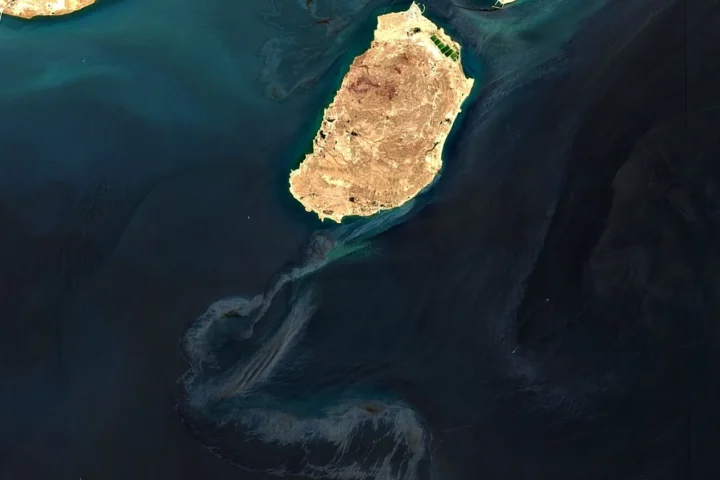
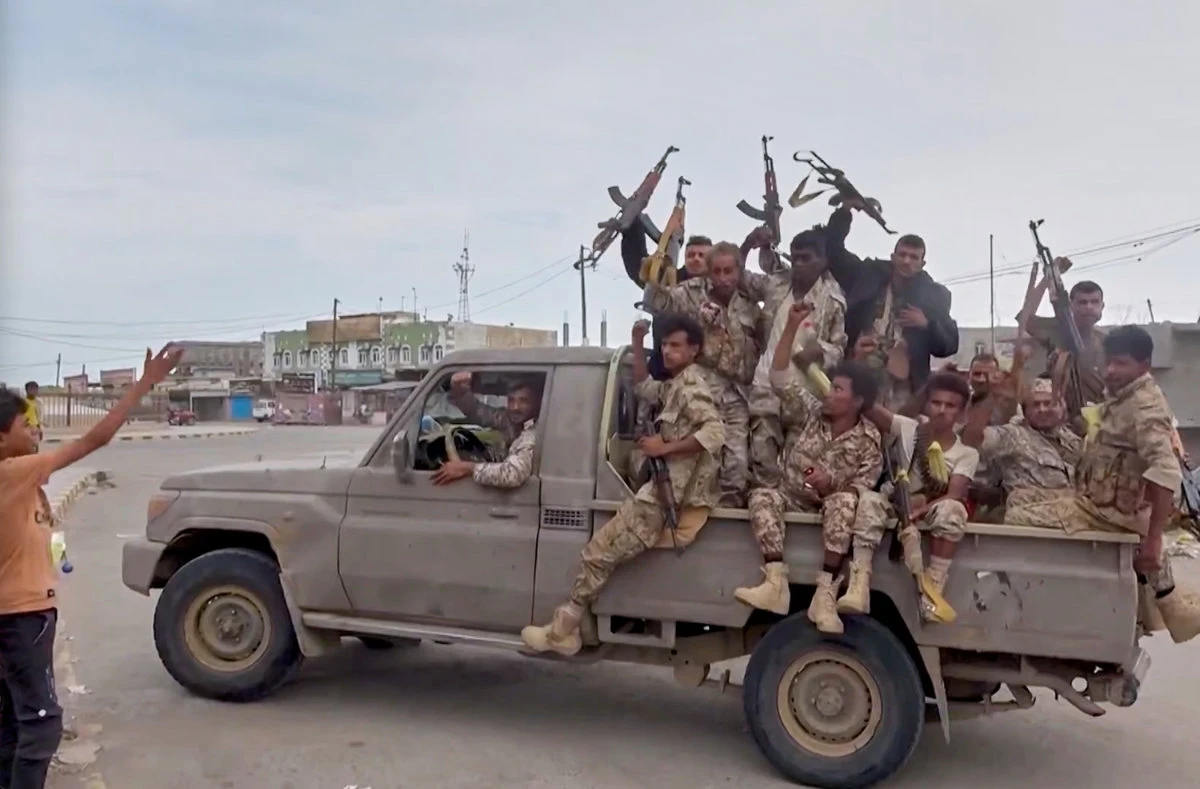
Starting September 3, Houthi forces pushed to cut the road linking Taiz to the port of Mokha. By September 11, they held Mokha, the nearby town of Dhubab, and the island of Mayyun, sitting in the mouth of the Bab el-Mandeb Strait — one of the busiest chokepoints for global shipping. In little more than a week, the group had taken roughly 2,100 square miles of territory. The U.N. estimates more than 100,000 people were displaced, some fleeing by boat across the water to Djibouti. It is the most significant shift in Yemen’s front lines since the truce took hold.
Most international coverage has read this through the lens of great-power competition — what it means for shipping lanes, for Saudi Arabia, for the wider map of Middle Eastern conflict. Those are legitimate questions. But they risk skipping past a more immediate one: what does this offensive mean for Yemen’s own war, which was never resolved, only paused?
The freeze that held from 2022 onward was never a settlement. It was an absence of active fighting layered on top of unresolved questions — about territory, about revenue, about who has the legitimate right to govern. Both sides used the lull differently. The internationally backed government coalition, never a unified body to begin with, grew more fractured, especially in the south, where competing factions have long disagreed on basic questions like secession. The Houthis, by contrast, used the calm to consolidate administrative control over the north, building the machinery of a governing authority even without international recognition.
That asymmetry matters for understanding why the offensive happened now. The Houthis’ opponents in the south became measurably weaker over the past year, particularly after a rift between Saudi Arabia and the United Arab Emirates led the UAE to pull back support from allied southern forces. A coastal force in Taiz and the Bab el-Mandeb area found itself exposed just as the Houthis had both the coherence and the incentive to press an advantage. Whatever the proximate trigger — the Houthis point to a July strike on Sanaa’s airport, and to years of accumulated grievance over blockade and restrictions on the north’s ports and airspace — the underlying logic is one familiar to any student of civil wars: armed movements advance when the other side’s ability to resist has quietly eroded, not only when a single event demands it.
What the Houthis Are Actually Trying to Solve
For all the international attention on shipping lanes and strategic maritime geography, the Houthis are, first, a Yemeni movement with a Yemeni problem: they have battlefield dominance across much of the north but no accepted political status. No government or faction has held both military and political supremacy over Yemen’s whole territory in the modern era, and the Houthis are no exception. A decade after taking Sanaa, they still govern without broad domestic buy-in and without recognition from most of the international community.
Seen from that angle, the coastal offensive looks less like a single tactical maneuver and more like an attempt to change the terms of a negotiation that stalled years ago. Saudi Arabia and the Houthis had been quietly negotiating toward a nationwide ceasefire as recently as 2023 — one that would have eased sanctions and restrictions on Houthi-controlled areas. That process collapsed amid the 2023-2024 Red Sea shipping crisis and was never meaningfully revived. By taking territory that the outside world — shippers, insurers, oil exporters — has an urgent interest in seeing reopened, the Houthis may be betting they can force renewed negotiations on more favorable terms, this time seeking political recognition rather than just economic concessions.
There are early, visible signs the group understands legitimacy has to be built, not just declared. Houthi-affiliated reports describe the reopening of Mokha’s customs house within days of its capture, reduced port fees, food distributions in newly held districts, and a general amnesty offered to fighters who had defended the coast. Leader Abdulmalik al-Houthi has publicly told southerners that his forces are not targeting them, only the government’s allied troops.
The Limits of Conquest
Yet governance gestures made in the wake of a military campaign are not the same thing as an actual political settlement, and there’s little in the Houthis’ decade of rule in Sanaa to suggest an appetite for power-sharing. The movement has consistently prioritized military control over political inclusion. Extending that same model to a newly conquered coastline — one with different demographics, different grievances, and its own recent history of displacement — is a considerably harder task than issuing food baskets and amnesties.
There’s also a wider cost to consider. Controlling a strait that much of the world wants open, and that international shippers and Saudi Arabia itself now depend on for oil transit, invites exactly the kind of external pressure the Houthis have spent a decade absorbing and adapting to, but rarely welcomed. Saudi Arabia has fought this war for more than ten years at enormous humanitarian cost, and few analysts expect Riyadh to attempt retaking Sanaa outright. But a rapid, high-profile seizure of strategic coastline is the kind of move that tends to invite a forceful response rather than a negotiated one — and any escalation is likely to fall hardest on the Yemeni civilians already displaced by the fighting.
A War That Isn’t Over, Just Different
The truce that held since 2022 was often described, hopefully, as a step toward peace. What the events of September make clear is that it was better understood as a pause between phases of an unresolved conflict — one in which neither side had given up its underlying claims, only the immediate means of pressing them. The Houthis have now pressed them again, and more successfully than at any point in three years.
Whether that translates into the political recognition the group has sought since 2014, or into a fresh, more dangerous phase of the same long war, will depend on choices not yet made — by Riyadh, by the fractured southern factions, and by the Houthis themselves, who now control ground that is far easier to seize than to govern. Territory, in Yemen’s war, has never been the hard part. Legitimacy has.