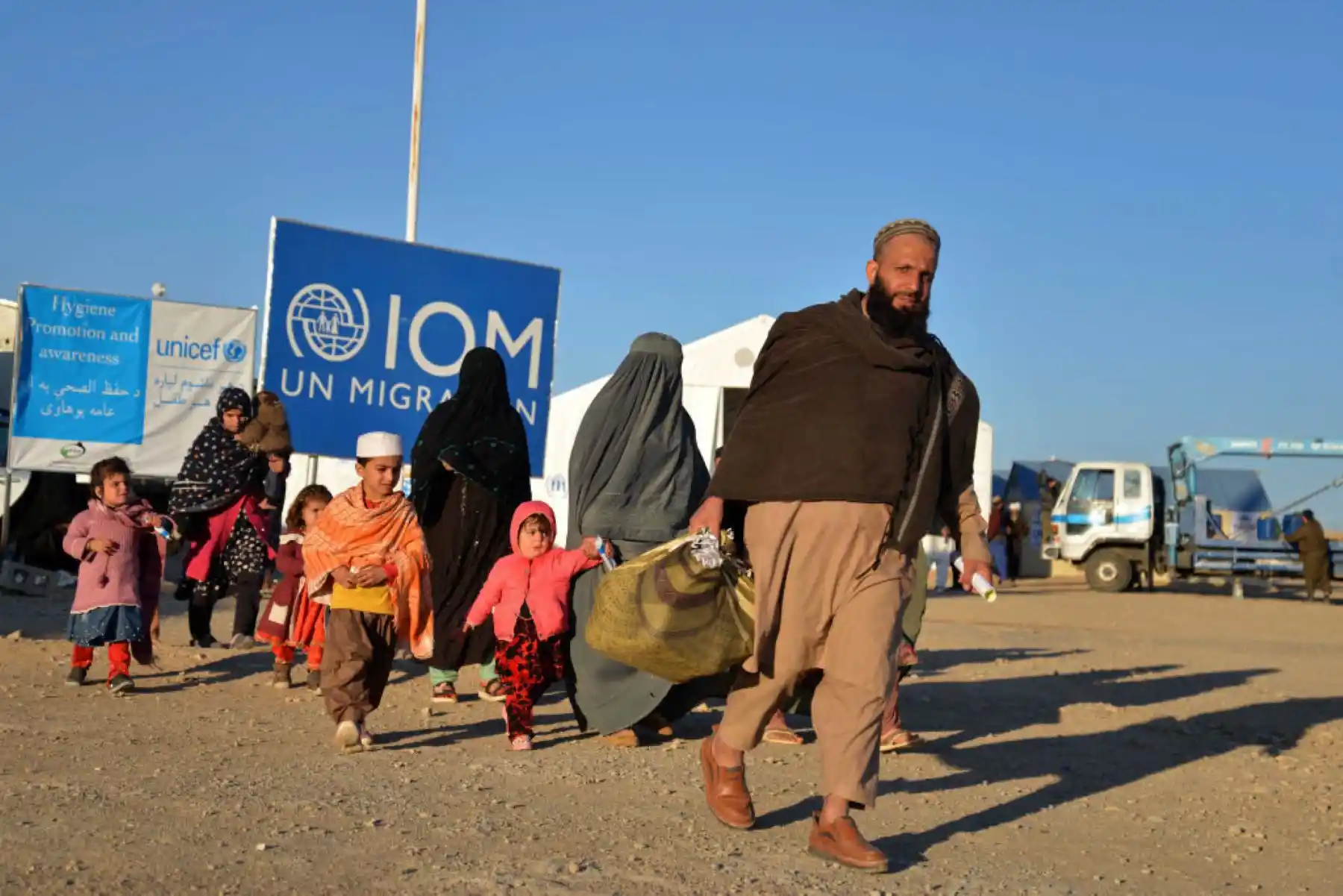
In the long shadow of Afghanistan’s wars, Pakistan has long stood as both refuge and pressure valve. Generations of Afghans have crossed the border seeking safety from conflict, persecution, and instability, and many have built entire lives in Pakistan: homes, businesses, marriages, friendships, and memories. Yet today, that history of refuge is being overwritten by a hardening state policy that treats Afghan families not as people in need of protection, but as bodies to be removed.
The most troubling part of this policy is not merely that expulsions are happening; it is how they are happening. Human Rights Watch reports that Pakistani authorities have sharply escalated abusive raids, arbitrary detentions, and forced returns, including door-to-door searches, arrests without warrants, confiscation of phones and cash, and demands for bribes in exchange for release. Amnesty International likewise says Afghans in Pakistan have been living under a constant threat of harassment, arbitrary detention, and deportation since the crackdown that began in 2023.
This is a familiar pattern in refugee politics: a displaced population is first tolerated, then securitized, then blamed for the very instability that forced it to move. But the Afghan case is especially cruel because Pakistan is expelling people into a country that remains profoundly unsafe and impoverished. UNHCR says Afghanistan is still grappling with one of the world’s largest humanitarian crises, with nearly half the population needing assistance, a collapsing health system, worsening poverty and food insecurity, and severe restrictions on women and girls. Returning people to that reality is not “repatriation” in any humane sense; it is the forced transfer of human suffering across a border.
Millions of Afghan refugees are being expelled across the globe, and that number keeps climbing day by day.
— Amnesty International South Asia, Regional Office (@amnestysasia) June 20, 2026
In host countries, they are facing arbitrary arrests and family separations; upon return, they are facing human rights violations amidst one of the most severe… pic.twitter.com/neZUoYjxj4
The legal problem is just as serious as the moral one. Amnesty says Pakistan’s “Illegal Foreigners’ Repatriation Plan” violates refugee and international human rights law, especially the principle of non-refoulement, which forbids sending people back to places where they face persecution or torture. Human Rights Watch makes the same point, warning that Pakistan’s forced returns may violate its obligations under the UN Convention Against Torture and the customary international law ban on refoulement. That principle exists for exactly this reason: states must not use administrative convenience or political anger to override the right to safety.
What the numbers show
The scale of the expulsions is staggering. Human Rights Watch says more than 146,000 Afghans were deported from Pakistan in 2026 alone, with the pace increasing after April 1. UNHCR reported that between September 2023 and late June 2025, more than 1 million Afghans returned to their country from Pakistan, and that more than 2 million Afghans in total were abruptly returned from Pakistan and neighboring countries, compounding Afghanistan’s humanitarian crisis. UNHCR also said in 2025 that more than 3.4 million Afghans had returned or been deported from Iran and Pakistan since 2023.
These are not abstract flows; they are families being uprooted in bulk. Amnesty’s reporting documents that the crackdown has included arbitrary arrests and separations of families, including minors, women, and older people. Human Rights Watch found that in numerous cases, families were forcibly separated, with children as young as 13 sent back to Afghanistan alone while parents remained behind without information on their whereabouts. When policy begins to sever parents from children, it has crossed from enforcement into cruelty.
Family separation
Family separation is the most human face of this crisis because it reveals how blunt the policy really is. In Pakistan, Afghan families often include people with mixed legal statuses: one spouse may have Pakistani citizenship, another may be Afghan; children may be born and raised in Pakistan but still face removal; some family members may hold expired documents while others are fully registered. Yet the deportation machinery does not pause for family life.
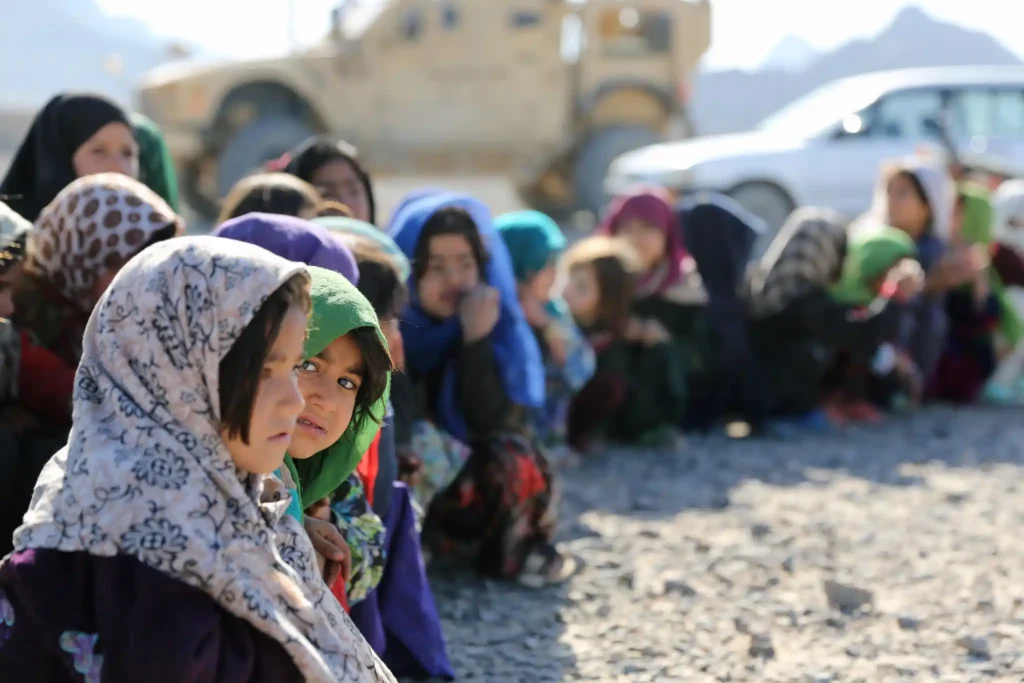
Consider the cases reported in the press. One Afghan man in Karachi, Shirzada, has lived in Pakistan since childhood and is facing deportation despite being married to a Pakistani citizen, leaving his family terrified of permanent separation. Another report described Muhammad Alam, an Afghan refugee married to a Pakistani woman, who fears he will be expelled while his wife and children remain in Pakistan, turning daily life into a recurring argument about whether the family must fracture to survive. Human Rights Watch also documented an Afghan woman whose husband and nine-year-old daughter were detained while shopping and then expelled, leaving her behind and separated from both. These are not outliers; they are the visible damage of a system that sees paperwork but not people.
Life after return
The tragedy does not end at the border. For many Afghans, return means arriving in a country where food, shelter, work, and health care are all scarce, while women and girls face even harsher restrictions on movement and rights. Human Rights Watch says some deported families have ended up in border camps in Afghanistan with harsh living conditions and limited access to necessities such as food, health care, and shelter. UNHCR has likewise warned that the sudden return of millions of Afghans has further burdened already limited resources in vulnerable communities.
The border itself has become a pressure point for humanitarian collapse. UNHCR’s 2026 briefing says humanitarian partners plan to reach 17.5 million Afghans with a $1.71 billion appeal, yet the appeal is only about 10 percent funded. That means every forced return lands in a system already running on emergency rations. When governments push people into an underfunded crisis, they are not solving migration; they are exporting disorder and demanding that aid agencies absorb the cost.
The security trap
Pakistan justifies the crackdown in part through security concerns and border tensions. But securitizing refugees rarely creates security; it creates fear, concealment, and deeper vulnerability. Human Rights Watch reports that Afghans in Pakistan have stopped going to health facilities, kept children indoors, and avoided ordinary movement because they fear arrest. Amnesty says the same climate of fear has been marked by a lack of transparency, due process, and accountability in detentions and deportations.
That fear also has a chilling effect on daily life. If a family cannot safely take a sick child to hospital, send a child to school, or leave home for work without fearing a raid, then the state has produced invisibility rather than order. Human Rights Watch recorded cases where even people with valid visas were detained and expelled, showing that documentation offers no reliable shield when enforcement becomes indiscriminate. A state that cannot distinguish between a refugee, a resident, and a lawful visa-holder is not administering law; it is wielding fear.
What a humane policy requires
Pakistan does have legitimate concerns about border management, but lawful migration control is not the same as mass expulsion. A humane policy would restore documentation review, halt forced returns, protect mixed-status families, and ensure that no one is deported without due process or an individualized assessment of risk. It would also preserve access to health care, schooling, and basic services while asylum claims and residency questions are sorted out.
More broadly, the burden cannot rest on Pakistan alone. The international community has spent years expressing concern while underfunding the response in Afghanistan and leaving neighboring states to absorb the fallout. UNHCR’s warnings make clear that Afghanistan’s humanitarian needs are enormous and the available resources are far too small. If the world wants Pakistan to behave differently, it must do more than issue statements: it must fund protection, support host communities, and create credible pathways for resettlement and legal stay.
A final moral test
The measure of a state is not how firmly it can push the vulnerable away, but how carefully it can protect them when political pressure rises. Pakistan’s current campaign against Afghan refugees fails that test. It punishes people for the circumstances of their birth, tears families apart, and sends men, women, and children back into one of the world’s gravest humanitarian emergencies.
There is still time to stop turning the border into a conveyor belt of misery. Pakistan should end arbitrary arrests and forced returns, and the international community should stop treating Afghan displacement as a recurring headline instead of a continuing obligation. When a child is separated from her parents at a checkpoint, or a sick family is too afraid to seek treatment, the issue is no longer migration policy. It is a human-rights failure in plain sight.