When people ask whether renewable energy can industrialize Africa, they are really asking something bigger and more uncomfortable: can a continent that still cannot keep the lights on in half its homes leap, in a single generation, into a green, power-hungry industrial future? It is a question that deserves a more careful answer than either the boosters or the skeptics usually offer. The truth is that renewables are not a magic wand, but they may be the single most important tool Africa has for breaking a century-old pattern of exporting raw materials and importing finished goods. Whether that tool gets used well is a political choice, not a technological inevitability.
Start with the scale of the problem. Africa holds almost a fifth of humanity but produces only about 3% of global GDP and somewhere between 2% and 3% of global manufacturing value added. That gap is not a rounding error; it is the story of a continent that industrialized late, if at all. Manufacturing accounts for roughly 10–13% of Africa’s GDP on average, a share that has been stuck below 13% since 2020. Compare that to the 20–30% manufacturing shares East Asia’s economies reached at the height of their industrial takeoffs, and the distance becomes clear. Only a handful of African economies—Eswatini, Guinea, Gabon, and North African states like Morocco and Tunisia—have manufacturing sectors approaching or exceeding 20% of GDP. In most countries, it is under 15%.
Underneath this industrial shortfall sits an energy shortfall. Roughly 600 million Africans have no access to electricity at all, and close to a billion lack clean cooking fuel. Per-capita electricity consumption averages around 750 kilowatt-hours a year—among the lowest anywhere in the world, a fraction of what a single refrigerator running continuously would use in a wealthier country. And the power that does exist is not particularly clean: gas alone supplies about 43% of Africa’s electricity, while clean sources—hydro, solar, wind, geothermal—generated only about 25% of the continent’s power in 2024, well below the global average of 41%.
Against this backdrop, African leaders have set a strikingly ambitious target. The African Union wants 300 gigawatts of renewable capacity installed by 2030, up from roughly 70–72 gigawatts in 2023—a fourfold increase in less than a decade. It is the kind of number that sounds either inspiring or delusional, depending on how you look at it. The real question is what that capacity, if it materializes, would actually be used for: powering phones and streetlights, or powering steel mills, fertilizer plants, and the data centers of a digital economy.
The case for renewables as industrial policy
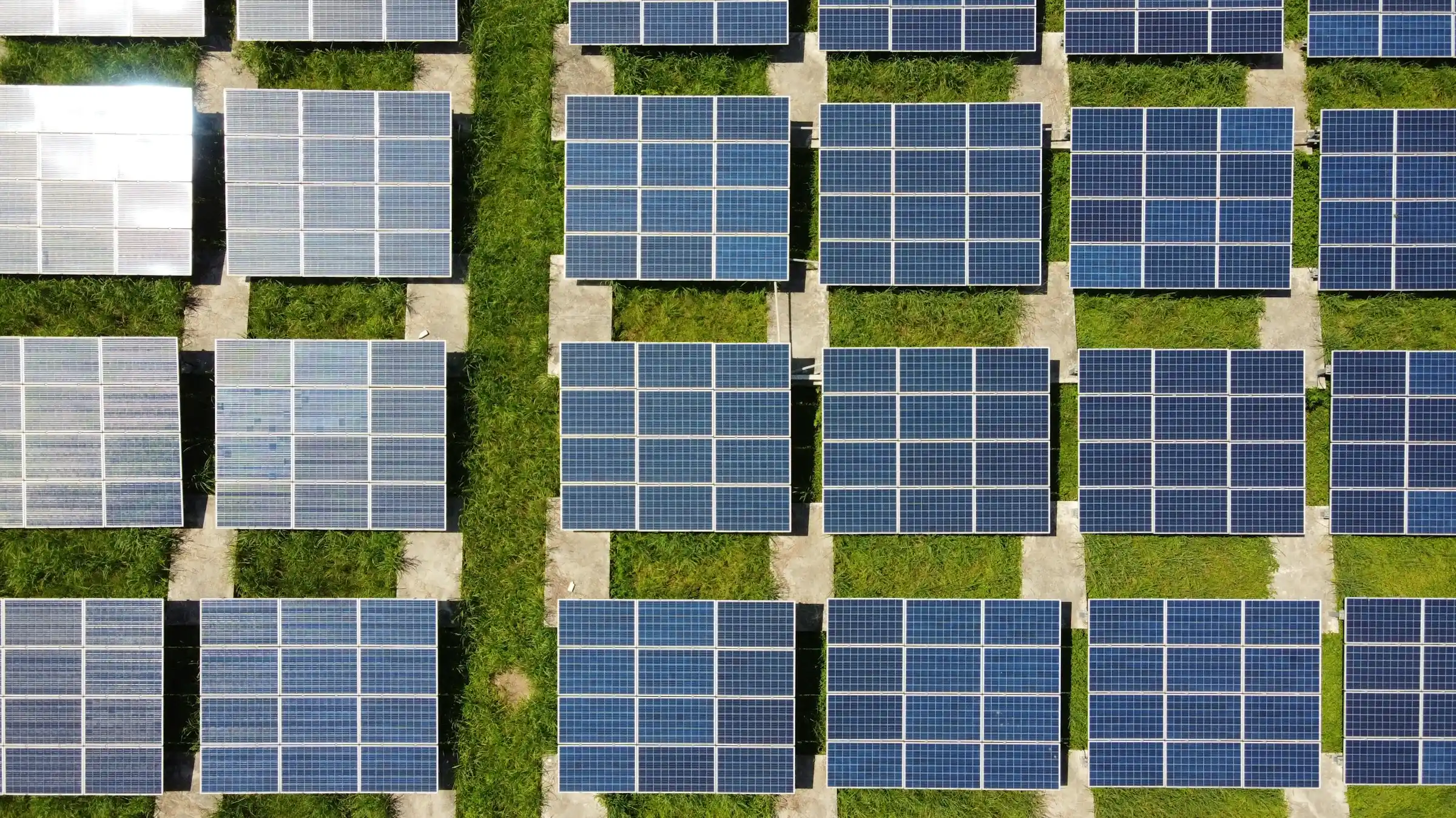
There are good reasons to believe renewables can be more than a consolation prize for a continent still waiting for its industrial moment. Africa is the sunniest continent on Earth, yet it captured only about 4% of global solar generation in 2024—a staggering mismatch between resource and use. And the economics have shifted decisively in renewables’ favor: by 2024, roughly 91% of newly commissioned utility-scale renewable projects worldwide produced electricity more cheaply than the cheapest new fossil-fuel alternative, according to the International Renewable Energy Agency. In Africa specifically, BloombergNEF estimates the continent added 7.9 gigawatts of renewable capacity in 2023, more than triple that year’s net fossil-fuel additions, continuing a five-year trend in which renewable additions have nearly doubled fossil ones.
Cheap, abundant electricity is the precondition for the industries that actually move the needle on development—cement, steel, aluminum, chemicals, fertilizer. Renewables offer a path to that power without saddling countries with the import bills and price volatility that come with shipping in coal, oil, or gas. And there is a second, less obvious advantage: the carbon content of electricity is becoming a competitiveness issue in its own right. As markets like the European Union move toward carbon border adjustments and stricter supply-chain standards, manufacturers who can point to clean power behind their products gain an edge that has nothing to do with sentiment and everything to do with market access. For African industry trying to break into global value chains, a solar-powered factory is not just good for the planet—it is good for the order book.
What the early movers show us
A handful of countries offer real, if partial, evidence that this can work. Kenya has met essentially all of its incremental electricity demand growth since 2018 through wind, solar, and geothermal, giving it one of the cleanest power mixes on the continent and reducing its exposure to imported fuel. In 2023 alone, Kenya brought online roughly 772 megawatts of new geothermal capacity across two plants—indigenous, reliable, baseload power that has helped support growth in agro-processing, textiles, and the tech-driven services economy clustering around Nairobi. This is an important detail, because industrial and digital growth both depend on power that does not disappear when the sun sets or the wind dies down.
South Africa offers a different model: using procurement itself as industrial policy. Its Renewable Energy Independent Power Producer Procurement Programme has brought 95 projects and about 7,336 megawatts onto the national grid, overwhelmingly from wind and solar. Under its sixth bidding round, two new solar projects—Virginia Solar Park and Doornhoek PV—will add 360 megawatts, mobilize roughly 4.9 billion rand in investment, and create more than 2,000 job-years of employment, while committing 389 million rand over 20 years to skills development, supplier development, and enterprise growth. Crucially, the program was never designed as a pure generation exercise. It was built with local-content requirements, community development obligations, and Black Economic Empowerment provisions written into the contracts, so that every megawatt procured was also meant to build domestic capability, not just add electrons to the grid.
Morocco tells a third version of the story. Through sustained policy commitment and large-scale investment in solar and wind—including the Noor solar complex—the country has built one of the continent’s most competitive industrial economies, using clean power to underpin export industries like automotive manufacturing and fertilizer production destined for European markets. In each of these cases, renewables did not industrialize the country by themselves. They became useful only because governments treated them as one lever within a larger industrial strategy.
The gap that could sink the whole project
Here is where the optimism needs a hard dose of realism. Africa’s renewable investment hit a record in 2023: about $15 billion, more than double the prior year. That sounds impressive until you realize it represents just 2.3% of global renewable power-generating investment—a share smaller than Africa’s roughly 2.9% of global electricity generation and its 2.7% of global GDP. In other words, Africa is under-investing in clean energy relative to its own economic weight, even as the rest of the world races ahead.
The International Energy Agency puts a number on what would actually be needed: more than $200 billion a year in energy investment to meet Africa’s stated energy and climate goals by 2030. Current investment runs around $110 billion annually, and nearly $70 billion of that still goes to fossil fuel supply and generation, not renewables. Clean energy investment on the continent amounts to only about 2% of the global total, and total energy investment is just 1.2% of Africa’s GDP—far below what earlier industrializers spent building out their power and infrastructure base.
Even where capacity does get built, the grid often cannot use it well. Transmission and distribution losses across Africa average around 15%, and many national grids are poorly interconnected, both internally and across borders. A gigawatt of new solar capacity is not worth much to a factory 300 kilometers away if the transmission lines to get it there do not exist or cannot carry the load. Without serious investment in transmission, storage, and regional interconnection, new renewable projects risk becoming isolated, underused assets rather than engines of industrial growth.
Catalyst, not silver bullet
So has the needle actually moved? Slightly. Manufacturing’s share of Africa’s GDP crept from 12.2% in 2016 to about 12.7% in 2023—real, but modest progress. Forecasters project that under business-as-usual conditions, that share might rise to around 16% by 2043. Under a more ambitious scenario, where manufacturing investment and supportive policy are deliberately scaled up, the share could reach 18.1% by 2043, adding more than $168 billion in manufacturing output compared with the baseline path. Renewables are a necessary ingredient in that better scenario, because they offer scalable, increasingly affordable power without the macroeconomic exposure that comes with fossil fuel imports or the climate risk now undermining traditional hydropower during droughts.
But clean electrons alone do not decide whether a country moves from exporting raw cocoa to exporting chocolate, or from shipping out iron ore to rolling its own steel. That transition rests on trade policy, workforce skills, logistics, access to finance, and, above all, governance. Power is necessary. It is not sufficient.
The danger of a two-speed Africa
There is a real risk that, absent deliberate policy, renewables entrench inequality rather than dissolve it. Clean power could end up concentrated in enclaves—industrial parks, mining operations, data centers, export processing zones—serving large firms and foreign investors, while ordinary households and small businesses remain stuck with unreliable or nonexistent grid access. That would produce a dual-track energy future: world-class renewable power for a favored few, and continued energy poverty for everyone else.
A second risk is that renewable buildout happens mostly through imported equipment and foreign financing, with minimal local content, leaving construction jobs behind but little lasting domestic capability. Given that Africa currently attracts only 2–3% of global renewable investment despite having some of the best solar and wind resources on the planet, the danger of the continent becoming merely a captive market for foreign panels and turbines, rather than a builder of its own energy industry, is not hypothetical.
What actually has to happen
Avoiding that outcome requires several things happening together, not in sequence. Deployment has to accelerate sharply—from roughly 8 gigawatts added per year today to more than 32 gigawatts annually if the African Union’s 2030 target is to mean anything. Grids need urgent investment to cut transmission losses from around 15% toward global norms and to link power-rich regions with power-hungry industrial clusters across borders. Electrification itself has to become a primary goal rather than an afterthought, with mini-grids and rooftop solar complementing large utility projects so that small enterprises outside the capital cities can actually plug in. Industrial policy needs to pick its shots—whether that is green hydrogen and fertilizer, critical mineral processing for batteries, agro-processing, or data infrastructure—rather than trying to do everything at once. And the financing architecture has to change, closing the gap between the roughly $110 billion invested annually and the $200-billion-plus that is actually needed, through a mix of domestic resource mobilization, blended finance, and risk-reducing reforms. None of this works well at the scale of small, fragmented national markets, which is why deeper regional integration under the African Continental Free Trade Area matters as much as any single power plant.
A realistic verdict
Can renewables industrialize Africa? They can make industrialization cheaper, cleaner, and less vulnerable to the price shocks and supply disruptions that come with importing fossil fuels. They can attract capital, open new export sectors, and remove the old assumption that competitive industry requires sitting on vast coal or gas reserves. Kenya’s geothermal-backed growth, South Africa’s procurement-driven local content model, and Morocco’s export-oriented industrial strategy all show that clean power can anchor real industrial progress.
But renewables are not magic, and no one should pretend otherwise. In a continent where manufacturing still hovers around 12–13% of GDP and hundreds of millions of people have never flipped a light switch, clean energy will only become factories and jobs if it is embedded in a much larger project—one that fixes grids, builds skills, reforms finance, and opens markets, all at once. The technology to power African industrialization largely exists already. What remains uncertain is not whether the sun shines brightly enough or the wind blows hard enough. It is whether African governments and their international partners have the political will to turn a renewable energy boom into a broadly shared industrial one, rather than letting it become one more resource the continent exports without keeping much of the value for itself.